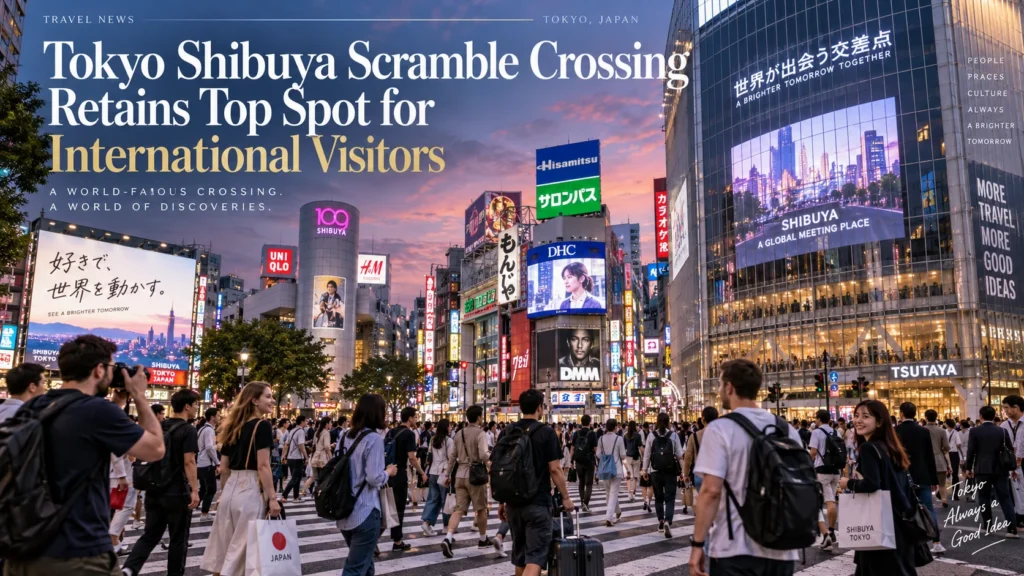
The Tokyo Metropolitan Government’s official annual travel survey confirms that Shibuya has retained its status as the most visited destination among foreign travelers in Tokyo. Ranking ahead of traditional commercial centers like Ginza and historic transit hubs like Tokyo Station for the fourth consecutive year, Shibuya continues to serve as the chief focal point for inbound tourism.
At the center of this attraction is the Tokyo Shibuya Scramble Crossing, an iconic multi-directional crosswalk located directly outside Shibuya Station. The intersection regularly draws crowds of international sightseers, sports supporters, and culture enthusiasts who view the busy roadway as an interactive public stage.
Global Visibility and Digital Transformation Fuel Inbound Arrival Trends
According to research from urban sociology experts and municipal tourism monitors, Shibuya’s sustained global popularity is strongly tied to digital media connectivity and international promotion campaigns. While the area historically functioned as a localized youth culture district, the introduction of large-scale digital displays at commercial complexes like QFront around 2000 established the intersection as a visual symbol for major events.
International media features, ranging from feature films to global athletic promotional broadcasts, have solidified the crossing’s global image. Unlike urban landmarks built around static historical monuments, the Scramble Crossing functions as a dynamic public arena where large pedestrian volumes create a unique urban spectacle.
The spread of social media platforms has amplified this effect. Millions of foreign tourists share self-recorded videos and photos taken from nearby station passageways, surrounding commercial platforms, and street-level crosswalks. Tourism planners note that this organic, user-generated visibility has made the location a self-sustaining destination on international Tokyo travel itineraries.
Major Infrastructure Redevelopment Reshapes the Shibuya Station District
To support high visitor density and long-term economic competitiveness, municipal authorities and public transit operators—including Tokyu Corporation and municipal transport departments—are executing a comprehensive, multi-decade urban renewal program surrounding Shibuya Station.
The extensive redevelopment plan, initiated alongside the underground relocation of regional rail infrastructure, addresses long-standing urban mobility challenges. Historically characterized by steep elevation changes and complex pedestrian pathways, the station precinct is undergoing a complete overhaul designed to streamline multi-level transit transfers and enhance public safety.
Key elements of the official infrastructure plan include:
Construction of high-rise commercial transit complexes, including Shibuya Hikarie and Shibuya Scramble Square.
Creation of multi-layered pedestrian networks connecting east, west, north, and south station exits via elevated walkways and underground passages.
Upgrade of public safety systems, including advanced flood mitigation infrastructure and real-time crowd management technologies.
Expansion of dedicated innovation facilities and co-working spaces aimed at attracting global technology enterprises and creative startups.
Developers report that the return of major multinational technology firms and digital media corporations aligns with Shibuya’s broader strategic goal of serving as a primary commercial and technological center within central Tokyo.
Balancing Modern Urban Development with Street Culture Preservation
As multi-billion-yen construction projects transform Shibuya into a modern commercial center, urban planners and cultural researchers are evaluating the impact on the district’s traditional street identity. Over recent decades, Shibuya gained global recognition as an incubator for alternative fashion, music, and urban art expressions.
Municipal authorities in Shibuya Ward have introduced advanced monitoring systems, public safety ordinances, and technology-assisted surveillance to maintain order and clean urban environments in high-density zones. While these measures ensure a safe, accessible environment for international visitors and diverse age groups, urban sociologists note that city administrators face an ongoing challenge in balancing security protocols with the flexible, spontaneous street culture that originally defined the district’s global appeal.
Official statements from corporate developers emphasize an inclusive long-term vision for the area. Future phases of the redevelopment focus on improving accessibility for families, elderly visitors, and international travelers, ensuring that the station precinct remains a comfortable, welcoming environment for all demographics while preserving its identity as an incubator for new ideas.
Future Outlook for Tokyo’s Premier Cultural and Commercial Hub
With additional skyscraper completions and public plaza renovations scheduled through the coming years, Shibuya is positioned to maintain its status as a central pillar of Tokyo’s international tourism strategy. Tourism officials project that the integration of upgraded transit infrastructure, world-class commercial developments, and iconic public spaces will ensure Shibuya remains a primary destination for global travelers seeking both traditional cultural vibrancy and cutting-edge urban design.
For more travel news like this, keep reading Global Travel Wire