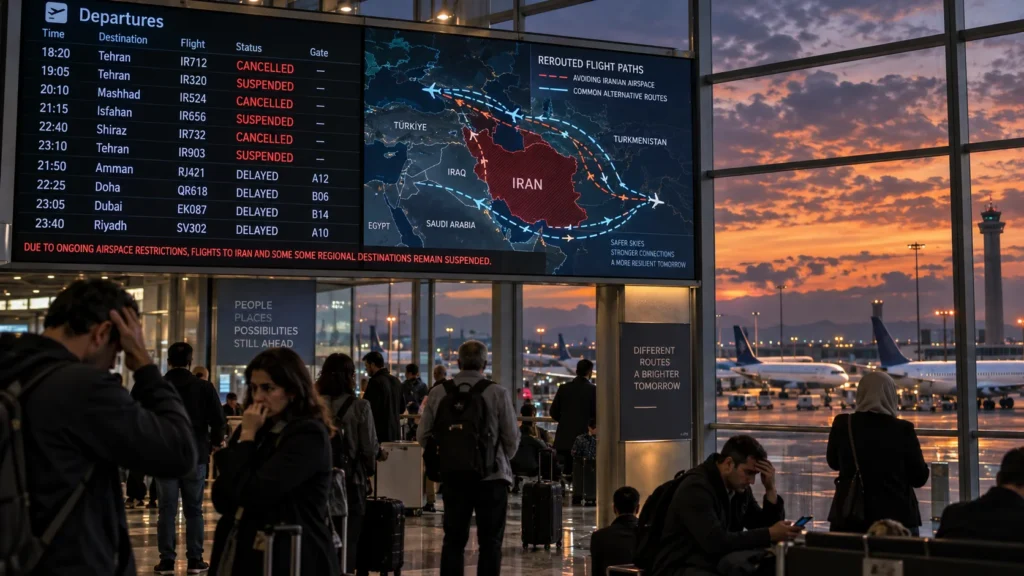
International transit networks across the Middle East and surrounding regions are adjusting to major operational changes following comprehensive airline schedule modifications and international regulatory directives. Official carrier schedules and diplomatic communications confirm extended flight suspensions to Iran, significantly altering passenger connectivity, leisure travel routes, and cross-border transit across major regional corridors.
Flag carrier Turkish Airlines confirmed the temporary cessation of its commercial passenger services to Iranian destinations through at least early 2027. The operational decision reflects broader changes in international civil aviation compliance, air traffic corridors, and cross-border transport agreements, impacting one of the most heavily traveled commercial corridors connecting Europe and the Middle East.
Global Regulatory Directives Impact Regional Aviation Operations
The indefinite pause in commercial service follows explicit policy statements issued by international financial authorities regarding secondary compliance measures for aviation services. Under standard regulatory frameworks, foreign airport authorities, ground handling providers, fuel suppliers, and ticketing agents are subject to severe enforcement protocols if services are rendered to designated commercial fleets.
Aviation administrative updates outline several core factors driving widespread fleet re-routing:
International Financial Compliance: Global commercial airlines and airport service providers must maintain alignment with international financial clearing systems, forcing operational adjustments on sanctioned flight paths.
Ground Handling and Refueling Limits: Strict restrictions on ground support equipment, jet fuel logistics, and technical maintenance services prevent standard flight operations at foreign origin and departure points.
Bilateral Air Transport Agreements: Regional civil aviation authorities are enforcing strict regulatory measures to ensure national airports remain fully compliant with global transport standards.
Airspace Routing Adjustments: Commercial flight planners are actively altering international corridors to avoid potential service bottlenecks and unexpected operational holds at regional hubs.
As regional government transport departments implement these compliance guidelines, commercial air carriers are removing affected flight sectors from global distribution systems, prompting passengers to seek alternative travel paths.
Shifts in Cross-Border Tourism, Family Travel, and Pilgrimage Corridors
The suspension of major flight routes alters longstanding regional travel patterns. Türkiye has historically served as a central international transit hub and primary leisure destination for travelers from across the region, offering direct connections for business conferences, family reunions, and cultural tourism. The removal of direct connections between major urban centers requires international passengers to navigate complex, multi-leg itineraries or utilize alternative overland pathways.
Concurrently, neighbouring civil aviation authorities—including public transport agencies in Iraq—have aligned local flight management policies with international compliance standards. The restriction of regional carrier operations directly impacts religious tourism corridors, most notably high-volume pilgrimage routes leading to historical and cultural landmarks in Najaf and Karbala.
Religious travel boards and municipal tourism operators traditionally manage millions of cross-border visitors during major cultural and spiritual observances. Transport authorities are urging tour organizers and independent travelers to verify state-issued travel permits and review alternative transit channels to accommodate incoming visitor flows within regulated frameworks.
Navigating Rebooking Options and Long-Term Travel Planning
Civil aviation administrations and passenger rights organizations recommend that affected travelers take immediate, proactive steps to manage existing reservations and itinerary adjustments.
Travelers holding tickets on affected routes should consider the following official guidelines:
Carrier Refund Policies: Passengers booked on canceled flight sectors are eligible for full ticket refunds or travel credit vouchers through primary carrier booking systems and authorized travel agencies.
Alternative Hub Transit: Travel planners are advised to consult updated airline schedules for modified routing options through fully compliant international transit hubs.
Consular and Advisory Notices: Travelers planning multi-destination itineraries across the region should continuously review official foreign ministry notices and civil aviation bulletins regarding local entry protocols and transport availability.
Government ministries and regional tourism development boards continue to monitor the long-term economic and infrastructural impacts of shifting flight availability. While commercial carriers adapt their long-haul networks and fleet deployments, public aviation authorities remain dedicated to ensuring civil airspace safety, operational transparency, and structured support for global travelers.
For more travel news like this, keep reading Global Travel Wire