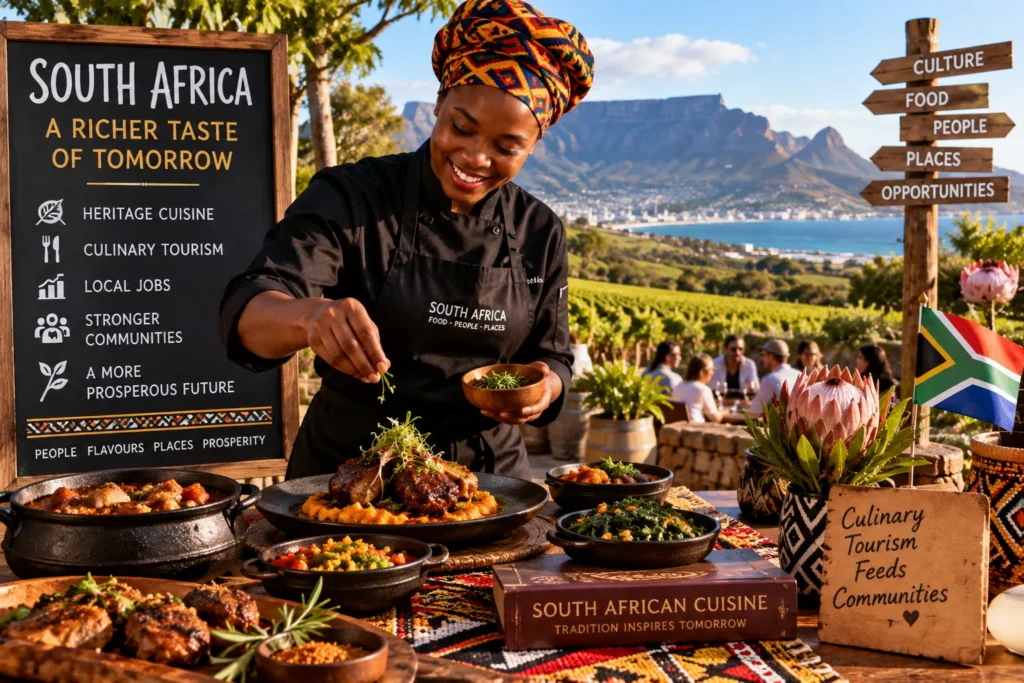
Every September, South Africa observes national Heritage Month, a dedicated cultural period highlighting the diverse traditions, histories, and values that shape the country’s national identity. Central to these annual celebrations is South African heritage cuisine, a vibrant food culture that is serving as a major catalyst for domestic and international travel growth across the nation.
Food has long served as a primary bridge between heritage and hospitality, reflecting local agricultural seasonality, regional ingredients, and culinary knowledge passed down through generations. From staple township favorites to traditional coastal dishes, the country’s living food culture continues to evolve, creating new avenues for cultural tourism, culinary development, and local enterprise.
Indigenous Ingredients and Culinary Roots Fuel Hospitality Sector
The evolution of traditional recipes sits at the center of modern culinary tourism. The national gastronomy landscape reflects centuries of cultural convergence, where indigenous African crops, Cape Malay spice traditions, colonial influences, and contemporary techniques intersect.
According to official economic reports from Statistics South Africa, the food and beverage service industry represents a critical pillar of national tourism performance. Restaurants, catering operations, and specialized dining venues account for more than 51 per cent of total sector income and provide employment for over 236,000 workers nationwide.
Central to this economic vitality is the renewed focus on ancestral recipes and indigenous flora. Ingredients long rooted in regional agriculture—including sorghum, rooibos, honeybush, buchu, amaranth, and marula—are increasingly appearing on fine-dining and casual hospitality menus.
Culinary research highlights how heritage provides a foundation for creative gastronomy rather than static nostalgia:
Street Food Modernization: The traditional kota—a hollowed-out bread loaf historically stuffed with chips and processed meats—is being elevated with spiced artisan proteins, house-made atchars, and gourmet sauces.
Ancient Grains in Fine Dining: Sorghum, one of Africa’s oldest cultivated grains, is being utilized as an earthy malt glaze for slow-braised meats, replacing imported grain bases.
Botanical Flavor Profiles: Indigenous botanicals like buchu, known for mint and citrus aromatic notes, are being infused into desserts, while rooibos and honeybush serve as natural smoking mediums for poultry and fish.
Reimagined Comfort Foods: Classic staples like umfino—a traditional blend of maize meal and leafy greens—are being repurposed into crispy crusts for braised short ribs, retaining familiar flavor profiles within modern plating styles.
Fused Dessert Traditions: Traditional sweet dishes are similarly shifting, with cooks infusing rooibos into milk tart custards to reduce added sugars or merging milk tart and malva pudding into consolidated regional desserts.
Tourism Indicators Highlight Strong Recovery Across Hospitality
The integration of authentic food experiences into broader travel itineraries coincides with strong performance metrics across the national tourism economy. Official data released by Statistics South Africa confirms that the tourism sector directly contributes over 3.3 per cent to national Gross Domestic Product, generating more than R240 billion annually for the national economy.
International arrivals have demonstrated sustained year-on-year growth, surpassing 8.9 million visitors annually. Official Ministry of Tourism figures record international passenger arrivals reaching multi-year highs, with strong inbound growth from both regional Southern African Development Community partners and long-haul source markets across Europe and North America.
Accommodation performance metrics further underline this positive trajectory:
Total income from tourist accommodation recorded double-digit percentage gains year-on-year.
Hotel revenues remain the dominant contributor to lodging performance, generating over 70 per cent of total accommodation sector income.
Direct employment supported by travel and hospitality operations exceeds 1.8 million direct and indirect jobs across the nine provinces.
Government economic framework projections emphasize that cultural and heritage travel—comprising culinary tours, historical site visits, and community-based hospitality initiatives—serves as a core differentiator for South Africa within global travel markets.
Regional Food Culture Drives Enterprise and Rural Dispersal
Beyond main metropolitan hubs like Cape Town, Johannesburg, and Durban, the promotion of regional food culture supports economic dispersal into rural communities and secondary destinations. Local food trails, township culinary tours, and community festivals encourage international and domestic travelers to explore beyond traditional safari and coastal itineraries.
Dishes firmly rooted in specific geographic localities—such as Durban curry and bunny chow in KwaZulu-Natal, tomato bredie and bobotie in the Western Cape, potjiekos prepared over open fires in rural regions, and roadside magwinya sold at local markets—provide small-scale entrepreneurs and independent vendors with direct access to tourist spending.
The Department of Tourism continues to support human capital development and culinary training programs designed to preserve traditional recipes while equipping young chefs with professional kitchen management skills. By linking local agricultural supply chains directly to restaurant kitchens, the government aims to strengthen local economic participation and promote sustainable food tourism.
As Heritage Month celebrations conclude, public tourism boards and private hospitality partners are focusing on embedding local gastronomy permanently into international marketing campaigns. By celebrating indigenous ingredients, preserving culinary roots, and encouraging contemporary innovation, South Africa continues to position its living food culture as a primary driver of long-term tourism growth.
For more travel news like this, keep reading Global Travel Wire