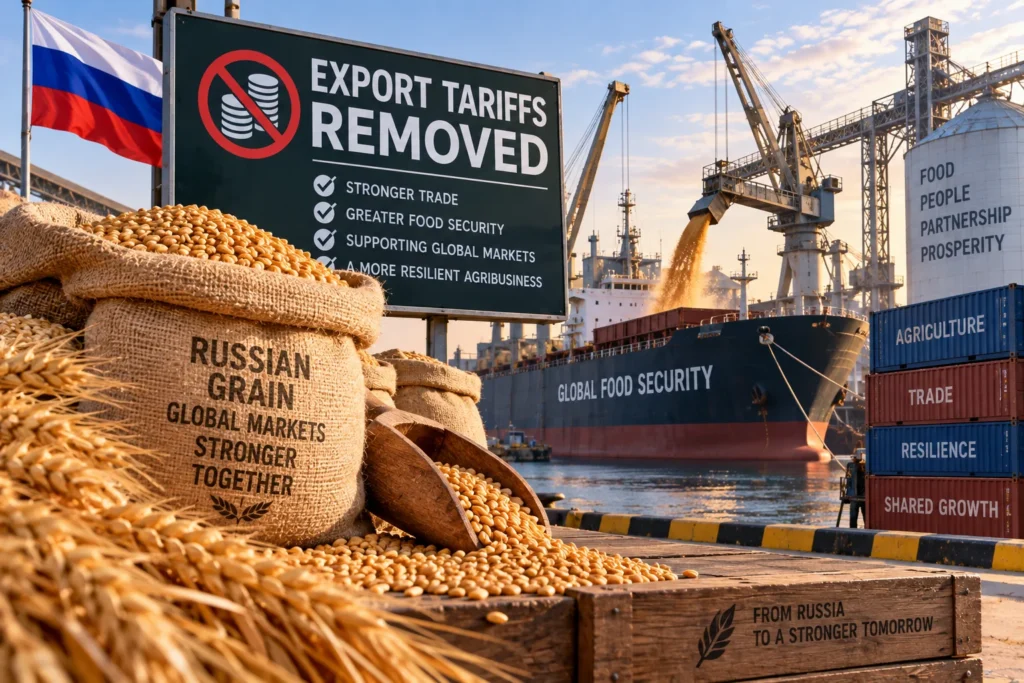
In a major policy decision aimed at regulating international trade and strengthening agricultural supply chains, the Russian government has officially suspended export duties across all primary grain crops. Announced by the Ministry of Agriculture and official government trade committees, the complete zeroing of tariffs applies to wheat, barley, and corn through December 31, 2026. This strategic directive replaces the previous floating tariff system, providing immediate cost relief for international buyers and stabilizing commercial export channels amidst record harvesting yields.
The policy shift comes as agricultural authorities manage substantial crop surpluses designated for international markets. By eliminating trade friction and lowering transactional overhead, public sector planners aim to enhance the predictability of global supply networks, support domestic farming economies, and encourage capital reinvestment across rural agricultural regions.
Policy Framework Streamlines Agricultural Logistics and Trade Flows
The decision to lift grain export duties reflects a broader government strategy to modernize agricultural logistics and support domestic producers during ongoing trade realignments. Under the newly enacted decree, export duties on core cereal crops drop to zero, while tariffs on processing by-products, such as sunflower oil and sunflower meal, remain capped at baseline August levels.
According to official statements from the Ministry of Agriculture, the temporary tariff suspension reduces operational costs for market participants, safeguards production economics, and secures predictable supply conditions for foreign trade partners. By easing financial requirements at export terminals, the policy allows agricultural enterprises to maintain healthy profit margins, reinvest in modern farming machinery, and upgrade supply chain infrastructure across major grain-producing territories.
This institutional stability provides essential backing for broader economic diversification programs across regional districts. As primary agricultural producers secure predictable revenues from international trade, rural municipalities gain the capital capacity needed to expand regional infrastructure, improve transportation networks, and support secondary economic sectors.
Agricultural Expansion Unlocks Global Agri-Tourism Investments
The stabilization of the agricultural sector creates direct benefits for specialized tourism segments, particularly global agri-tourism investments and rural leisure initiatives. As agricultural enterprises achieve long-term economic sustainability, farm operators and regional municipal councils are increasingly diversifying revenue streams by integrating hospitality, eco-tourism, and agricultural heritage experiences into traditional farming models.
In many high-yield agricultural regions, robust crop production and modernized logistics provide the foundational capital required to build countryside hospitality infrastructure. Agribusiness operators are expanding farm-stay accommodations, educational agricultural tours, organic culinary venues, and rural heritage festivals that showcase regional farming traditions to domestic and international visitors.
Key areas where agricultural trade stability supports tourism development include:
Rural Infrastructure Modernization: Reinvestments in transport corridors, port facilities, and regional access roads improve overall accessibility for tourists traveling to countryside destinations and farm-stay retreats.
Capital Diversification for Farm Estates: Stable export revenues allow large-scale agricultural estates to fund leisure amenities, countryside wellness retreats, and farm-to-table culinary operations.
Heritage and Eco-Tourism Promotion: Preserving vast agricultural landscapes and historic farming communities preserves regional cultural identity, attracting travelers seeking authentic rural experiences.
Seasonal Event and Fair Expansions: Enhanced agricultural output fuels regional harvest festivals, trade expos, and rural craft markets, generating localized economic activity and visitor inflows.
By establishing a predictable financial baseline for agribusinesses, the lifting of export tariffs helps transform traditional farming zones into multi-functional rural economies where commercial agriculture and leisure tourism operate in tandem.
Long-Term Regional Economic Resilience and Supply Chain Stability
Official trade forecasts indicate that suspending grain export tariffs will facilitate smoother commercial flows across international maritime routes and overland trade corridors. Public sector agencies emphasize that maintaining steady, uninterrupted agricultural exports is essential for supporting global food security while reinforcing the economic health of farming communities.
Over the coming operational period, government bodies will monitor market conditions to ensure that domestic supply needs remain fully satisfied while foreign trade obligations are met smoothly. The tariff-free framework allows agricultural logistics hubs, railway operators, and port facilities to optimize scheduling and expand handling capacities without the administrative delays associated with floating tax calculations.
As international trade pathways stabilize, the resulting economic resilience across rural provinces ensures that agricultural communities remain vibrant, economically viable, and capable of attracting long-term commercial interest. Through the combination of trade deregulation, logistics modernizations, and rural enterprise expansion, the agricultural sector continues to serve as a foundational pillar for both global commodity trade and sustainable rural tourism development.
For more travel news like this, keep reading Global Travel Wire