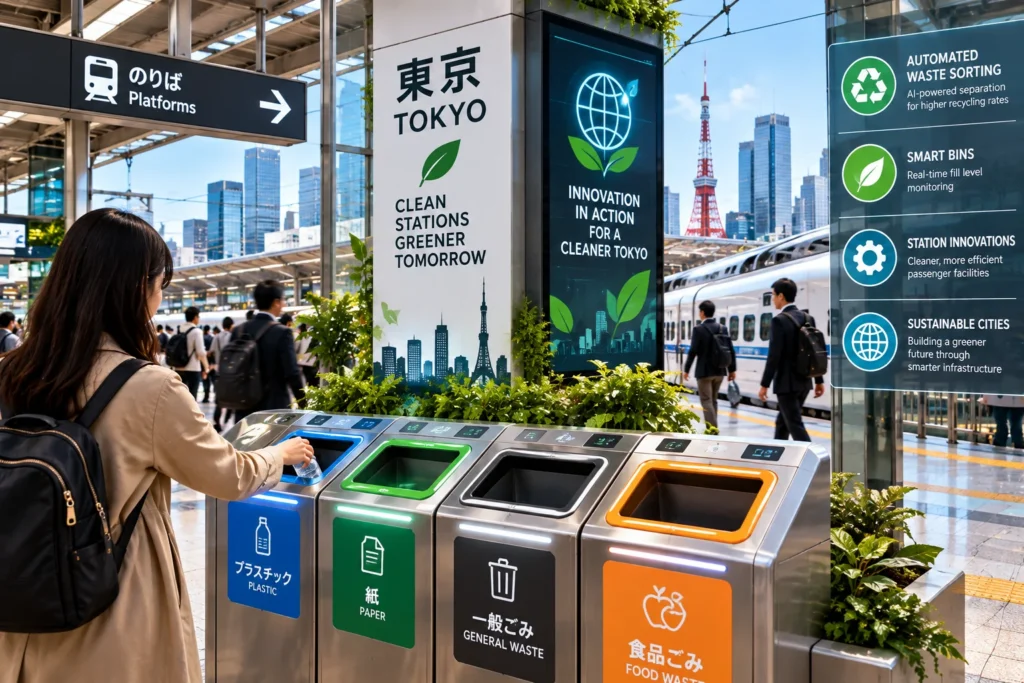
East Japan Railway Company, known as JR East, has launched a operational trial of mobile, self-driving trash bins at Shinjuku Station in Tokyo. The sprawling transit hub, recognized as the busiest railway complex in the world with over 2.7 million daily passengers, is serving as the primary proving ground for automated waste collection technology designed to support station sanitation workers.
The pilot program features three autonomous mobile units operating across the station’s first basement-level paid concourse inside major ticket gates. Standing just over one meter tall and adorned with expressive, googly-eyed wraps featuring the station mascot Shinjukuma, the automated units traverse pre-programmed circular routes to collect general waste and recyclable plastic bottles directly from passing commuters.
Moving at a controlled speed of 20 centimeters per second, the robotic bins are designed to navigate crowded underground corridors safely. The cautious speed allows the machines to halt instantly when sensors detect nearby pedestrians, while providing adequate time for passengers to deposit trash into side openings as the units roll past.
Enhancing Sanitation Efficiency Across High-Traffic Rail Hubs
Station sanitation across high-density rail networks presents ongoing operational challenges. In the JR East-operated sections of Shinjuku Station, conventional waste receptacles are emptied manually by cleaning personnel more than ten times each day. Despite the station’s massive physical footprint across multiple levels, fixed public wastebaskets were systematically reduced in recent years to enhance security standards and maintain overall concourse cleanliness.
The autonomous mobile trash bins are designed to act as assistive collection tools for human sanitation staff rather than as complete replacements. Once full, the units automatically return to a centralized collection point, transferring gathered waste to maintenance crews and reducing the physical strain on cleaning personnel.
Key operational objectives assessed during the trial include:
Autonomous Safety Navigation: Monitoring onboard sensors, cameras, and collision-avoidance systems as units maneuver through dense pedestrian crowds.
Commuter Interaction and Acceptance: Measuring public willingness to utilize mobile waste collection units during daily transit routines.
Pedestrian Flow Impact: Evaluating whether slow-moving robotic units affect passenger walking speeds or create bottlenecks near ticket gates.
Workload Reduction Metrics: Quantifying time saved by station cleaning staff through automated waste transport to central drop points.
JR East research officials emphasized that testing automated technology in Shinjuku’s complex underground layout provides critical data on how robotics can improve overall facility management across the broader rail network.
Improving Japan Travel Logistics and Overseas Visitor Convenience
The introduction of mobile waste collection addresses a frequent observation made by international travelers visiting Japan. Public trash cans remain relatively scarce across Japanese urban areas and public transit stations, requiring tourists to carry personal waste throughout the day.
The mobile units have quickly emerged as an engaging feature for international transit passengers. Overseas visitors frequently stop to photograph the autonomous devices as they navigate the concourse, welcoming the accessible convenience of disposing of food packaging and beverage containers while transferring between rail lines.
While domestic commuters in Japan traditionally take personal trash home in accordance with local cultural norms, the addition of roaming disposal options supports international tourism logistics in high-volume transport gateways. Providing accessible, clean, and reliable waste infrastructure enhances the overall passenger experience for foreign visitors navigating complex metropolitan transit systems.
Future Outlook for Automated Station Infrastructure
The automated trash bin pilot project is scheduled to run through late November, operating on weekdays during peak daytime hours. Rail authorities plan to analyze sensor logs, video footage, and passenger usage statistics gathered during the trial to refine future automated facility management strategies.
As demographic shifts and labor market changes affect public service sectors across East Asia, transit operators are increasingly turning to smart technology to maintain high cleanliness standards across public infrastructure. Integrating robotics into daily maintenance operations forms part of long-term station modernization visions aimed at creating safer, cleaner, and more efficient travel environments.
If the Shinjuku Station trial successfully demonstrates safe crowd navigation and operational efficiency, transit authorities anticipate expanding mobile sanitation technology to other major high-speed rail terminals and metropolitan transport hubs nationwide.
For more travel news like this, keep reading Global Travel Wire