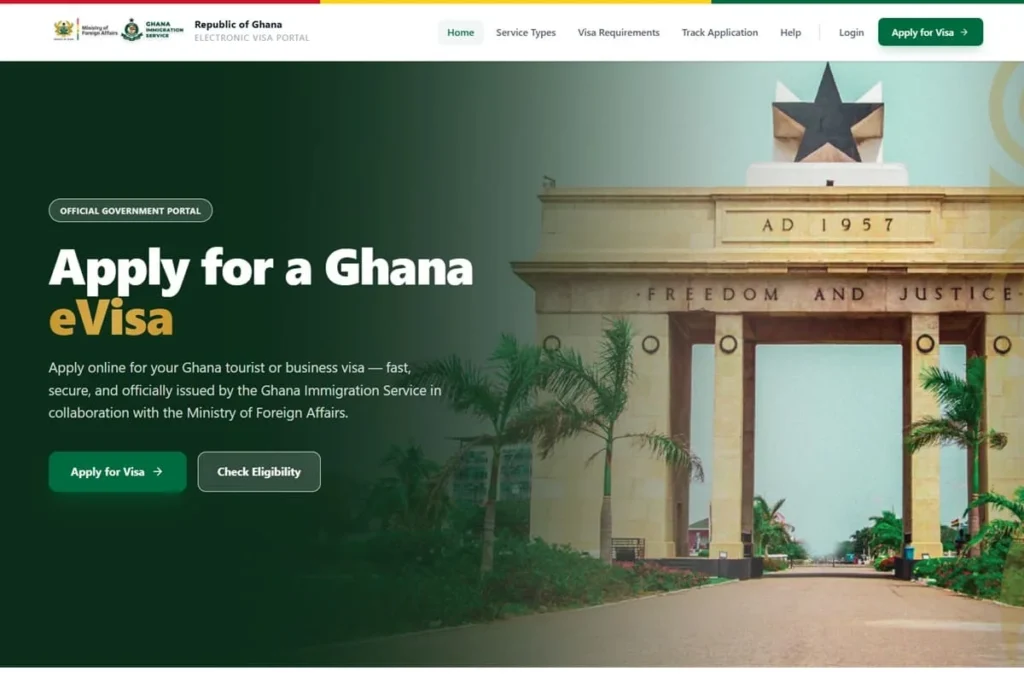
Ghana’s e-Visa application system now lists 48 entry points, expanding arrival choices beyond the seven airports previously available. The updated selection includes land crossings and maritime locations, giving eligible visitors more ways to plan journeys into the country.
The change is particularly relevant to travellers combining Ghana with neighbouring West African destinations. Those visitors can now identify a land crossing during their application instead of planning an airport arrival solely because of the online form’s earlier choices.
Ghana’s electronic visa portal supports online applications for tourist and business travel. Applicants can check their requirements, submit documents, pay and track progress through the system. Approval arrives digitally, allowing travellers to carry the document on a device or print it.
The broader entry list does not change the need to meet visa conditions. Travellers should confirm eligibility for their nationality and select the crossing they actually intend to use.
Airports, Borders and Ports Gain Coverage
The updated list comprises seven airports, 37 land crossings and four maritime or waterway entry points. Together, they bring the selectable total to 48.
Airport options include Accra, Kumasi, Tamale, Takoradi, Sunyani, Wa and Ho. Among the land crossings are Aflao and Akanu near Togo, Elubo near Côte d’Ivoire and Paga in northern Ghana.
The listed maritime locations include Tema Port, Takoradi Port, Jaway Wharf and Ellanda Wharf. Their inclusion broadens the types of arrival that applicants can specify.
Selecting a location in an application is a planning step, not a promise that every transport service will operate there. Travellers should separately confirm their route, the crossing’s current arrangements and the documents required for their journey.
Land Travel Becomes Easier to Plan
The greatest practical change may be for visitors arriving by road. A traveller planning several West African destinations can identify a Ghanaian border crossing before departure and align the visa application with the itinerary.
For example, Aflao and Akanu are relevant to journeys from Togo, while Elubo serves travel near Côte d’Ivoire. Paga provides another named option for travellers planning a northern route.
This flexibility can support tourism beyond a single arrival city. Visitors may build itineraries around several regions, local accommodation and attractions. However, the availability of an e-Visa entry option alone does not establish an increase in cross-border tourism.
Tour operators should confirm the intended crossing for each traveller rather than assume that an approval covering one itinerary automatically fits a changed route. That is especially important when a tour combines flights with overland travel.
How the Digital Application Works
Ghana Immigration Service operates the national e-Visa portal with the Ministry of Foreign Affairs. Applicants begin by checking entry requirements for their nationality and purpose of travel.
They then create an account, complete the form, upload the requested documents and pay before submission. The system provides a way to follow an application’s progress. An approved e-Visa is delivered electronically.
Travellers should review their passport information and arrival details carefully before submitting. A mistake in a name, document number or intended entry point can create avoidable problems during check-in or at the border.
The portal states that an approved e-Visa may be shown digitally or in print. It also makes clear that possession of the document does not automatically guarantee entry. An immigration officer makes the entry decision at the port.
Visitors should therefore travel with their passport, approval and any supporting documents relevant to their trip. They should check current official requirements again shortly before departure, since visa rules and border procedures can change.
What the Expansion Means for Tourism
Ghana’s digital visa system can make trip preparation more straightforward when travellers know where they can enter. Adding land and maritime choices helps align the application process with journeys that do not begin at an airport.
For tourism businesses, the change creates opportunities to design routes involving more of the country. A visitor arriving across a land border might spend time in a nearby region before travelling onward, spreading potential visitor spending beyond Accra.
The scale of that effect remains unmeasured. No visitor growth figure or forecast follows automatically from a longer entry-point list. The confirmed practical development is broader choice within the application process.
Check the Route Before Travelling
Visitors should verify three details before finalising a Ghana itinerary: their visa eligibility, their selected entry point and their transport route. Those checks matter especially for multi-country trips.
The move from seven airport choices to 48 listed locations makes Ghana’s e-Visa system more useful for varied arrivals. For travellers, its value lies in being able to plan the digital application around the journey they intend to take.