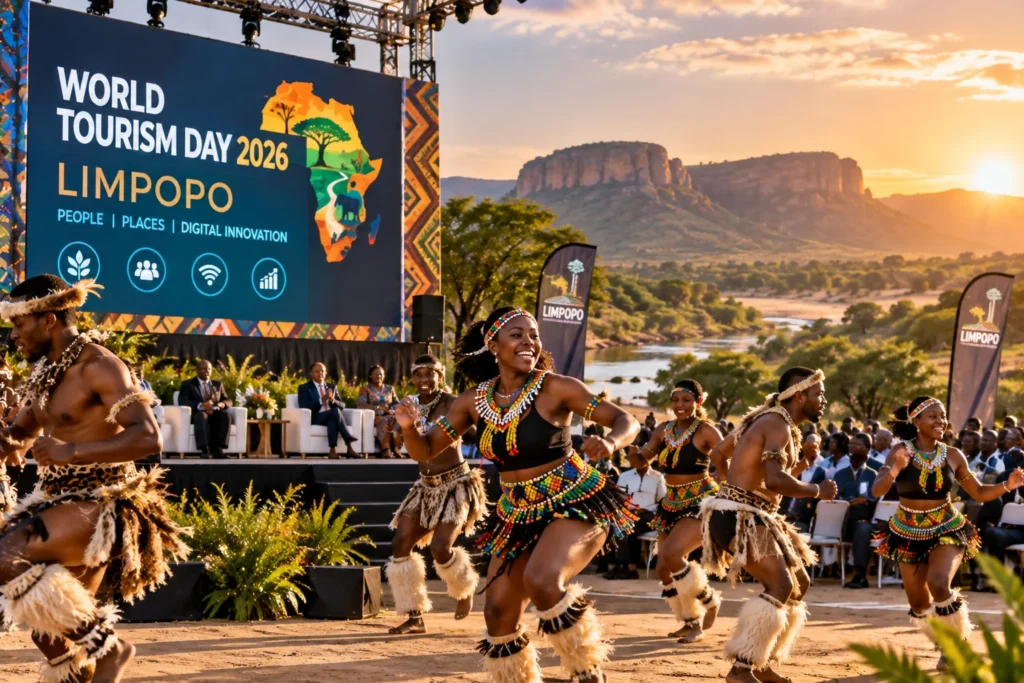
The Department of Tourism, in collaboration with the Limpopo Provincial Government and sector partners, hosted South Africa’s national World Tourism Day celebrations at the Legend Golf & Safari Resort in the Waterberg District, Limpopo. The official program forms a cornerstone of Tourism Month, an annual initiative designed to foster domestic travel, support localized enterprise development, and highlight the economic impact of the hospitality sector across the country.
The national gathering brought together government leadership, regional tourism authorities, technology innovators, and local cultural groups. By hosting the national event within the Waterberg region, official travel planners aim to direct visitor flow toward emerging provincial destinations outside conventional metropolitan and coastal travel hubs.
Official statements from the Ministry of Tourism emphasize that expanding regional itineraries remains essential to long-term sector growth. Distributing tourist activity into diverse landscapes creates sustainable revenue opportunities for local municipalities, rural conservation areas, and community-owned enterprises.
Advancing Tourism Through AI and Smart Infrastructure
The 2026 national commemoration convened under the official theme, “Growing South Africa’s Tourism Sector in the Digital Era.” The official agenda focused on the integration of artificial intelligence, data-driven destination management systems, and smart visitor tools across the national travel ecosystem.
Public sector advisories outline several key operational focus areas driven by digital adoption:
Enhanced Visitor Engagement: Deploying interactive digital platforms, virtual destination previews, and intelligent itinerary planning applications to streamline traveler journeys.
Smart Destination Governance: Utilizing real-time data analytics to manage visitor volume, monitor environmental impact, and improve municipal resource allocation.
Operational Efficiency for Enterprise: Supporting small, medium, and micro-enterprises (SMMEs) with modern digital booking systems, automated customer management, and targeted global marketing channels.
Inclusive Economic Access: Leveraging digital connectivity to showcase rural destinations, community-led cultural experiences, and eco-tourism initiatives directly to domestic and international travelers.
To demonstrate practical applications, the event featured a dedicated digital tourism activation alongside a Sustainability Village. The interactive showcase illustrated how eco-friendly hospitality practices and smart technology work together to build resilient, sustainable tourism models.
Strategic Focus on Limpopo as a Priority Tourism Hub
Limpopo was designated as the primary province of focus for national Tourism Month initiatives, reflecting a targeted government policy to expand South Africa’s tourism footprint. Official statements from Ministry leadership emphasize that long-term sector resilience relies on continuously offering domestic and international visitors new destinations, unique cultural encounters, and broader exploration opportunities.
| Strategic Tourism Pillar | Objectives and Focus Areas |
| Regional Diversification | Redirect visitor traffic to secondary destinations such as the Waterberg District to spread economic benefits. |
| Digital Integration | Provide local operators with AI-driven marketing and operational tools to enhance global competitiveness. |
| Sustainable Operations | Highlight community-led conservation, eco-lodges, and green energy adoption through the Sustainability Village platform. |
| Domestic Market Stimulation | Encourage affordable domestic exploration during Tourism Month through localized promotional campaigns. |
Limpopo offers diverse outdoor and heritage assets, including biosphere reserves, ancient cultural landscapes, and wildlife conservation areas. Departmental releases indicate that promoting these assets through digital channels allows regional destinations to compete effectively in the global marketplace while encouraging South Africans to explore hidden national attractions.
Looking Forward: Digital Inclusion and Regional Economic Impact
As South Africa accelerates its tourism recovery and expansion strategies, official programs emphasize that digital modernization must remain inclusive. Public agencies are coordinating training workshops and digital literacy programs to ensure rural operators, local artisans, and hospitality staff benefit directly from technological advancements.
By aligning provincial destination promotion with modern digital infrastructure, national tourism authorities aim to establish a more accessible, efficient, and sustainable tourism ecosystem capable of driving long-term economic development across all nine provinces.
For more travel news like this, keep reading Global Travel Wire