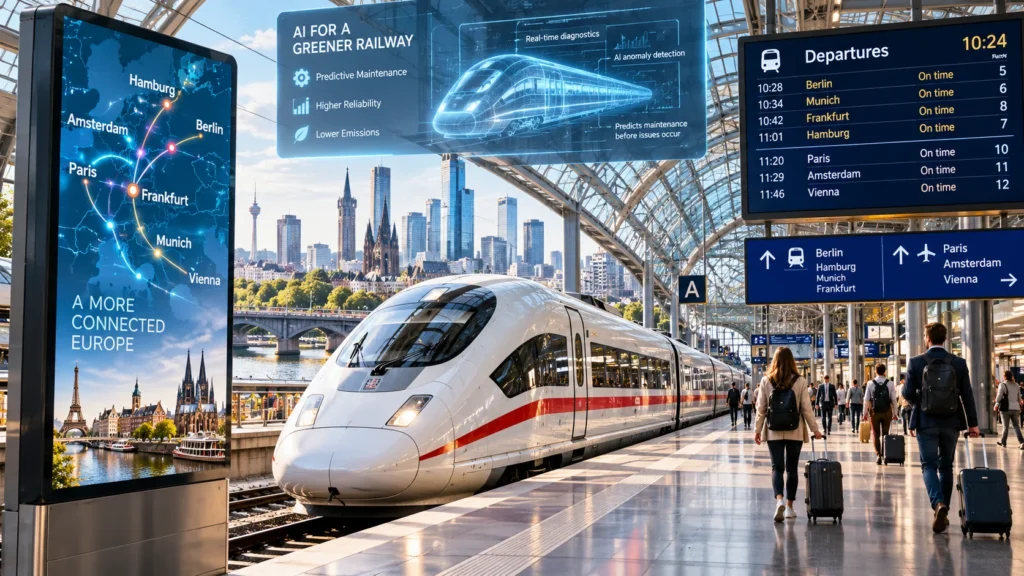
Germany’s national railway network stands as one of Europe’s most vital transport backbones, carrying millions of international tourists, business visitors, and regional travelers each year. Managed by state-owned operator Deutsche Bahn under the direction of the Federal Ministry for Digital and Transport, the country’s rail system is undergoing a massive structural transformation. Backed by a landmark 100-billion-euro public modernization initiative running through 2030, official infrastructure programs aim to restore long-term punctuality, increase network capacity, and integrate next-generation artificial intelligence technology into daily operations.
For international visitors navigating popular rail routes between cultural capitals like Berlin, Munich, Frankfurt, and Hamburg, understanding ongoing track upgrades and new digital assistance tools is essential for seamless holiday planning.
Germany Railway Modernization: Federal Investments and AI Technology Integration
The Federal Ministry for Digital and Transport has allocated substantial public funding to revitalize rail corridors, including a dedicated 42-million-euro government grant to advance driverless and automated train technologies. Unveiled during official industry transport expositions, national rail initiatives highlight how advanced sensor systems—combining LiDAR laser radar, ultrasonic sensors, and infrared camera arrays—can detect track obstacles and automatically initiate braking procedures at speeds up to 40 kilometers per hour in depot and station zones.
To improve passenger communication and operational efficiency across the national network, state railway programs are introducing a range of digital solutions:
Virtual Passenger Assistants: Interactive digital interfaces are being integrated into station terminals and mobile application channels to provide real-time schedule updates, platform changes, and route guidance.
Automated Maintenance Monitoring: Sensor-driven diagnostics enable maintenance teams to identify mechanical wear on tracks and rolling stock before breakdowns occur, minimizing unexpected delays.
European Train Control System Expansion: Federal infrastructure plans include expanding standardized digital safety signaling across high-speed corridors to harmonize cross-border European rail travel.
Autonomous Last-Mile Connections: Transport planners are evaluating automated road shuttles and micro-transit options to connect regional train stations with rural tourist destinations and suburban hubs.
Managing Corridor Upgrades: Travel Guidelines for International Visitors
While long-term capital investments aim to deliver high-performance rail transport, extensive track reconstruction requires temporary route adjustments across major travel corridors. Federal transport authorities emphasize that major track refurbishments are conducted in planned phases to preserve overall connectivity across the country.
When planning rail itineraries through Germany during major modernization cycles, international tourists should take note of several practical travel strategies:
Route Planning and Alternate Connections
During major corridor refurbishments—such as comprehensive multi-month track overhauls along primary East-West lines connecting Berlin and Hanover—direct rail schedules may be rerouted or supplemented by express coach services. Travelers are encouraged to check official Deutsche Bahn digital applications prior to departure to review alternative express connections or adjusted travel durations.
Seat Reservations and Off-Peak Travel
Given high passenger volumes on long-distance Intercity Express trains, official tourism boards and railway authorities strongly recommend purchasing reserved seating when booking tickets. Traveling during mid-day or off-peak weekday hours provides a more relaxed journey and greater flexibility when navigating busy interchange hubs like Frankfurt Central Station or Cologne Central Station.
Utilizing Regional Rail Passes
Germany’s integrated public transit structure allows travelers to combine high-speed long-distance services with regional trains, streetcars, and city S-Bahn networks. Official regional transport passes provide unlimited access to local transit networks, making it easy to explore historic old towns, alpine valleys, and river basins beyond major metropolitan centers.
Premier German Destinations Accessible by Train
Germany’s rail network provides direct, scenic access to world-renowned cultural landmarks, UNESCO World Heritage sites, and natural reserves. Planning rail-focused itineraries allows visitors to explore the country’s diverse regions comfortably and sustainably.
Bavaria and the Alps: High-speed rail lines link Munich directly to alpine gateways like Garmisch-Partenkirchen and Berchtesgaden, offering easy access to mountain hiking trails, historic castles, and alpine lakes.
The Rhine and Moselle Valleys: Regional rail lines follow the winding Rhine River, offering scenic views of hillside vineyards, medieval fortresses, and historic riverfront towns like Bacharach and Cochem.
The Baltic Sea Coast: Direct train services connect Berlin with coastal destinations such as Rügen Island and historic Hanseatic cities like Lübeck and Stralsund, famous for brick Gothic architecture and coastal resorts.
The Black Forest Region: Specialized scenic railways navigate the dense woodlands and mountain passes of southwestern Germany, connecting Freiburg with picturesque lakes and traditional craft villages.
For more travel news like this, keep reading Global Travel Wire