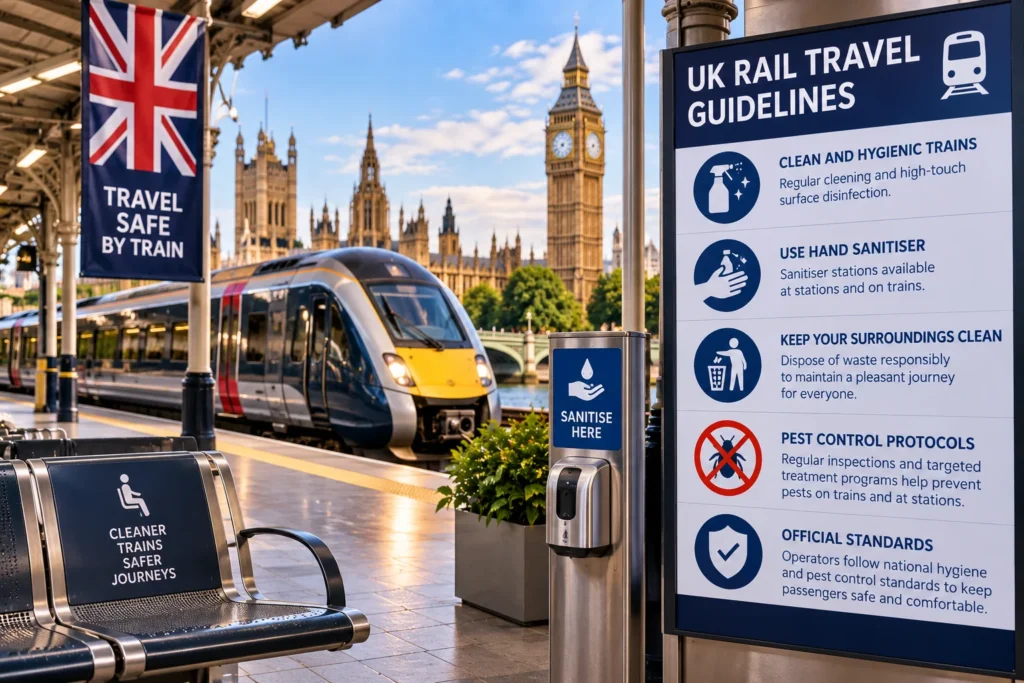
Maintaining high standards of clean, reliable public transit across the United Kingdom remains a top priority for national transport authorities and passenger rail operators. Serving millions of daily commuters and international visitors traveling between major hubs like London, Kent, and the scenic coastlines of East Sussex, the UK passenger rail network relies on continuous maintenance, routine deep-cleaning cycles, and rapid pest management protocols.
When localized pest concerns or technical hygiene issues arise at train care depots, transport operators work alongside public health guidelines and labor unions to resolve incidents quickly. Understanding official passenger safety measures, depot maintenance standards, and transit guidelines helps international tourists navigate train travel with complete confidence.
Official Train Depot Maintenance and Hygiene Standards
Rail operators across the United Kingdom adhere to rigorous cleaning regimes established under national transport safety frameworks. Passenger carriages, driver cabs, and depot maintenance facilities undergo multi-stage sanitization to preserve public health and ensure a comfortable environment for both passengers and railway crew.
Key operational protocols maintained across UK train care depots include:
Scheduled Overnight Deep Cleaning: Rail carriages receive comprehensive interior cleaning during depot stabling hours, including carpet vacuuming, surface disinfection, and seat upholstery treatment.
Rapid Response Inspections: When frontline staff or cleaning crews identify potential pest risks or cleanliness concerns inside train cabs or passenger coaches, affected carriages are immediately removed from service for specialized treatment.
Professional Pest Control Deployments: Transport companies engage certified pest-control specialists to conduct thorough inspections, thermal heat treatments, and targeted eradication measures within depot facilities and rolling stock.
Staff Health and Safety Measures: Railway operators consult continuously with union representatives and occupational health officers to provide protective gear, safe working conditions, and clear reporting procedures for transit personnel.
By taking affected carriages offline for thorough treatment before returning them to active passenger routes, rail operators uphold essential health and safety standards across regional transit networks.
Essential Travel Guidance for Rail Passengers in the UK
Traveling by train remains one of the most convenient, scenic, and environmentally friendly ways to explore England, Scotland, and Wales. To ensure a smooth journey while operators maintain high service standards, international visitors and daily commuters can follow several practical travel guidelines:
Monitor Live Travel Updates
Before heading to the station, passengers should check real-time service updates through official rail operator applications or national rail inquiry services. On occasions when specific trains are temporarily withdrawn for routine maintenance or localized pest-control procedures, digital travel channels provide immediate information regarding replacement services, alternate routes, or adjusted departure times.
Practicing Standard Personal Hygiene
While passenger carriages undergo regular cleaning, practicing basic travel hygiene enhances personal comfort during transit:
Keep luggage secured on elevated racks or designated storage areas off carpeted floors.
Inspect seating areas briefly before settling in for long journeys.
Store personal belongings and outerwear in zippered bags when using busy regional routes.
Utilizing Alternative Transit Services
If localized maintenance actions lead to temporary service alterations on specific regional lines, rail operators typically arrange ticket acceptance on alternative train routes or deploy dedicated replacement bus services. National conditions of carriage guarantee that ticket holders receive clear guidance and alternative transit options during scheduled or unexpected service adjustments.
Exploring Scenic Rail Routes Across Southern England
Despite occasional localized maintenance adjustments, the rail network across southern England continues to connect visitors to historic cities, picturesque countryside, and iconic coastal landmarks. Traveling by rail provides seamless access to world-renowned tourist destinations:
London to Kent Corridor: Rail lines running east from London connect international travelers to the historic cathedral city of Canterbury, the maritime heritage of Greenwich, and the coastal white cliffs of Dover.
East Sussex Coastal Line: Scenic regional services connect London terminal stations to seaside destinations like Hastings, Eastbourne, and Brighton, featuring historic pier structures, art galleries, and coastal hiking trails along the South Downs.
The Surrey and Sussex Countryside: Trains traveling south pass through rolling green hills, historic market towns, and grand country estates, making day trips from metropolitan hubs easy and accessible.
For more travel news like this, keep reading Global Travel Wire