For decades, the United States passport was recognized among the world’s most versatile travel documents, providing seamless entry to scores of international destinations. However, official international mobility reports confirm that the American passport has experienced a multi-year decline in relative global standing.
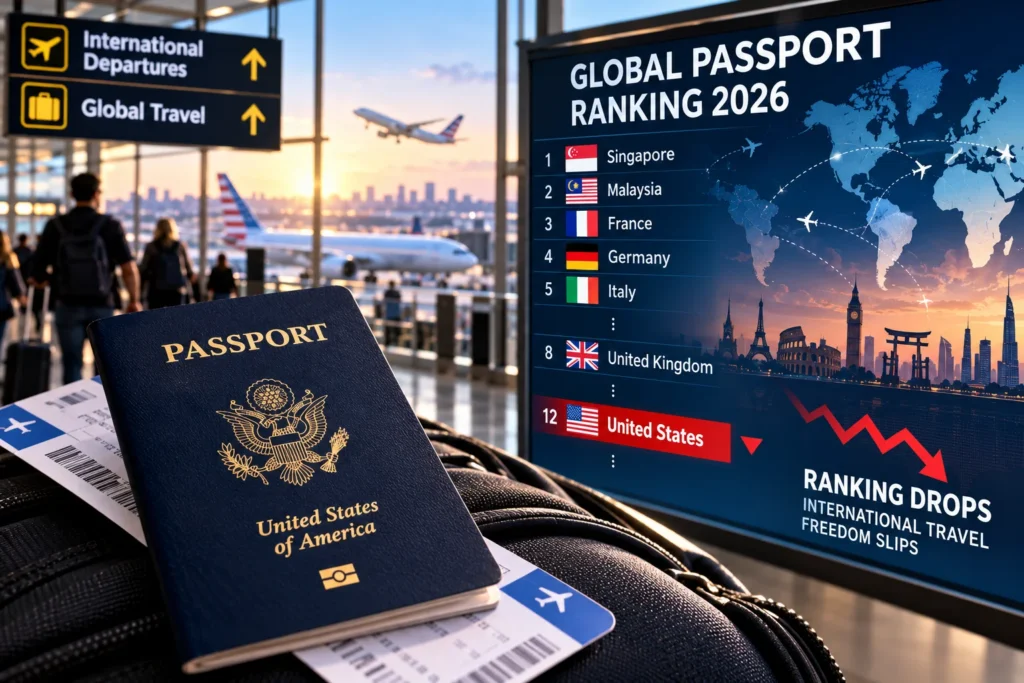
The global mobility sub-index of the 2026 Global Passport Index places the United States in 12th position overall, continuing a multi-year drop from its top ranking when the index was introduced in 2021. While the overarching index evaluates broader national factors such as economic investment opportunities and standard-of-living metrics, the decline is primarily driven by reduced visa-free access for American passport holders.
Simultaneously, alternative international evaluation models reflect similar shifts. According to official findings from the 2026 Henley Passport Index, the United States currently ranks 10th globally—tied with Iceland—providing entry to 180 destinations without a pre-arranged visa. Two decades ago, the U.S. travel document provided near-unrivaled global access, trailing only select Nordic nations.
Shrinking Visa-Free Access and Travel Mobility Indicators
The fundamental driver behind the lower standing is a sharp reduction in global travel mobility. The country’s sub-ranking for pure travel freedom dropped from 10th position in 2021 to 41st internationally in 2026. Consequently, dozens of foreign passports now grant broader visa-exempt entry across international borders compared to the American passport.
This shift requires American travelers to navigate additional administrative entry procedures, complete electronic travel authorizations, or pay mandatory entry fees prior to departing for foreign destinations.
A primary example of this policy shift occurred when the government of Brazil officially reinstated mandatory visa requirements for U.S. tourists. Under the updated regulations, American travelers entering Brazil must obtain an electronic visa (e-Visa) prior to travel at a standardized fee of $80.90.
Principles of Bilateral Reciprocity and International Diplomacy
Foreign ministry officials in several nations cite the diplomatic principle of reciprocity as the main reason for revising entry requirements. Reciprocity means a government aligns its entry rules with the conditions imposed on its own citizens when visiting foreign nations. Because the United States maintains formal visa and security screening requirements for visitors from many regions, several foreign governments have introduced matching requirements for arriving Americans.
Global mobility research indicates that full bilateral visa reciprocity remains relatively uncommon across international aviation routes. Historically, higher-income nations enjoyed broader unilateral visa-free access than they offered in return. However, international border management trends indicate a growing shift toward strict bilateral equity, prompting several governments to remove unilateral visa exemptions.
The rise of automated Electronic Travel Authorizations (ETAs) and mandatory digital entry registrations across international destinations has further standardized entry compliance globally.
Operational Impacts for American Leisure and Corporate Travelers
The evolving landscape of international entry requirements changes how American travelers organize international trips. The need for advance visa applications and electronic registrations requires longer lead times, added documentation, and higher expenses for leisure tourists and corporate travelers.
Key practical considerations for international journeys include:
Advance Processing Lead Times: Travelers must submit digital visa requests weeks in advance rather than relying on automated arrival stamps at foreign ports of entry.
Increased Travel Budget Costs: Electronic visa processing fees, third-party administrative charges, and mandatory health declaration registrations add to total travel expenses.
Expanded Compliance Standards: Foreign immigration services require strictly verified return itineraries, confirmed lodging arrangements, and proof of sufficient travel funds.
Despite the decline in relative rankings, the U.S. passport remains a robust travel document, offering access to 180 countries and territories without a prior visa. However, as foreign governments modernize digital border protocols and prioritize reciprocal visa rules, global mobility trends suggest American travelers must prepare for a more structured, document-intensive international travel environment.
For more travel news like this, keep reading Global Travel Wire