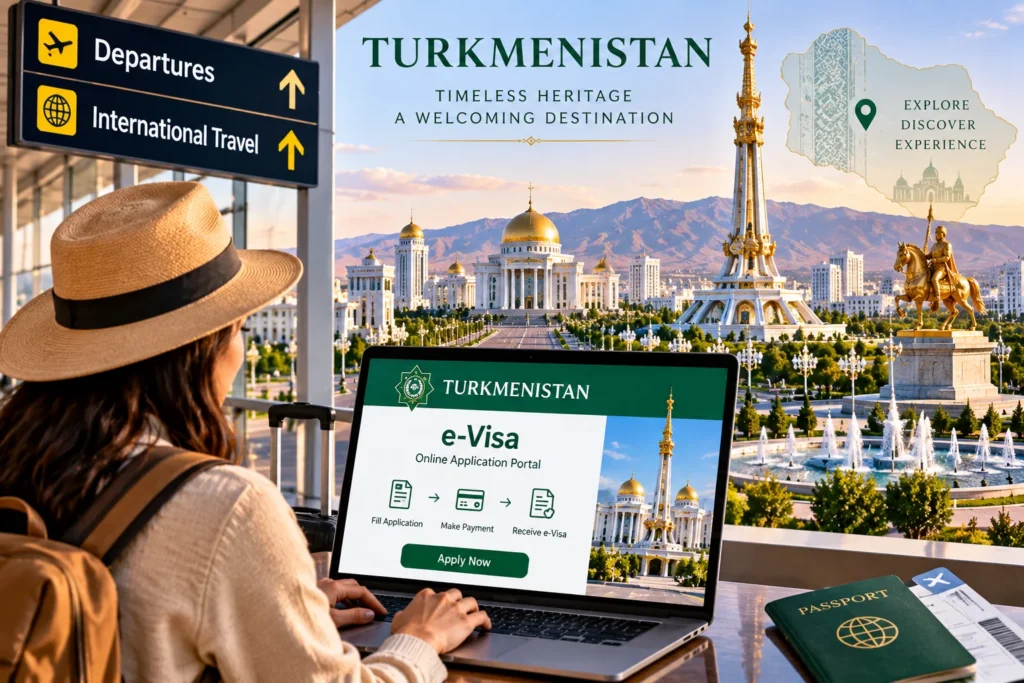
The State Migration Service of Turkmenistan has officially launched a unified electronic visa system, introducing a streamlined digital framework for foreign nationals seeking entry into the country. Effective October 1, 2026, all electronic visa processing, documentation verification, and application status tracking are mandated to occur exclusively through a dedicated online portal operated by national migration authorities.
The implementation of the digital platform marks a significant modernization effort designed to enhance international cooperation, improve administrative efficiency, and simplify entry procedures for international visitors, business representatives, and humanitarian personnel.
Key Policy Changes for Tourist Visa Applicants
The most notable procedural change introduced under the new electronic platform concerns tourist visa applications. Under the new guidelines for the e-TU tourist visa category, an official letter of invitation is no longer listed among the mandatory required documents.
Instead, supporting documentation such as travel itineraries, confirmed hotel reservations, and travel medical insurance are designated as optional supporting records during the application upload process.
This administrative update represents a structural departure from historical entry regulations. Previously, foreign tourists were required to secure an official letter of invitation arranged through licensed local host organizations and formally endorsed by state migration authorities prior to visa issuance. The current digital process aligns with national migration legislation adopted in 2025, which established the legal foundation for electronic visa issuance without requiring separate invitation sponsorships for leisure travelers.
Available Visa Categories and Application Protocols
The online portal currently categorizes digital entry permissions into three primary operational types:
e-TU (Tourism): Formulated for leisure travel, cultural sightseeing, and independent tourism, featuring simplified document submission without mandatory invitation letters.
e-BS (Business Travel): Designed for commercial stays up to 30 days. Applicants in this category must upload an official invitation letter from a corporate entity or organization registered within Turkmenistan detailing the visitor’s role.
e-HM (Humanitarian Purpose): Allocated for non-governmental and international missions. Applicants must present official assignment documentation issued by recognized humanitarian organizations or United Nations agencies.
All applicants, regardless of visa class, must provide a digital scan of their passport’s biographical page showing a minimum validity period of six months from the planned date of entry. Submissions must also include a recent color passport photograph meeting International Civil Aviation Organization standards and a valid email address for administrative verification, application updates, and final document delivery.
Processing Timelines and Financial Terms
To accommodate varying travel schedules, the State Migration Service has established three tiered processing speeds within the digital system:
Regular Processing: Standard applications are processed within seven business days.
Urgent Processing: Accelerated reviews are completed within three business days.
Super-Urgent Processing: Expedited requests offer a 24-hour turnaround time for urgent travel needs.
Applicable service fees are dynamically calculated during the online application sequence based on specific user parameters, selected processing speeds, and nationality criteria. All fee quotes are denominated in United States Dollars, with payments processed securely through the portal upon submission.
Integrated Digital Infrastructure and Tourism Outlook
The centralized platform allows applicants to track the real-time status of their submissions by providing basic identification credentials, such as passport details or confirmation reference numbers. The service operates alongside parallel digital systems managing address registrations for foreign nationals during their stay, consolidating entry and residency procedures into comprehensive electronic databases.
By eliminating primary administrative bottlenecks—most notably the prior invitation letter requirement—tourism state authorities anticipate a gradual rise in international visitor interest. The digital transition positions the country to better connect with global travel networks across the Silk Road region, offering international travelers easier access to historical monuments, unique natural landscapes, and cultural heritage sites.
For more travel news like this, keep reading Global Travel Wire