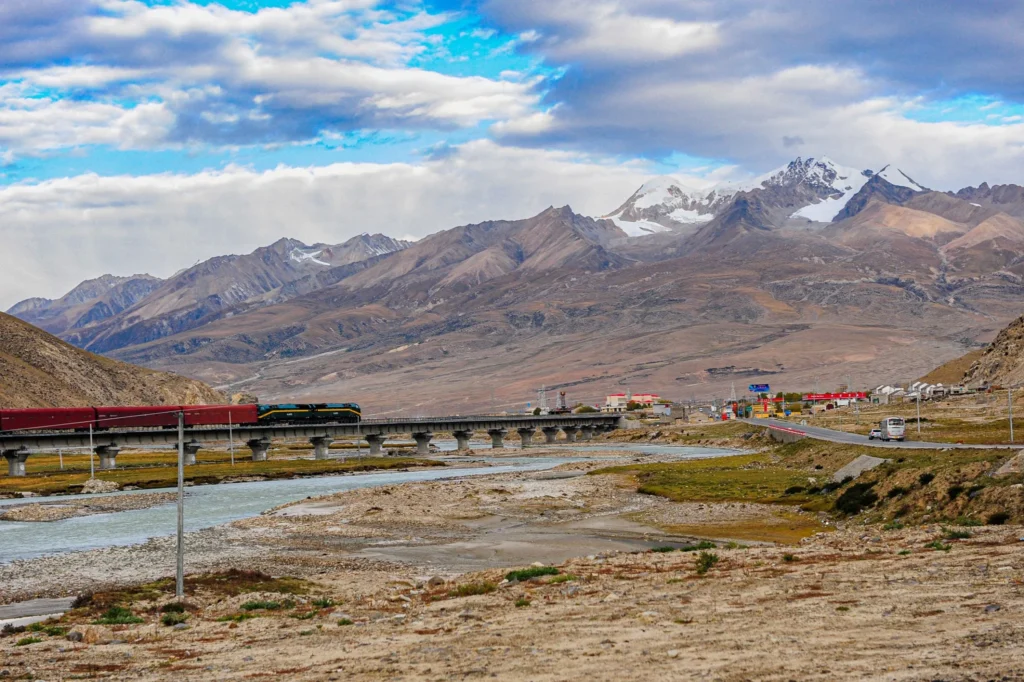
The Qinghai-Tibet Railway continues to stand as one of the world’s most impressive engineering achievements in modern passenger transport. Linking Xining, the capital of Qinghai Province, directly with Lhasa in the Tibet Autonomous Region, the 22-hour rail journey crosses the expansive Qinghai-Tibet Plateau, reaching elevations that exceed 16,500 feet above sea level.
Operating at altitudes where atmospheric pressure and oxygen concentration drop significantly, the passenger line incorporates specialized environmental technologies to ensure safety, health, and comfort during transit across high-elevation terrain.
Engineering Solutions for High-Altitude Oxygen Regulation
To address thin atmospheric air along the route, passenger trains operating on the Qinghai-Tibet line are equipped with specialized oxygen supply infrastructure. Rail car interiors feature centralized oxygen-enrichment systems that increase overall cabin oxygen concentration as the train ascends above critical altitude markers.
In addition to ambient cabin systems, individual oxygen outlets and personal oxygen dispensing units are built directly into passenger compartments, sleeper berths, and seating areas. Passengers can connect personal tubing to these ports if they experience symptoms of mild altitude adjustment.
The passenger cars are specifically engineered with pressurized sealing, ultraviolet-filtering glass to protect against intense high-altitude sunlight, and automated environmental sensors that dynamically monitor interior air quality throughout the 22-hour journey.
Scenic Corridors and Passenger Amenities Across the Plateau
Stretching across more than 1,900 kilometers, the railway line navigates diverse high-altitude ecosystems across Western China. The route provides passengers with direct views of snow-capped mountain ranges, glacial rivers, expansive alpine grasslands, and high-altitude lakes such as Qinghai Lake and Cuona Lake.
The rail corridor traverses protected wildlife sanctuaries, including the Hoh Xil Nature Reserve, where passengers can frequently observe protected plateau fauna, such as Tibetan antelopes, wild yaks, and Tibetan gazelles, through broad panoramic train windows.
The passenger fleet features multi-class sleeper accommodations, including soft-sleeper four-berth cabins and hard-sleeper six-berth compartments, allowing travelers to rest comfortably during extended overnight transit. Full-service dining cars operate on board, providing cooked meals, warm beverages, and regional dishes tailored for long-distance travel across remote plateau regions.
World Heritage Landscapes and Regional Infrastructure Development
The construction and ongoing operation of the Qinghai-Tibet Railway represent a landmark achievement for state transport infrastructure. Overcoming extreme engineering hurdles—such as building tracks across delicate permafrost layers and designing Tanggula Station, the world’s highest railway station situated at 16,640 feet above sea level—the line serves as a primary transport artery for the region.
National tourism statistics highlight that direct rail access has significantly expanded cultural tourism, regional commerce, and travel accessibility between central provinces and the Tibet Autonomous Region. The route provides an affordable, accessible alternative to air travel, allowing passengers to gradually acclimate to rising elevations while experiencing the natural landscape of the Qinghai-Tibet Plateau.
By integrating advanced safety technology, medical-grade oxygen support, and comfortable passenger amenities, the Qinghai-Tibet Railway remains a bucket-list journey for global travelers seeking to explore one of the world’s most remote geographical regions.
For more travel news like this, keep reading Global Travel Wire