Madrid, Barcelona and Lisbon are pursuing airport developments that could reshape Southern European travel, strengthening connections and supporting tourism growth. Their competing strategies combine larger infrastructure, international airline networks and ambitions to capture more long-haul passengers.
Madrid-Barajas handled 68.18 million passengers in 2025, ahead of Barcelona-El Prat’s 57.48 million and Lisbon’s 36.1 million. However, Barcelona recorded the fastest annual growth among the three, increasing passenger traffic by 4.4%.
The Spain and Portugal airport expansion race now extends beyond annual passenger rankings. Its tourism significance lies in additional routes, smoother transfers and stronger access to destinations across the Iberian Peninsula.
For international visitors, the developments could eventually broaden airline choice and improve connections between Europe, the Americas, Africa and Asia.
Madrid Strengthens Its International Gateway
Madrid enters this competition with the largest passenger operation and an established connecting network, particularly across Latin America.
Its international commercial passenger traffic reached 51.39 million in 2025, rising 5.5%. Meanwhile, domestic commercial traffic declined 4.2%, highlighting international demand’s growing importance.
Airlines scheduled almost 33.9 million Madrid seats for winter 2025–26, an increase of 4.6%. Planned Asia-Pacific capacity rose 33.5%, while Middle Eastern capacity increased 28.6%.
Latin American seats also climbed 10.5%, reinforcing a market central to Madrid’s position as an intercontinental gateway.
These scheduled increases illustrate airline interest, although seat availability alone does not establish how many passengers ultimately travelled.
The airport investment programme for 2027–2031 allocates approximately €4.488 billion to airports in the Madrid region. That regional allocation forms part of a wider national programme approaching €13 billion.
For tourism businesses, stronger international access could support hotels, conferences, attractions and onward journeys beyond the Spanish capital.
Barcelona Pursues More Long-Haul Connections
Barcelona’s challenge differs from Madrid’s. It already attracts substantial international leisure and business traffic, while seeking a deeper role in connecting aviation.
Passenger numbers increased 4.4% in 2025, compared with Madrid’s 3.0% growth. Barcelona’s route count also reached 379, rising from 356.
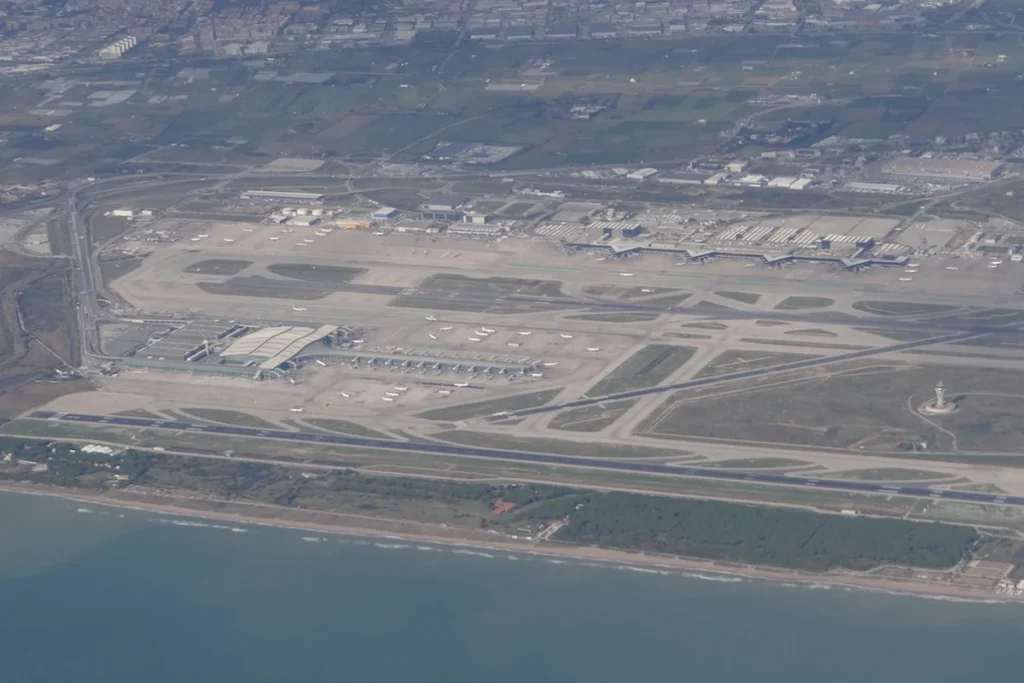
Its expansion plan involves approximately €3.2 billion in investment, including a satellite terminal and an extension of the sea runway.
The proposed 500-metre extension would bring that runway to 3,160 metres, supporting the airport’s ambitions for greater intercontinental capability.
Nevertheless, infrastructure must work alongside airline networks. Connecting passengers can help sustain long-haul services by supplementing demand from travellers beginning or ending journeys locally.
Barcelona’s development also involves environmental considerations around La Ricarda, making implementation central to its future capacity.
For visitors, the potential benefit is wider access to Catalonia through international services. Hotels, cultural attractions and business events could gain from improved connectivity.
Lisbon Prepares for a Longer Transformation
Lisbon recorded its highest annual passenger total in 2025, handling 36.1 million travellers, an increase of 2.9%.
Its competitive strength rests partly on Atlantic geography and TAP’s connections between Europe, the Americas and Africa.
However, Portugal’s largest infrastructure change remains a longer-term project. The planned Luís de Camões Airport carries estimated investment of €7.9 billion to €8.9 billion at 2024 prices.
The timetable targets construction beginning in 2029 and completion by 2033. Opening is expected from 2035, following testing and certification.
Those milestones represent plans, rather than capacity already available to airlines or passengers.
Meanwhile, TAP’s reprivatisation introduces another strategic variable. Portugal authorised negotiations with Air France-KLM and Lufthansa in September 2026 over a potential sale of up to 44.9%.
Any eventual agreement could influence partnerships, feeder traffic and network planning. Its practical effects will depend on the final ownership arrangements and airline strategy.
Tourism Gains Depend on Usable Connections
The three airports can also complement one another through airline schedules.
Singapore Airlines plans five weekly Singapore–Barcelona–Madrid services from 26 October 2026, using an Airbus A350-900. The operation would add Madrid as its second Spanish destination.
Such arrangements show how airlines can combine tourism demand across multiple cities within one international network.
The economic stakes are substantial. International visitors spent €134.7 billion in Spain during 2025, up 6.8%. Catalonia accounted for €24.8 billion, while the Madrid region received €17.9 billion.
Improved access could help destinations attract visitors and distribute spending across accommodation, dining, transport and attractions.
However, expansion does not automatically guarantee lower fares or new routes. Airline decisions, operating capacity and connection quality will shape traveller benefits.
Madrid holds the current scale advantage, Barcelona seeks greater intercontinental reach, and Lisbon prepares for a major future transformation.
Travellers should compare nonstop availability, connection times and seasonal frequencies as this aviation competition develops.