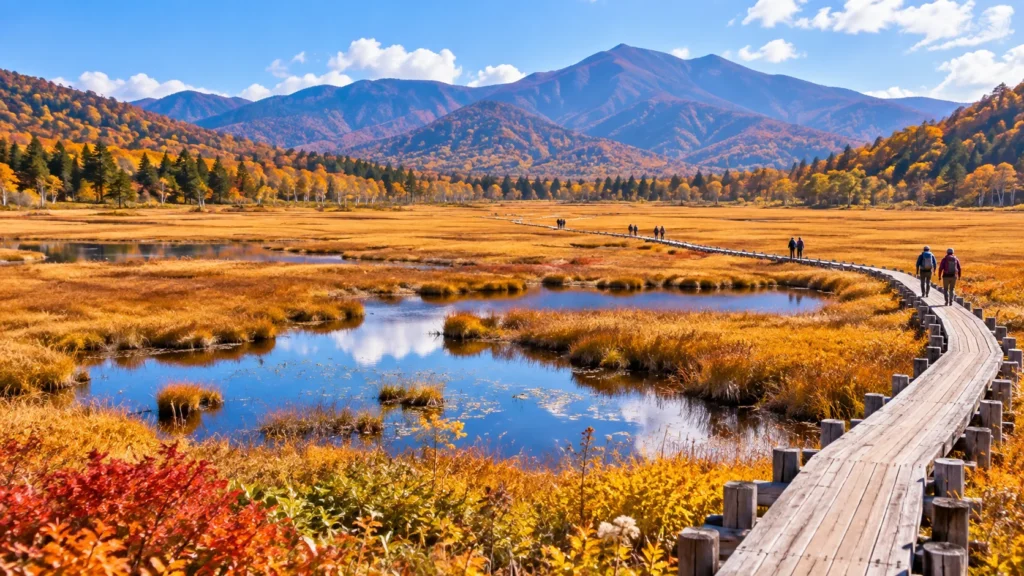
The vast, high-altitude marshlands of Ozegahara have officially entered their peak autumn foliage season, creating a breathtaking visual spectacle across central Japan. Spanning the alpine borders of Gunma, Fukushima, and Niigata prefectures within Oze National Park, the region’s lush wetlands have transformed from summer greens into brilliant hues of amber, orange, and radiant gold.
This seasonal phenomenon, known locally as kusamomiji or grass autumn leaves, marks one of the most celebrated botanical events in Japan’s mountain regions. Unlike forest foliage, which relies on broadleaf trees, the high marshland landscape glows with golden alpine flora, attracting outdoor enthusiasts, nature photographers, and hikers from around the globe.
Golden Grasses and Alpine Flora Glow Across Oze National Park
The transformation across the Ozegahara plateau is driven by unique marshland flora that blanket the expansive alpine floor. Key plant species leading the seasonal change include kinkoka, commonly known as bog asphodel, alongside yamadori-zenmai or cinnamon ferns. As autumn temperatures drop, these unique marsh plants turn vibrant shades of rust, copper, and bright gold.
Punctuating the shimmering golden plain are hundreds of quiet marshland pools known as tanguto. These pristine bodies of water feature floating red hitsujigusa, or pygmy waterlilies, whose crimson pads create a stark, beautiful contrast against the surrounding amber grasses and clear mountain skies.
Visitors exploring the national park can experience this landscape along an extensive network of elevated wooden boardwalks. These raised pathways allow travelers to journey through the fragile wetland ecosystem without disrupting the delicate soil or protected plant life, ensuring a sustainable, low-impact viewing experience.
Ideal Viewing Timeline and Seasonal Hiking Guidance
According to official seasonal guidance from the Oze Preservation Foundation, the peak viewing period for the golden grass foliage extends through mid-October. While early autumn rain showers led to a quieter start for hiking turnouts during late September, clearing skies and crisp mountain air are creating optimal conditions for mid-season trail exploration.
Park officials note that the grass foliage represents just the first phase of the region’s broader autumn transition. As the grass color reaches its peak, surrounding mountain forests featuring beech and maple trees will begin their own dramatic color changes, wrapping the valley in rich scarlet and deep golden tones.
Because of the high elevation of the Ozegahara marshland—which sits roughly 1,400 meters above sea level—temperatures drop rapidly in the early morning and late afternoon hours. Official park advisories urge all visiting hikers and overnight travelers to prepare appropriately by carrying insulated, layered clothing, as morning frost forms regularly across the wooden boardwalks during this time of year.
Eco-Friendly Travel and Sustainable Wetland Conservation
Ozegahara is widely recognized as a pioneer in sustainable tourism and environmental conservation within Japan. The area implemented strict “Leave No Trace” policies decades ago, including mandatory garbage carry-back rules and the prohibition of vehicle traffic within core wilderness zones.
Travelers accessing the national park typically enter through primary trailheads such as Hatomachi-toge in Gunma Prefecture, utilizing eco-friendly shuttle buses designed to limit regional carbon emissions and preserve air quality within the park boundaries.
By balancing low-impact tourism infrastructure with active conservation, local management organizations ensure that the delicate alpine ecosystem remains protected for future generations. For travelers seeking an unforgettable autumn retreat, the golden expanse of Ozegahara delivers an extraordinary encounter with Japan’s wild, untouched natural beauty.
For more travel news like this, keep reading Global Travel Wire