India is rapidly asserting itself as one of the world’s most influential travel and hospitality powerhouses, fueled by strong economic fundamentals, expanding digital infrastructure, and surging international interest. During a high-level industry panel organized by the World Travel and Tourism Council, prominent global business executives and government leaders gathered to discuss strategic frameworks needed to convert India’s cultural diversity and infrastructure investments into sustained global leadership.
Hosted by international broadcaster Richard Quest, the leadership forum featured Union Minister of Tourism Gajendra Singh Shekhawat alongside prominent industry leaders, including Zubin Karkaria, Founder and Chief Executive Officer of VFS Global; Puneet Chhatwal, Chief Executive Officer of Indian Hotels Company; and Gaurav Bhatnagar, Co-Founder of TBO.com. The dialogue focused on eliminating operational friction, streamlining border entry processes, and expanding marketing initiatives beyond traditional regional circuits.
Moving Beyond Traditional Tourist Corridors
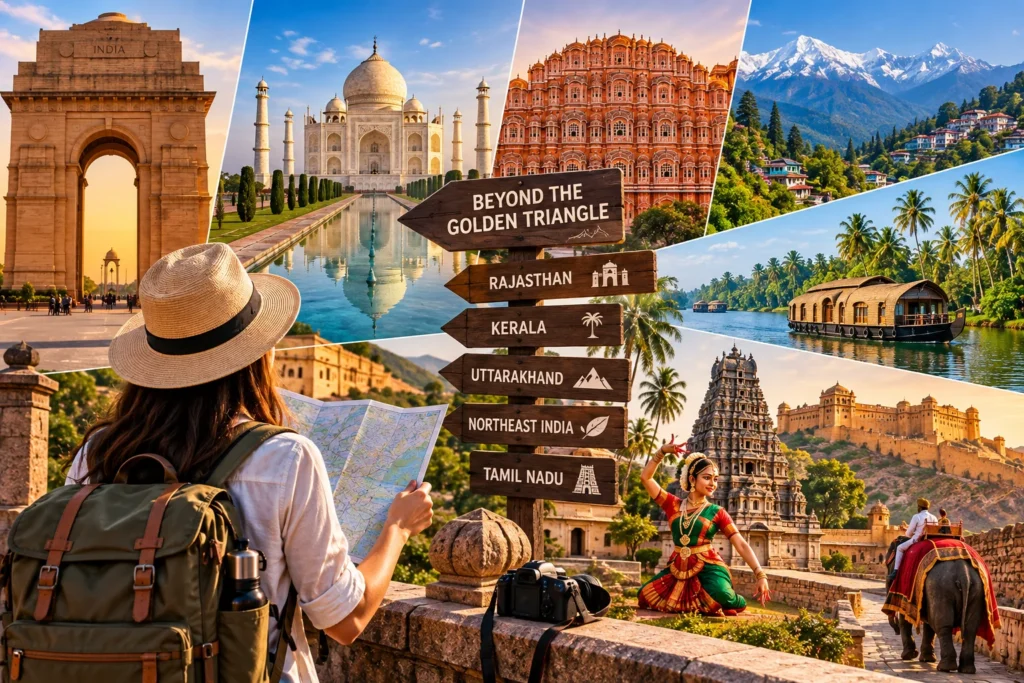
Reflecting on nearly three decades of direct experience across corporate, inbound, and outbound aviation markets, Zubin Karkaria emphasized that India must reframe how it presents its destination assets to international travelers. While historic circuits like the Golden Triangle—comprising Delhi, Agra, and Jaipur—have traditionally served as the primary gateway for first-time visitors, sustainable growth requires showcasing the full geographical and cultural depth of the entire nation.
Karkaria noted that India should not be marketed as a single-visit destination. With distinct regional cuisines, UNESCO World Heritage sites, wellness traditions, and ecological reserves scattered across every state, individual provincial governments must take direct ownership in promoting their unique local experiences to foreign markets. By expanding international marketing campaigns to include lesser-known states, destination marketing organizations can attract repeat international visitors and prevent overtourism in primary urban hubs.
Eliminating Friction in International Visitor Mobility
A central theme of the panel focused on reducing entry barriers and creating a seamless travel journey for arriving guests. Seamless mobility requires combining secure digital identity verification, simplified visa processing, and robust transport connectivity. When processing steps are modernized, potential travelers face fewer administrative hurdles, directly increasing booking conversion rates for international flight corridors and hotel chains.
Public-private collaboration plays a vital role in executing these operational upgrades. As government agencies modernize customs and immigration checkpoints, private technology providers and global visa service specialists continue to deploy biometric automation and digitized application platforms. These technological enhancements ensure that visitor verification remains rigorous while delivering a modern, welcoming entry experience at national airports.
Multi-State Ownership and Decentralized Destination Marketing
To convert global interest into actual visitor arrivals, state tourism boards are being urged to work hand-in-hand with central authorities and private operators. Each Indian state holds distinct cultural assets, coastal corridors, adventure tourism circuits, and heritage centers capable of competing on the world stage.
Key strategies for state-level tourism expansion include:
Regional Circuit Development: Creating thematic travel itineraries—such as eco-tourism trails, spiritual heritage paths, and culinary routes—that connect adjacent states.
Direct Private Sector Engagement: Collaborating with global travel platforms, hotel chains, and tour aggregators to ensure local accommodation and experiences are easily bookable online.
Targeted Destination Branding: Launching dedicated international promotional campaigns tailored specifically to key source markets in Europe, North America, the Middle East, and Southeast Asia.
When regional governments actively showcase their distinct offerings, travelers gain compelling reasons to extend their stay durations and explore diverse landscapes throughout the subcontinent.
Economic Scale and Strategic Future Outlook
The travel and tourism sector remains an essential pillar of India’s long-term economic development. According to official research from the World Travel and Tourism Council, the sector’s total economic contribution continues to expand at a rapid pace, supporting tens of millions of jobs nationwide and driving significant infrastructure development in transport, hospitality, and civil aviation.
Looking ahead, industry leaders agree that aligning national tourism policies with state-level execution will ensure India fulfills its potential as a global travel leader. By removing administrative friction, modernizing travel infrastructure, and actively promoting all regions of the country, India is establishing a high-value, sustainable foundation for the future of international tourism.
For more travel news like this, keep reading Global Travel Wire