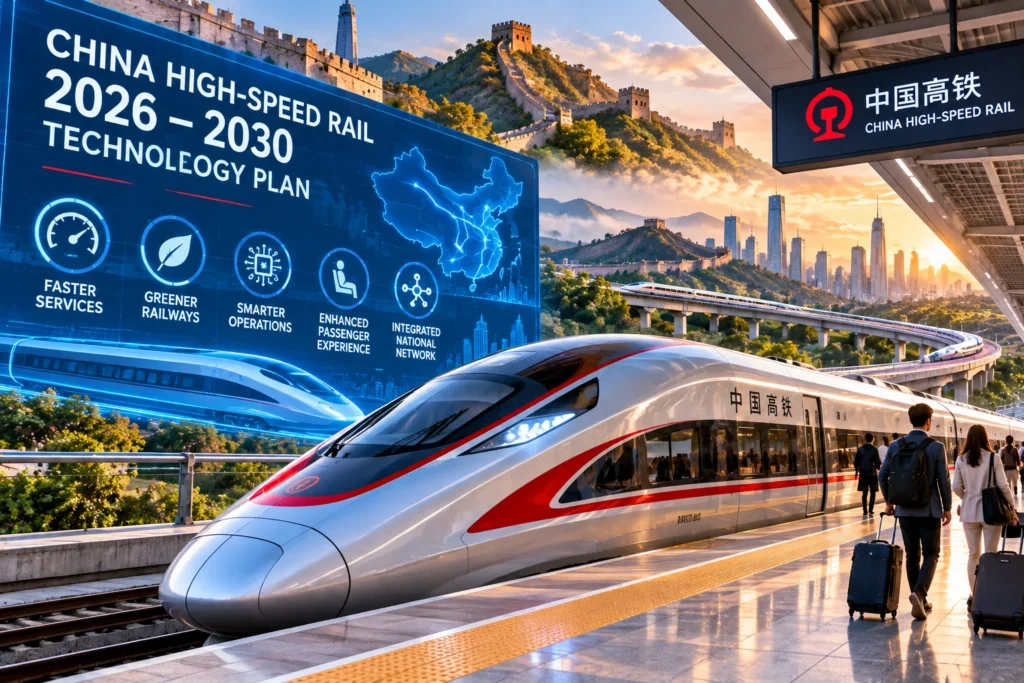
China has officially published its comprehensive railway science and technology innovation strategy for the 15th Five-Year Plan period (2026–2030), charting a path toward next-generation transit infrastructure. Released by the National Railway Administration, the blueprinted strategy establishes technological benchmarks across high-speed equipment, digital passenger services, ecological sustainability, and engineering construction. Operating the world’s most extensive high-speed rail network, China aims to construct an integrated innovation ecosystem that directly supports modern rail travel and regional tourism connectivity by 2030.
The strategic plan targets major technological achievements, laying out foundational goals to accelerate high-speed transit technology. Over the five-year development window, the National Railway Administration plans to establish approximately 30 specialized railway science and technology innovation bases, generate no fewer than 500 major technological achievements, and secure technological breakthroughs in at least 100 core functional areas across the national network.
Next-Generation Speeds and Maglev Research
A central priority of the 2026–2030 strategy involves advancing high-speed rolling stock capabilities and commercial operating thresholds. The National Railway Administration outlined plans to implement at least 20 targeted application scenarios and public demonstration projects, centered around testing and operating 400 km/h high-speed train systems.
Regarding frontier equipment research, the official plan establishes a structured approach to ultra-high-speed transit technologies:
High-Speed Maglev Development: Authorities will steadily advance research into 600 km/h high-speed magnetic levitation (maglev) systems, building testing frameworks to verify core operational components.
Domestic Technology Verification: Testing protocols will focus on verifying key domestic manufacturing components, ensuring full supply-chain security for next-generation rail fleets.
Demonstration Corridors: Integrated testing tracks will evaluate speed stability, aerodynamic efficiency, and passenger comfort under operational conditions.
These high-speed innovations are designed to shrink travel times between major economic zones, making long-distance intercity travel faster and more accessible for international and domestic tourists.
Intelligent Transport Upgrades for Travelers
The technical framework promises to overhaul passenger-facing transport services by transforming how travelers plan, book, and navigate multi-modal journeys across the country. Central to this digital evolution is the upgrade of the official 12306 national ticketing platform.
The system will transition from a single ticketing portal into an end-to-end intelligent travel platform, offering unified, one-stop intermodal travel itineraries that cater to personalized and diverse passenger preferences. To power these digital services, the railway administration will establish computing infrastructure tailored to transport analytics, creating more than 20 high-quality industry datasets alongside 20 practical artificial intelligence applications. Passengers will experience real-time route optimizations, automated baggage transfers, and synchronized connections across high-speed rail, city subways, and regional airports.
Green Transport Initiatives and Carbon Targets
In alignment with national sustainability objectives, the 2026–2030 blueprint introduces clear green development metrics aimed at reducing the environmental footprint of passenger and freight transport. The strategy establishes formal carbon management standards across the railway sector, targeting a national peak in total railway carbon emissions by 2030.
Key environmental initiatives outlined by official authorities include:
Alternative Propulsion Locomotives: Deploying multi-source power locomotives powered by advanced battery systems and hydrogen fuel cells to minimize emissions along non-electrified branch lines.
Low-Emission Fleets: Introducing low-consumption diesel engines across auxiliary routes to optimize energy usage across all operational environments.
Eco-Friendly Rail Corridors: Building low-carbon infrastructure standards into new track construction and station facility operations nationwide.
Through continuous investment in high-speed maglev technology, digital ticketing platforms, and green mobility networks, China high speed rail continues to refine the global standard for high-capacity, sustainable passenger transit.
For more travel news like this, keep reading Global Travel Wire