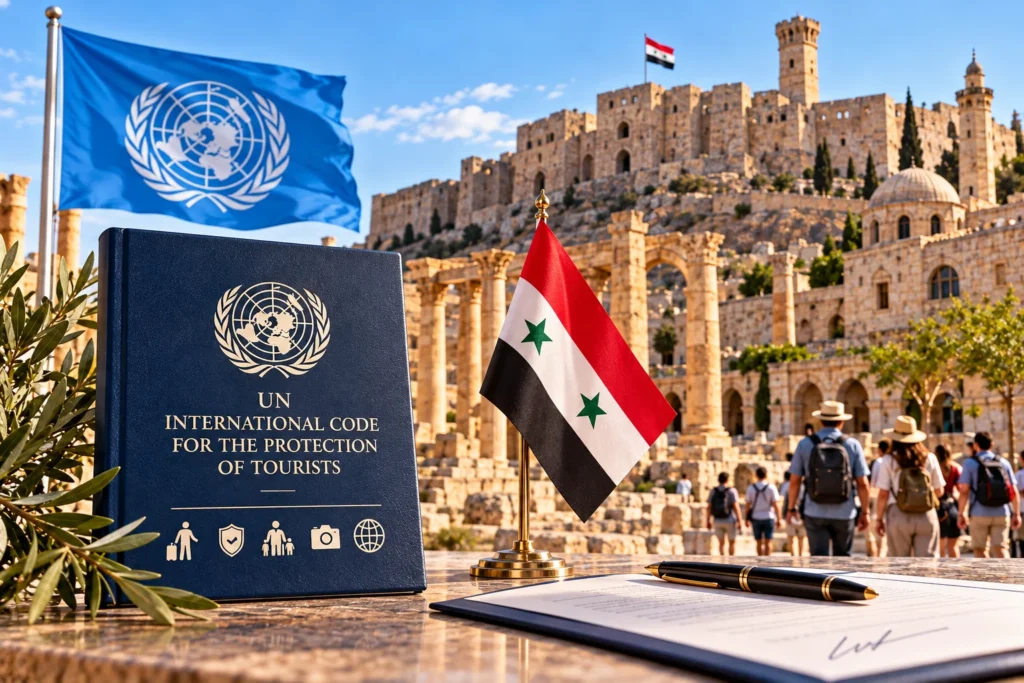
In a major step toward rebuilding its international travel sector, Syria has officially joined the International Code for the Protection of Tourists, a global legal framework created by UN Tourism. The announcement follows an official cable sent to the Ministry of Foreign Affairs and Expatriates by the UN Tourism General Secretariat confirming that all accession procedures have been successfully completed.
The accession serves as a crucial legal benchmark for Syria’s travel sector. By adopting these international standards, national authorities aim to establish clear tourist rights, improve destination reliability, and provide robust institutional support for foreign and domestic travelers navigating the country’s historic destinations.
Strengthening Consumer Safeguards for International Travelers
Developed by UN Tourism and formally adopted under Resolution 732 during the 24th General Assembly in Madrid, the International Code for the Protection of Tourists functions as a standardized legal instrument. Designed primarily to restore travel confidence following global crises and market disruptions, the code sets clear minimum standards for tourist rights and outlines transparent service rules between travelers and tourism businesses.
Syria’s accession introduces key institutional protections across primary operational areas:
Transparent Contractual Terms: Tourism service providers must offer clear pre-contractual information, ensuring travelers understand consumer rights and remedies if services are interrupted.
Emergency Crisis Protocols: The framework requires comprehensive national crisis management plans to assist travelers during unforeseen emergencies, incorporating rapid administrative and consular assistance.
Financial Guarantees and Dispute Resolution: The code establishes alternative dispute resolution mechanisms to efficiently resolve commercial claims and protect tourist investments.
While non-binding, the code encourages member states to integrate these core consumer rights into national laws, enhancing the overall safety and appeal of member destinations.
Rapid Inbound Visitor Growth Drives Operational Upgrades
The adoption of the UN protection framework comes during a notable recovery period for Syria’s hospitality sector. Official statistics released by the Ministry of Tourism report a 438 percent increase in visitor arrivals, marking the highest growth rate recorded in the ministry’s history.
Preliminary official data indicates that approximately five million visitors arrived in Syria through the end of August. Syrian expatriates accounted for the largest share of these arrivals, exceeding 3.5 million visitors, accompanied by growing numbers of Arab nationals and international travelers. Regional mobility patterns reveal that Turkey led the list of origin countries, alongside increasing arrivals from European nations such as Germany and Sweden, as well as the United States—primarily comprised of returning Syrian citizens.
Visitor flows remain diverse, encompassing day-trip travel from neighboring nations like Jordan, as well as extended stays for medical treatments, cultural tourism, shopping, and business conferences.
Five-Year Tourism Expansion and Capacity Building
Looking ahead, the Ministry of Tourism projects receiving up to 30 million visitors over the next five years, including an estimated 12 million to 15 million Syrian expatriates. Achieving these targets requires addressing structural challenges, including modernizing damaged hospitality infrastructure, upgrading public utilities across heritage sites, and expanding professional training programs for local tourism workers.
To diversify its appeal, the Ministry of Tourism is collaborating with the Ministry of Health to launch a dedicated Medical Tourism Project, alongside international partnerships to exchange technical expertise. By aligning with UN Tourism consumer protection standards, Syria establishes a firm regulatory foundation to support sustainable long-term growth across its travel industry.
For more travel news like this, keep reading Global Travel Wire