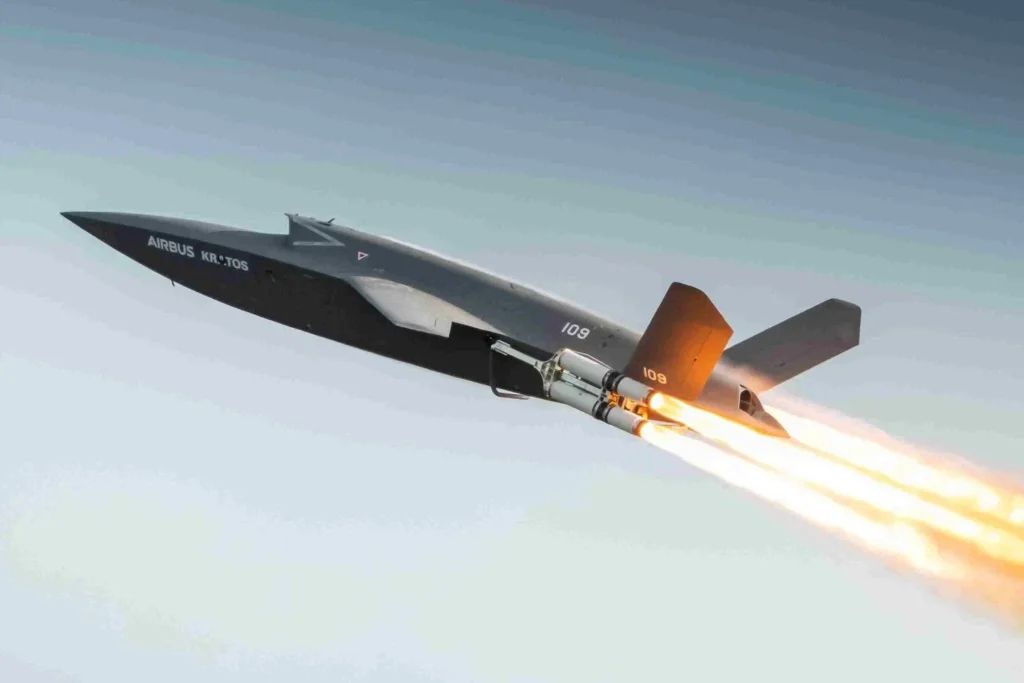
Airbus and American defence manufacturer Kratos have completed the Airbus U740 Valkyrie’s first European flight, advancing their collaborative aircraft programme. The milestone supports their ambition to deliver an operational uncrewed combat aircraft for German and other European forces by 2029.
Conducted at a Northern European test facility, the demonstration achieved its planned objectives. These included a rocket-assisted launch, manoeuvres at different altitudes, speeds reaching Mach 0.8 and mission adjustments during flight.n heritage and specialist visitor interest. Its development highlights Germany’s engineering capabilities, although the flight announcement establishes no new tourist attraction or public viewing opportunity.
German-American Partnership Supports Aerospace Development
The programme combines Kratos’ American-developed Valkyrie aircraft with Airbus’ planned European mission technology. This approach builds on an existing platform while adapting its capabilities to European operational requirements.
Kratos’ original Valkyrie first flew in 2019. Airbus is preparing aircraft at Manching, near Munich, as part of its European development work.
The partnership illustrates how manufacturers can combine established aircraft designs with new software and mission systems. However, the 2029 objective remains a development target, with further testing required before operational readiness.
For aviation enthusiasts, the collaboration provides another subject within Germany’s established aerospace story. It connects aircraft engineering, autonomous systems and international industrial cooperation.
Flight Demonstration Tests Advanced Capabilities
The U740 Valkyrie measures 9.1 metres long and has an 8.2-metre wingspan. Its stated range exceeds 5,000 kilometres, while its maximum take-off weight reaches approximately three tonnes.
The aircraft can operate at altitudes of up to 45,000 feet. These specifications describe a platform intended for military missions alongside crewed aircraft.
Its rocket-assisted launch also distinguishes the programme from conventional airport operations. The demonstration tested flight capabilities without requiring a traditional runway for take-off.
Consequently, the milestone concerns defence aviation development. It introduces no passenger services, additional airline capacity or new airport connections.
That distinction matters when assessing tourism implications. Interest in aircraft technology can support specialist travel coverage without suggesting direct changes to commercial flying.
European Mission System Shapes Next Steps
Airbus plans to integrate its Multiplatform Autonomous Reconfigurable and Secure mission system, known as MARS, into the Valkyrie programme.
The system uses artificial intelligence to support autonomous operations and coordination between aircraft. Airbus also emphasises human oversight of critical decisions.
The planned architecture would give European operators control over mission software, operational information and associated hardware. Future development will examine more complex capabilities and cooperation with crewed fighters, including the Eurofighter.
These subjects offer educational interest for visitors exploring aviation, robotics and engineering exhibitions. However, the programme provides no confirmed application for passenger aircraft or airline customer services.
Germany’s Aviation Exhibitions Provide Tourism Context
Germany’s aerospace exhibitions provide a public setting for understanding developments that otherwise occur within restricted industrial programmes.
Airbus showcased its uncrewed aircraft portfolio at ILA Berlin in 2026. The presentation included the U740 Valkyrie and U760 Ravenstorm, illustrating its wider development ambitions.
Such events bring together manufacturers, technology specialists, industry visitors and aviation enthusiasts. For international travellers, they can form the centrepiece of an aviation-focused itinerary.
Nevertheless, the latest flight announcement confirms no future public appearance for the Valkyrie. Travellers should check organiser announcements before planning journeys around a particular aircraft.
Exhibition attendance also depends on event schedules, ticket availability and admission conditions. A development milestone alone does not establish access.
Aviation Heritage Offers Accessible Visitor Experiences
Public aviation museums and authorised airshows provide practical options for travellers interested in aerospace technology.
Germany’s connection to the Valkyrie programme offers context for exploring its broader aviation heritage. Meanwhile, the American contribution highlights the international character of modern aircraft development.
The Northern European test location has not been publicly identified in the supplied announcement. It therefore cannot serve as a specific destination recommendation.
Similarly, Airbus’ development work at Manching does not establish public access to its military facilities. Visitors should choose attractions with published opening hours and admission arrangements.
For hotels and local tourism businesses, any benefits would depend on actual exhibition attendance or organised visitor activity. The programme currently provides no confirmed tourism demand figures.
Further Testing Will Determine Programme Progress
The European flight marks an important stage in the Valkyrie programme, with additional integration and demonstrations still ahead.
For international travellers, its immediate significance lies in aerospace education and specialist interest. Established exhibitions and heritage attractions remain the clearest ways to explore that story.
As development progresses towards the 2029 target, confirmed public displays could provide further reasons for aviation enthusiasts to visit. Until then, travel planning should follow announced events and verified visitor arrangements.
For more travel news like this, keep reading Global Travel Wire