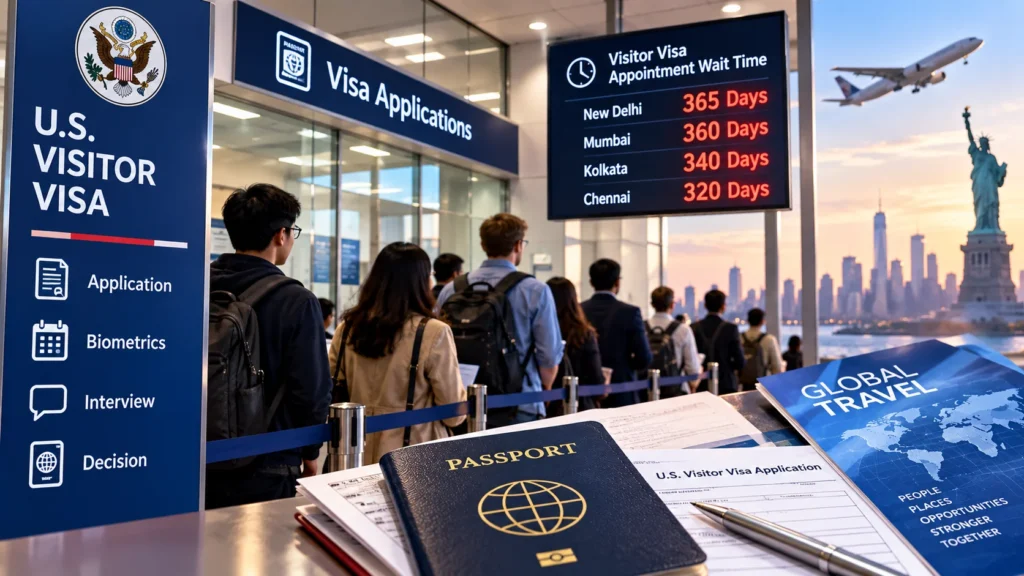
Governments across the Americas, Asia-Pacific, and Europe have issued key announcements updating international border entry procedures, residency requirements, and work authorization pathways. These policy developments refine regulatory frameworks for foreign nationals, cross-border corporate assignees, and long-term remote professionals.
Official bulletins released by international foreign ministries and consular authorities highlight procedural adjustments designed to enhance border security while maintaining streamlined entry for authorized travellers.
Digital Entry Reforms Across the Americas
Venezuela’s Ministry of Foreign Affairs has released official guidance outlining a digitized application system for foreign nationals seeking PRO-V 90 visas through its Cancillería Digital portal.
Foreign professionals can complete visa filings online by registering account profiles, choosing an assigned embassy or consular office, and uploading verified digital documentation. Mandatory requirements include a valid passport with a minimum of six months’ remaining validity, passport photos, completed application forms, verified proof of sufficient financial resources, invitation letters from local enterprise sponsors, and corporate registration documents.
Applicants are advised to review all submitted details carefully prior to final submission. Official guidelines state that finalized digital filings cannot be edited; any errors require the deletion of the existing application and the creation of a new filing record.
Asia-Pacific Region Expands Entry and Mobility Protocols
Japan Implements Pre-Entry Health Screening Expansion
Japan’s Immigration Services Agency confirmed an expansion of its pre-entry tuberculosis screening initiative to cover Indonesian citizens applying for medium- to long-term residency status.
Under this framework, accredited medical centers in Indonesia will commence designated medical examinations on November 2, 2026. Beginning January 4, 2027, applicants must submit an official Tuberculosis Clearance Certificate during the Certificate of Eligibility or direct visa application phase. This measure aligns with established health screening procedures previously required for nationals of Nepal, the Philippines, and Vietnam.
Malaysia Announces Employment and Digital Nomad Reforms
The Prime Minister’s Office of Malaysia announced key expatriate and foreign investment measures under Budget 2027:
Spousal Work Authorization: Effective January 1, 2027, accompanying spouses holding Dependant Passes under Category I Employment Pass holders are permitted to seek employment within the country, subject to regulatory conditions.
Digital Nomad Extension: Remote workers operating under the Professional Visit Pass (Nomad category) who reach their initial two-year stay limit can request a two-year extension if program eligibility criteria continue to be met.
Global Services Hub Incentives: Revised fiscal frameworks introduce a 5% corporate tax tier on eligible income for approved Global Services Hub enterprises starting January 1, 2027.
Taiwan Updates Health Documentation Criteria
Taiwan’s Bureau of Consular Affairs issued a notice updating visa entry rules in alignment with World Health Organization health advisories. Applicants who have resided in or visited designated countries—including Afghanistan, Cameroon, Chad, Djibouti, the Democratic Republic of the Congo, Laos, Pakistan, or South Sudan—for four weeks or more within the preceding 12 months must present proof of polio vaccination administered within the past year.
European Legislative Proposals on Residence Rules
In Europe, the Icelandic government has presented legislative amendments regarding residence permits for non-European Economic Area (EEA) nationals to bring national policies into closer alignment with broader Nordic frameworks.
The proposed reform extends the minimum continuous residence requirement for permanent residence eligibility from four years to six years. The bill introduces revised spousal cohabitation thresholds, removes non-EEA au pair residence pathways, and creates specialized protective permit options for victims of labor exploitation. Existing residence permits and established rights for EEA nationals remain unaffected under the draft legislation.
For more travel news like this, keep reading Global Travel Wire