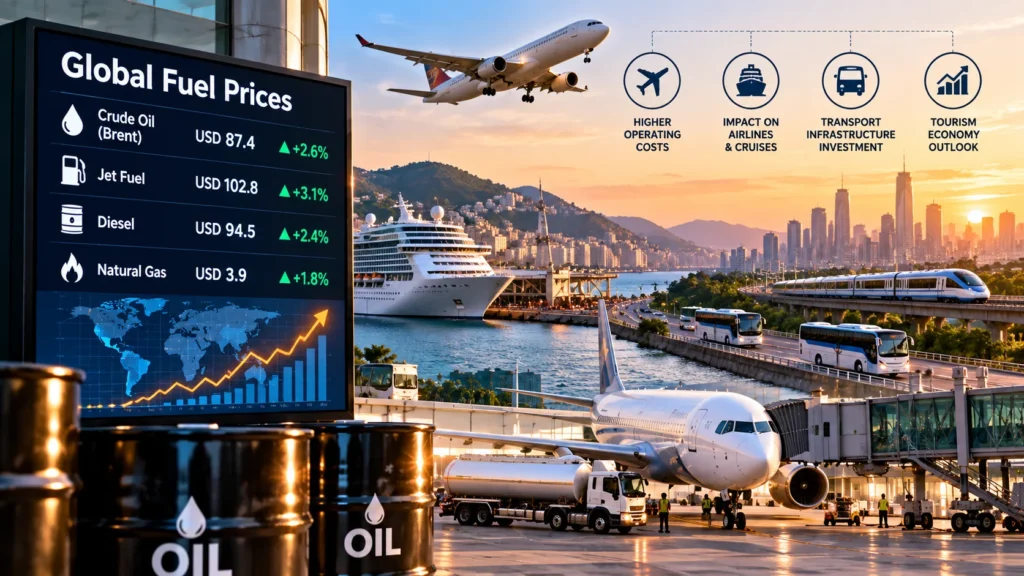
Recent international developments in global energy logistics have seen Russian diesel exports resume shipments to international markets following announcements regarding fuel stabilization agreements. Official government statements confirm that shipments originating from Baltic ports have begun moving toward international destinations, marking a significant development in global fuel supply chains and transit energy economics.
As global fuel prices influence international aviation, maritime travel, and overland tourist transport, energy market stability remains a central factor for the global tourism and travel economy.
Ocean Logistics and Fuel Supply Resumption
Official maritime and port tracking statements confirm that export loadings resumed from the Baltic port of Primorsk, with initial cargo shipments transporting ultra-low sulphur diesel toward destination ports in North Africa.
Government communications outline planned export volumes intended to assist in addressing international refined product shortages and mitigating upward pressure on global fuel prices:
Initial Maritime Loadings: Cargo vessels dispatched with approximately 40,000 metric tonnes of diesel to initiate supply flows.
Near-Term Allocation Plan: Projected short-term shipments exceeding 300,000 metric tonnes (approximately 2.25 million barrels) directed toward international markets.
Extended Energy Supply Schedule: Additional allocations scheduled at 500,000 metric tonnes, followed by a planned subsequent phase of 1 million metric tonnes.
While these shipments add liquidity to refined fuel markets, energy analysts and official transportation assessments note that these volumes address only a fraction of daily global transport consumption. In the United States alone, daily transportation fuel usage averages nearly 2.94 million barrels, illustrating the massive operational scale required to sustain national and international transport networks.
Implications for Tourism Transportation and Travel Costs
The availability and pricing of refined diesel directly affect regional tourism infrastructure, long-distance coach travel, maritime cruise operations, and air freight logistics. High fuel costs typically lead to higher operating surcharges across commercial fleets, which are eventually passed along to international visitors and tour operators.
Stabilizing global fuel prices helps regional tourism authorities and passenger carriers maintain predictable pricing structures during peak holiday seasons. Lower fuel volatility supports:
Commercial Aviation and Charters: Reduced jet fuel cost volatility allows airlines to stabilize ticket pricing and maintain long-haul flight schedules.
Overland Bus and Rail Tourism: Predictable diesel costs keep regional coach tours, intercity bus travel, and self-drive vehicle rentals affordable for domestic and international holidaymakers.
Cruise and Maritime Transit: Coastal ferries and international cruise operators benefit from stabilized marine fuel expenditures, preserving operational margins across popular island and archipelagic routes.
International Diplomatic Context and Regional Infrastructure Dynamics
The resumption of fuel exports occurs within a complex geopolitical landscape, where energy security, peace initiatives, and regional stability remain closely intertwined. Official statements from European and Ukrainian government representatives highlight ongoing discussions regarding energy infrastructure security and international trade policies.
Efforts to maintain stable energy supplies face persistent challenges from regional infrastructure disruptions and conflict dynamics. Government announcements confirm ongoing impacts on energy processing facilities and refinery operations across Eastern Europe, underscoring the delicate balance between maintaining energy security and supporting broader diplomatic negotiations.
For international tourism boards, hospitality sectors, and travel organizers, monitoring global energy logistics remains essential. A stable and transparent fuel market ensures that global transport networks continue to facilitate international travel, business mobility, and tourism growth worldwide.
For more travel news like this, keep reading Global Travel Wire