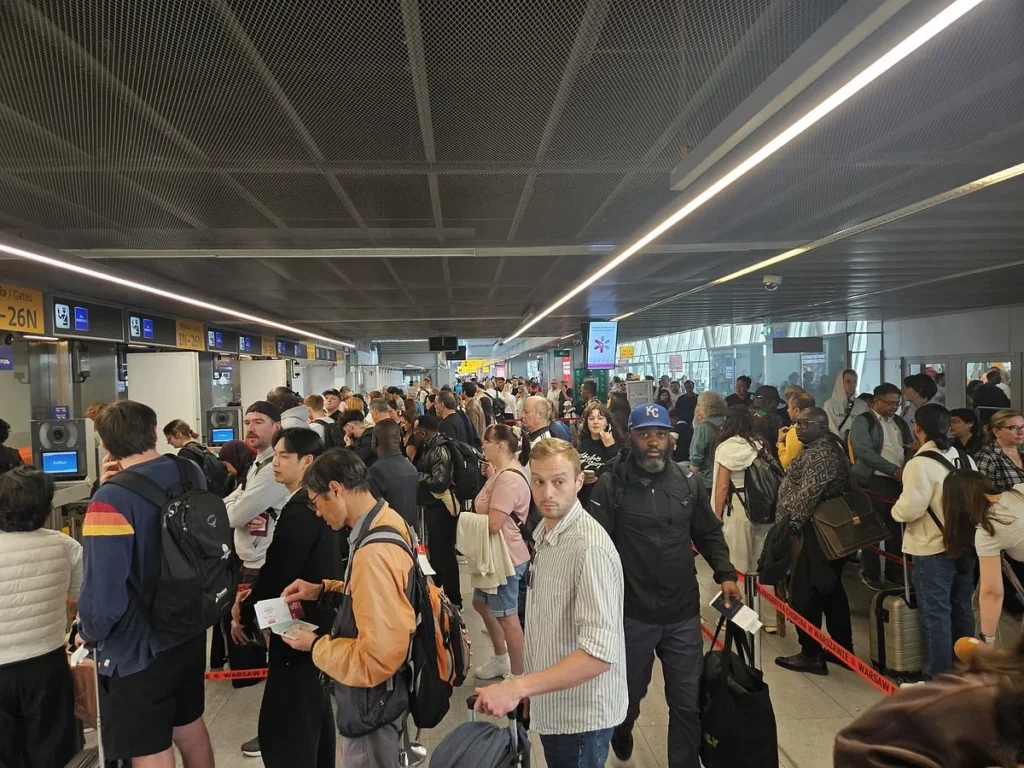
Passport-control congestion at European airports is creating uncertainty for international travellers, particularly those crossing external Schengen borders. Amsterdam Schiphol and Frankfurt have issued guidance highlighting conditions that can lengthen processing times.
The immediate concern involves passengers reaching onward flights, airport transfers and accommodation as planned. However, earlier warnings do not establish current waiting times at every airport or confirm disruption to individual bookings.
Biometric registration, concentrated flight schedules and technical reliability all influence border processing. Consequently, travellers need airport-specific updates rather than assumptions about conditions across Europe.
Schiphol Highlights Technical Disruption Risks
Amsterdam Schiphol reported a passport-control technical malfunction on October 18, according to the supplied airport notice details.
The disruption required manual checks and created the potential for longer queues affecting departing and transferring passengers.
The episode illustrates why congestion cannot automatically be attributed to biometric registration alone. A technical problem can reduce checkpoint capacity and complicate passenger movement through a major connecting airport.
For travellers, the relevant question concerns whether their journey requires passport control at Schiphol. Transfer arrangements differ according to the origin and destination of each flight.
An earlier operational notice also cannot establish whether the same problem remains active. Passengers should check the latest information before departure.
Frankfurt Warns of Longer Processing
Frankfurt Airport issued guidance on September 29 warning passengers about potentially longer border-processing times during the autumn school holiday period.
Such warnings matter because international flights can deliver large groups to passport checkpoints within short intervals.
Passengers connecting between Schengen and non-Schengen services may encounter border checks during their transfer. That processing forms another stage between arrival and boarding.
However, a congestion warning does not establish that every passenger will face a lengthy delay. Conditions depend on the checkpoint, travel period and operational circumstances.
Travellers should therefore assess their actual itinerary and follow guidance relevant to their departure date.
Digital Checks Change the Border Experience
The European Union’s Entry/Exit System introduces digital recording for covered short-stay travellers crossing participating countries’ external borders.
The process includes identity information, biometric details and records of entry or exit.
For eligible first-time users, registration adds steps to the airport journey. Subsequent crossings involve checks against existing records, although processing still depends on functioning systems and available capacity.
Not every non-EU traveller falls within the same arrangements. Residence status and other exemptions can affect the procedures that apply.
These checks also differ from aviation security screening. Completing security does not necessarily mean a passenger has finished every checkpoint before boarding.
Connections Require Particular Attention
Border queues create a practical challenge when passengers have limited time between flights.
Travellers should establish whether their transfer involves crossing an external Schengen border. They should also examine the available connection time before purchasing an itinerary.
Where operational delays occur, passengers need clear instructions about their onward service and available assistance.
A passport-control queue does not automatically establish airline responsibility for every resulting expense. Any request for replacement travel or reimbursement requires consideration of the booking and circumstances.
Keeping airline messages, reservation details and receipts provides a useful record when discussing disrupted arrangements.
Tourism Businesses Need Accurate Timings
Unpredictable airport processing can affect the beginning or end of a visitor’s stay.
A delayed arrival may require a revised pickup, later hotel check-in or adjustment to a booked activity. Those consequences depend on the individual journey and should not be assumed.
Hotels and transport providers can respond more effectively when guests share confirmed changes promptly.
Nevertheless, the information available does not establish a Europe-wide decline in tourism demand caused by border congestion.
The immediate tourism issue concerns dependable movement between airports and destinations. Reliable information helps businesses adjust services while giving visitors a clearer understanding of their options.
Travellers Should Follow Local Airport Advice
Passengers should review their airline’s instructions and the airport’s latest operational guidance before travelling.
Recommended arrival times can differ between airports. Arriving excessively early may offer little benefit where check-in or terminal access follows specific opening times.
Travellers should prepare their documents and identify where passport control falls within the departure process.
For connecting journeys, clear information about border requirements is particularly valuable.
Europe’s digital border procedures depend on reliable technology, sufficient staffing and effective checkpoint management. Until processing becomes more predictable at affected locations, timely operational updates remain central to protecting connections and improving the visitor experience.
For more travel news like this, keep reading Global Travel Wire