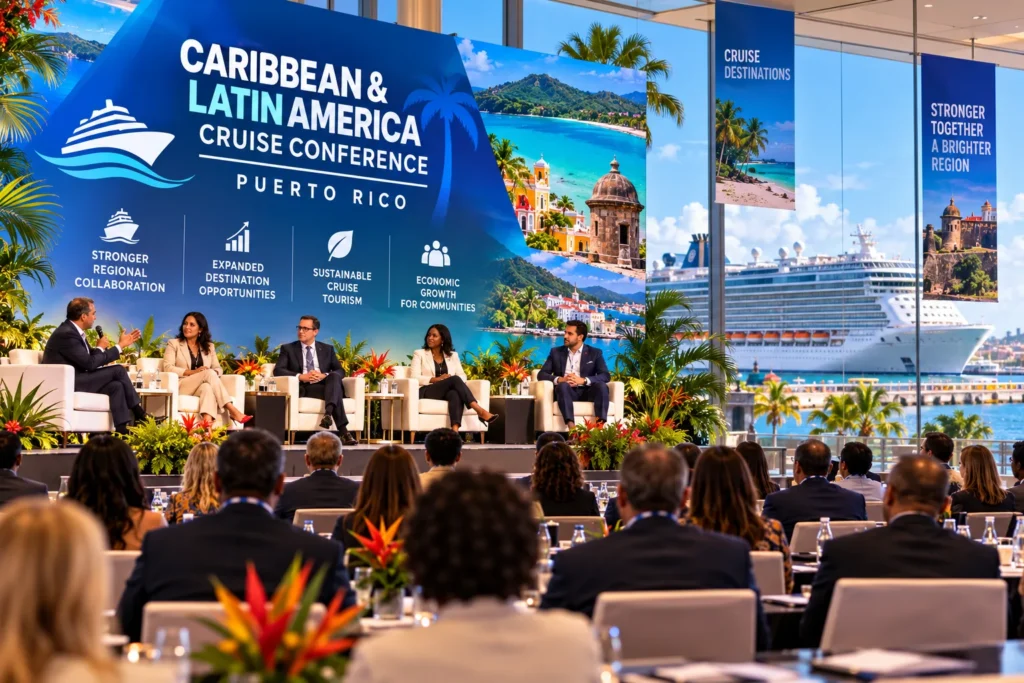
SAN JUAN, Puerto Rico — Global cruise passenger numbers are projected to expand from 37 million in 2025 to 46 million by 2031, positioning Caribbean and Latin American ports to capture substantial long-term economic gains. Industry leaders, government officials, and port operations executives gathered at the 32nd annual Florida-Caribbean Cruise Association (FCCA) Cruise Conference & Trade Show in San Juan to discuss strategies for aligning itinerary development with destination readiness and local business integration.
The gathering brought together nearly 700 delegates, including cruise line executives, regional tourism ministers, tour operators, and maritime service providers. Discussions centered on expanding the economic footings of port communities, improving visitor arrival logistics, leveraging digital innovation, and creating sustained commercial opportunities for local suppliers across the region.
Strategic Destination Alignment Drives Passenger Engagement
Leadership at the event highlighted that destination partnerships remain the primary driver of passenger satisfaction and repeat bookings. As major lines introduce larger vessels and expand sailing itineraries, local destinations play a essential role in delivering diverse, authentic travel experiences that differentiate one port of call from another.
The CEO & President Leadership Panel—featuring executive representatives from Carnival Cruise Line, Margaritaville at Sea, MSC Cruises, Norwegian Cruise Line, and Virgin Voyages—examined vessel deployment choices and shifting customer preferences. Executives emphasized that successful deployment relies on collaboration between cruise brands and local port authorities to build infrastructure capable of managing higher passenger throughput while preserving authentic cultural assets.
Discussions reinforced that destinations offering strong shore excursion networks, reliable transport links, and distinct culinary or historical identity are best positioned to secure year-round itinerary placement.
Port Operations and Homeporting as Catalysts for Local Spending
A dedicated operational session titled “Building Your Port into an Unforgettable Experience” addressed how passenger impressions form well before visitors arrive at key attractions. Industry representatives reviewed measures to enhance port terminal operations, upgrade arrival greeting services, and incorporate regional heritage directly into the port environment.
Recommended practices include frontline hospitality and language training for terminal staff, alongside dedicated venues for local craft producers, performance artists, and regional food vendors inside port precincts. These initiatives are designed to distribute visitor spending directly to independent business owners and community artisans.
The economic benefits of homeporting were evaluated in depth during “Homeporting: The Gateway to the Caribbean.” Panelists detailed how establishing a destination as a voyage origination or termination point creates broad financial ripples across local supply chains. Homeports generate direct revenue for hotel properties, ground transfer operators, airport facilities, and agricultural or provisioning vendors supplying cruise ships. Executing successful homeport operations requires seamless operational coordination between civil aviation authorities, maritime port managers, customs officials, and cruise line logistics teams.
Technology, High-End Services, and Community Economic Impact
The conference program also addressed changing visitor expectations through technology and specialized cruise market segments. Delegates reviewed applications of digital storytelling tools, artificial intelligence for visitor guidance, and immersive cultural exhibits designed to streamline ashore navigation and heighten passenger engagement.
Sessions focused on luxury cruise operations examined strategies for catering to high-yield travelers on both boutique and large-capacity vessels. Speakers emphasized that luxury passengers seek small-group, carefully curated shore excursions that offer direct interaction with local historians, environmental guides, and master chefs.
Economic analysis presented during the event by Oxford Economics quantified the broader financial footprint of passenger arrivals. The research underlined that cruise visitor spending directly supports employment in hospitality, retail trade, transportation, and port infrastructure maintenance.
Building Regional Supply Chains and Sustainable Growth
Senior leadership from the FCCA, alongside public sector hosts including the Puerto Rico Tourism Company, emphasized that translating passenger demand into lasting community benefit requires strong local integration.
As cruise operators deploy new ships and adjust sailing schedules, destination authorities throughout the Caribbean and Latin America are focusing on expanding local food and service procurement, upgrading public facilities, and incentivizing sustainable shore excursions. Strengthening these operational connections ensures that passenger growth yields direct, measurable economic development for port cities and surrounding regions.
For more travel news like this, keep reading Global Travel Wire