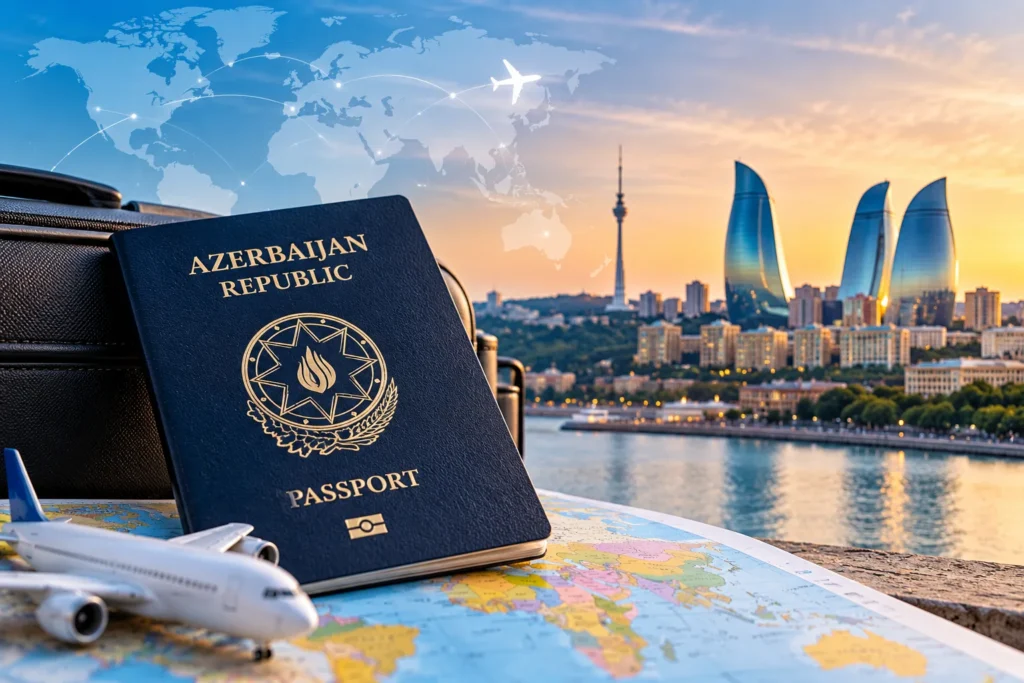
The freedom of international travel remains a primary metric for assessing destination accessibility and regional diplomacy. In the October 2026 update of global mobility indexes based on official international flight and aviation authority metrics, Azerbaijan has secured the 73rd position worldwide. The country’s passport holders can currently enter 68 destinations without the need to obtain a traditional visa in advance, utilizing options such as complete visa-free entry, visas on arrival, or approved electronic travel authorisations.
This latest standing reflects a minor shift from previous global evaluations, moving down three spots from its prior 70th-place ranking. Despite slight position adjustments in international indexes, cross-border access metrics underscore how regional visa agreements and diplomatic engagement shape global tourism, trade opportunities, and international passenger travel.
Regional Travel Mobility in the South Caucasus and Central Asia
Within the regional landscape of the South Caucasus, Azerbaijan maintains a leading position over several neighboring nations in international travel access. Official mobility metrics place Azerbaijan ahead of Armenia, which occupies 78th place worldwide by offering its citizens access to 63 destinations without a prior visa.
The wider Eurasian and Central Asian territories display varying levels of global passport freedom, reflecting distinct diplomatic agreements and bilateral tourism policies:
Azerbaijan: Holds 73rd place globally, offering access to 68 destinations via visa-free entry, visa-on-arrival, or electronic authorization.
Armenia: Holds 78th place globally, granting access to 63 travel destinations without advance visas.
Kyrgyzstan: Ranks 81st internationally, providing access to 59 visa-free destinations.
Uzbekistan: Positioned at 82nd place worldwide, offering entry to 57 destinations without prior visa requirements.
Turkmenistan: Ranks 93rd globally, with access restricted to 44 destinations without advance visas.
These regional statistics highlight how mobility partnerships enable smoother transit across borders, encouraging cross-border trade, regional eco-tourism, and cultural exchange.
Global Leaders in Visa-Free Access and International Mobility
Asian and European destinations continue to command the highest positions in global travel freedom rankings, setting the benchmark for international visa policy integration and destination connectivity.
Singapore maintains its status as the world’s most powerful passport, granting its citizens seamless access to 193 destinations without requiring an advance visa. Japan, South Korea, and the United Arab Emirates share the second position globally, each granting pre-approved entry to 188 destinations. Sweden follows closely in third place with access to 187 destinations worldwide.
A substantial coalition of European nations occupies the fourth global tier, where Belgium, Denmark, Finland, France, Germany, Ireland, Italy, Luxembourg, the Netherlands, Norway, and Spain jointly share the ranking, each delivering access to 186 worldwide destinations.
Elsewhere across global markets, the United States holds 10th place internationally with access to 180 destinations. In South America, nations such as Chile, Brazil, and Argentina continue to lead their continent in diplomatic travel freedom and open border access.
Understanding Mobility Index Data and Tourism Policy Impacts
Global passport indexes evaluate 199 distinct passports against 227 global travel destinations by aggregating official transit data provided directly by the International Air Transport Association. The standardized scoring methodology assesses entry requirements based on whether travelers can cross borders without securing prior consular approval.
The calculation counts full visa-free travel, automatic visas issued upon arrival, and designated electronic travel authorisations that process approval rapidly without formal visa applications. However, standard electronic visas that require advance documentation and manual consular processing are excluded from visa-free scoring totals.
For tourism boards, aviation departments, and government ministries, passport index rankings serve as vital indicators for planning international tourism campaigns and air route infrastructure. Expanding visa-free entry agreements directly stimulates leisure travel, reduces entry friction for foreign visitors, and boosts local economic performance through higher international tourist arrivals.
As international aviation capacity expands and nations simplify entry protocols, enhancing global passport index mobility remains an essential goal for governments seeking to attract direct foreign investment and build thriving, globally connected tourism economies.
For more travel news like this, keep reading Global Travel Wire