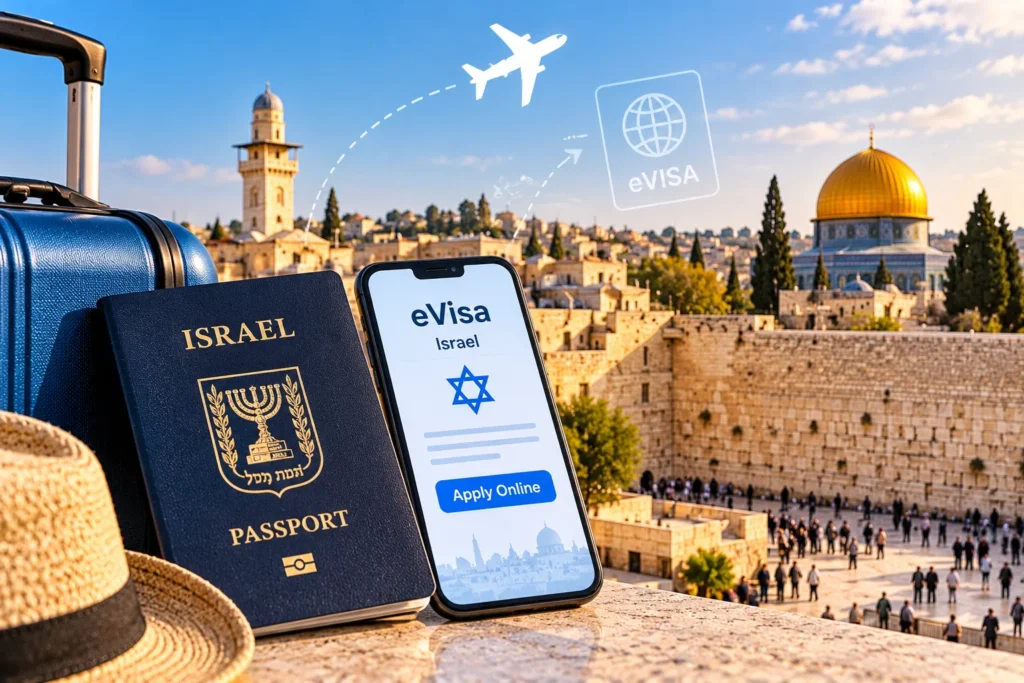
Global travel governance and diplomatic protocol heavily dictate international visitor movement. In an official communication updated on October 23, 2026, diplomatic updates from the Israeli Embassy in Singapore signaled a major potential shift in border entry policies. The diplomatic release outlined a prospective broadening of the B/2 electronic visa framework, listing 63 nations and territories whose passport holders could soon gain access to online entry processing.
Israel initially launched its digital B/2 tourist visa system in January 2025 under a focused pilot framework restricted strictly to Indian nationals residing in India. By June 2025, authorities extended the platform to cover Sri Lankan citizens. Expanding digital visa eligibility to tens of thousands of prospective international visitors across multiple continents represents a pivotal strategic effort to modernize entry protocols, streamline immigration logistics, and stimulate post-recovery foreign tourist arrivals.
Proposed Eligibility Framework Across International Regions
If officially confirmed by central population and immigration authorities, the updated diplomatic roster would allow travelers from dozens of visa-required destinations to bypass traditional, time-consuming consular interviews and submit documentation entirely through digital channels.
The published listing spans across four primary geographical sectors:
Asia: Bhutan, Brunei, Cambodia, India, Kazakhstan, Kyrgyzstan, Laos, Maldives, Singapore, Sri Lanka, Tajikistan, Thailand, Timor-Leste, Uzbekistan, and Vietnam.
Africa: Angola, Benin, Botswana, Burkina Faso, Burundi, Cameroon, Cape Verde, Central African Republic, Côte d’Ivoire, Democratic Republic of the Congo, Djibouti, Equatorial Guinea, Eswatini, Ethiopia, Gabon, Gambia, Ghana, Guinea, Guinea-Bissau, Kenya, Lesotho, Liberia, Madagascar, Malawi, Mali, Mauritius, Mozambique, Namibia, Republic of the Congo, Rwanda, São Tomé and Príncipe, Senegal, Seychelles, Sierra Leone, Somaliland, South Africa, South Sudan, Tanzania, Togo, Uganda, Zambia, and Zimbabwe.
Americas: Canada, Colombia, Costa Rica, Cuba, Nicaragua, and Venezuela.
Transitioning from physical consular visa applications to centralized digital processing removes entry friction for long-haul leisure visitors, trade delegates, and pilgrims visiting historical landmarks.
Portal Operational Status and Technical System Readiness
Despite the forward-looking announcements published by overseas diplomatic missions, central entry portals maintained by the Israel Population and Immigration Authority continue to enforce original pilot program constraints. As of late October 2026, the central government application system maintains strict operational parameters, restricting online submission functionality to qualifying citizens of India and Sri Lanka residing in their respective home countries.
This operational divergence suggests that public diplomatic statements may have preceded the technical integration of updated software backend systems. When border agencies expand electronic visa programs, digital portal updates must synchronize with border control databases, airline passenger name record systems, and payment processing portals to handle increased application volumes securely.
Until backend technical integration is fully finalized across border control networks, applicants from newly listed territories attempting to access digital forms are instructed to fulfill standard consular procedures through regional diplomatic missions.
Understanding B/2 Electronic Visas Versus ETA-IL Authorizations
To avoid confusion among prospective visitors, tourism authorities emphasize the strict regulatory distinction between electronic visas and digital travel authorizations.
The B/2 electronic tourist visa is designed explicitly for passport holders of nations that require formal visa vetting before arriving at entry points. In contrast, the Electronic Travel Authorization system, known as ETA-IL, serves as an electronic pre-screening requirement for citizens hailing from visa-exempt countries. Introduced as a mandatory requirement on January 1, 2025, the ETA-IL allows visa-exempt international travelers to secure entry permission online prior to departure.
Certain nationalities included in diplomatic releases—such as citizens of Canada and Singapore—already maintain visa-exempt status and utilize the ETA-IL framework for short-term holiday visits. Similarly, reciprocal entry agreements reinstated between Israel and Colombia in late 2026 place Colombian visitors under the ETA-IL umbrella rather than standard B/2 tourist visa procedures.
Future Outlook for Israel Tourism and Border Infrastructure
As global travel demands shift toward paperless, pre-verified border control systems, expanding digital visa access remains an efficient method for government tourism boards to stimulate incoming economic activity. Streamlined online applications significantly reduce administrative burdens on overseas embassies while offering foreign travelers transparent, predictable entry timelines.
While a centralized timeline for the full multi-national rollout remains subject to final confirmation by central immigration directors, the release of prospective regional lists signals an intent to scale border technology infrastructure.
Travelers planning leisure or business trips are advised to monitor official government entry portals for real-time policy updates. Visitors from visa-exempt countries must continue completing mandatory pre-travel ETA-IL registrations, while citizens of visa-required nations should confirm current eligibility guidelines directly with official immigration portals before scheduling international flights.
For more travel news like this, keep reading Global Travel Wire