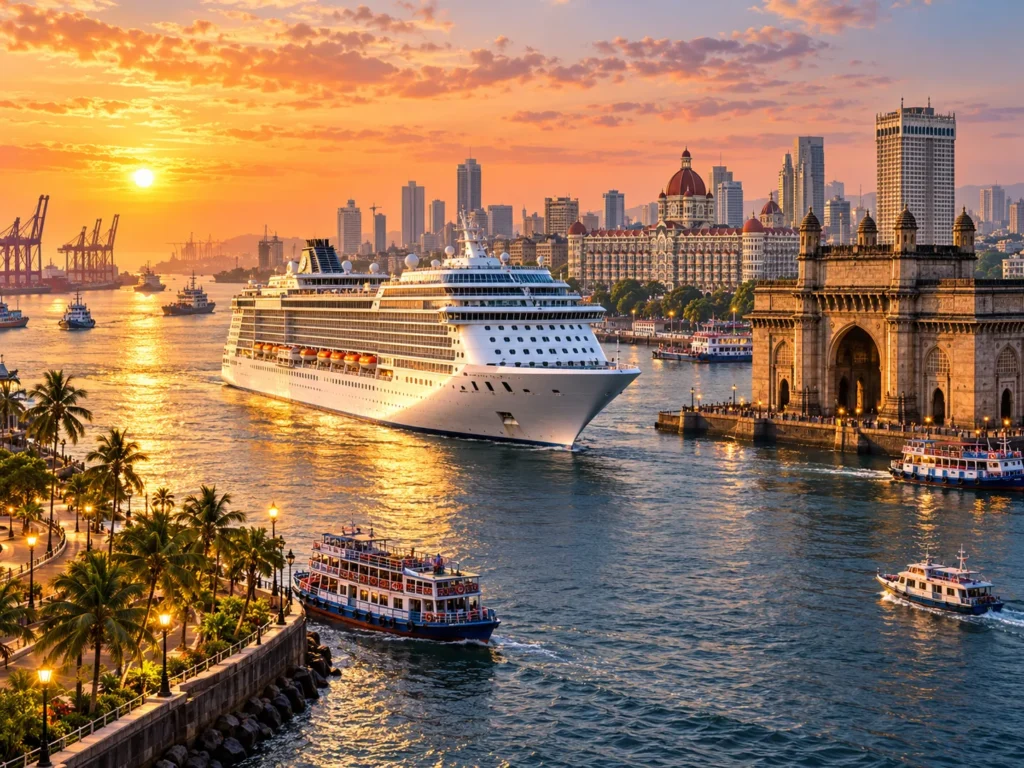
Official maritime development initiatives and expanding commercial vessel deployments are positioning India’s coastline as one of the fastest-growing holiday corridors in the world. Operating in synergy with national infrastructure roadmaps, leading domestic cruise operator Cordelia Cruises has announced strategic projections to propel India into the top five cruise markets globally by 2032. The expansion strategy leverages an addressable middle-class demographic, customized cultural hospitality, and an expanding network of modernized deep-water passenger terminals.
Official statistics and company performance assessments highlight significant headroom for leisure expansion across the subcontinent. Industry projections indicate that approximately 14 percent of the domestic population possesses the disposable income required for maritime voyages, representing an addressable demographic of nearly 200 million potential travelers. Cordelia Cruises has already crossed the milestone of hosting one million guests since commencing operations. With the planned introduction of additional vessels, including the Cordelia Sky, domestic passenger carrying capacity will undergo a substantial multi-fold expansion over the coming years.
Understanding the Evolving Indian Cruise Demographic
While traditional international cruise markets cater predominantly to older age brackets, domestic leisure data demonstrates a distinctly younger demographic profile. The average age of cruise guests aboard Indian domestic sailings ranges between 34 and 35 years, contrasting sharply with the global cruise industry average of 55 to 56 years. This demographic reality establishes India as one of the youngest passenger cruise demographics worldwide.
Converting domestic holidaymakers from short land-based breaks to maritime voyaging has required targeted category education. Traditional domestic leisure travelers are accustomed to planning brief weekend trips to beachside destinations such as Goa, booking independent hotels, and arranging distinct local transit. By contrast, ocean voyaging introduces a holiday format where the ship operates simultaneously as the primary resort, transport mechanism, and leisure venue.
To accelerate category adoption, shipboard operations have adapted directly to regional dining cultures and seasonal calendar variations:
Curated dining infrastructure featuring specialized Jain kitchens, pure vegetarian dining rooms, and authentic regional culinary preparations.
Dynamic onboard entertainment programming tailored specifically to departures from western hubs such as Mumbai and southern hubs like Chennai.
Itinerary planning synchronized around major festive seasons, family vacation periods, and national holidays.
Addressing fundamental guest inquiries regarding onboard safety protocols, water recreation amenities, and baggage guidelines to demystify ocean travel.
Sourcing data indicates strong outbound passenger demand from metropolitan centres and hinterland districts across Maharashtra, Gujarat, Rajasthan, and West Bengal. Similarly, southern departures draw heavy passenger volume from Tamil Nadu, Telangana, and Karnataka, requiring operators to tailor regional languages, culinary styles, and live performances to align with diverse cultural expectations.
Commercial Charters, MICE, and Destination Maritime Weddings
In addition to individual family leisure traffic, group bookings and corporate events represent a vital pillar of commercial sustainability. Corporate gatherings, Meetings, Incentives, Conferences, and Exhibitions (MICE), along with large-scale destination celebrations, currently generate between 30 percent and 35 percent of total operating revenue.
Large private enterprises, public institutions, and industry associations increasingly charter ocean-going vessels for multi-day conventions, strategic incentive retreats, and product launch showcases. The cruise format provides conference organizers with integrated logistics, dedicated auditorium facilities, unified catering, and controlled scheduling in a single venue.
Simultaneously, the demand for maritime wedding celebrations has expanded significantly. Couples and families are opting for open-sea wedding ceremonies as a distinctive alternative to conventional heritage hotels and terrestrial banquet halls. These high-capacity celebrations utilize the entire vessel ecosystem, providing multi-day celebrations that combine formal ceremonies, ocean-view receptions, and curated entertainment.
Institutional Port Development and Strategic Route Expansion
Long-term commercial viability remains tied to national maritime development frameworks overseen by the Ministry of Ports, Shipping and Waterways. The government’s targeted Cruise Bharat Mission and broader Maritime India Vision frameworks have earmarked 27 coastal ports for infrastructural transformation, focusing on modern passenger processing facilities, fast-track immigration counters, and enhanced road-rail connectivity.
Key maritime hubs receiving ongoing modernization capital include Mumbai, Mormugao in Goa, Cochin, Chennai, and Visakhapatnam. Expanding dedicated cruise terminals and developing designated home-port berths are critical to supporting larger vessel dimensions, accelerating turnaround logistics, and diversifying regional sailing circuits across both the Arabian Sea and the Bay of Bengal.
Looking beyond coastal territorial waters, long-haul international voyages are also under development. Indicative itineraries include an extensive 34-day oceanic voyage linking Mumbai with Sydney, traversing seven countries and calling at 16 international ports. Such long-haul offerings aim to attract both seasoned Indian globetrotters and foreign inbound voyagers interested in comprehensive transcontinental voyages.
While rising operating expenditures, such as bunker fuel market fluctuations, present ongoing commercial considerations, operators are deploying advanced maritime routing systems, optimizing vessel speeds, and maximizing passenger load factors to safeguard profitability. Through targeted cultural customization, growing corporate acceptance, and concerted public-private infrastructure investments, the domestic cruise market is steadily converting national economic potential into sustained, long-term maritime growth.
For more travel news like this, keep reading Global Travel Wire