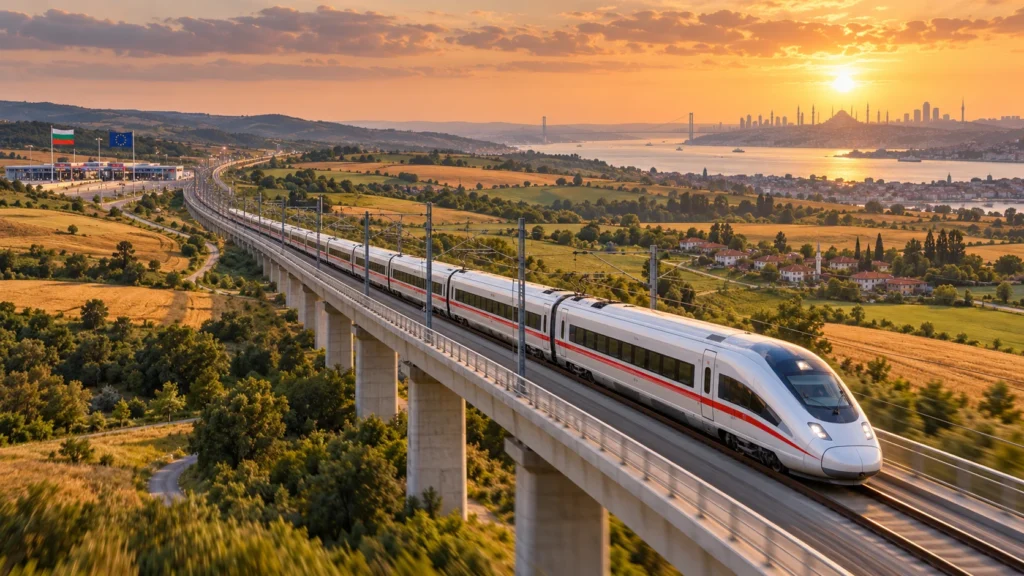
Cross-border mobility between Southeastern Europe and Türkiye has reached a historic turning point with the formal commissioning of the high-speed rail line connecting Çerkezköy to the Kapıkule border post near Edirne. Built under the direction of Turkish State Railways in partnership with international construction consortia, the newly completed 153-kilometre railway forms the cornerstone of the modern transit corridor running between Istanbul and the European Union border at Bulgaria.
The modern electrified double-track alignment enables passenger train sets to operate at cruising speeds of up to 200 kilometres per hour. By bypassing outdated track geometries and replacing aging regional routes, the infrastructure slashes passenger transit times from over four hours down to just one and a half hours. In addition to accelerating freight transit across continental supply chains, the line offers leisure travelers, cultural tourists, and regional commuters a rapid, low-carbon transit alternative across historic Thrace.
Enhancing Connectivity Across Historical Thrace
The newly opened stretch begins in Çerkezköy, a vital industrial and passenger hub situated west of metropolitan Istanbul, and extends through the rolling interior of Eastern Thrace to Kapıkule on the Bulgarian frontier. This section represents the longest contiguous segment of the 229-kilometre flagship railway project that will ultimately provide unbroken high-speed connectivity directly from Halkalı, a primary rail terminal on Istanbul’s European side.
For the regional visitor economy, the railway dramatically opens access to historic cultural treasures. Edirne, once the imperial capital of the Ottoman Empire before the fall of Constantinople, is now directly reachable via high-speed services. Visitors can easily plan day trips and weekend itineraries from surrounding regions to explore Edirne’s world-renowned Selimiye Mosque, historic covered bazaars, Ottoman bridges spanning the Tunca and Meriç rivers, and celebrated culinary culture without facing the delays of highway traffic.
Beyond urban hubs, the high-speed route connects key Thracian towns including Lüleburgaz and Babaeski. This integration is anticipated to stimulate rural tourism, heritage trails, and local artisan markets that have historically remained outside the principal paths of international visitors flying into Istanbul.
Cross-Border Rail Tourism and Sustainable Leisure Journeys
International tourism authorities identify cross-border rail travel as an essential pillar for sustainable tourism development across Europe. By linking into Bulgaria’s national railway network at the Kapıkule-Svilengrad border interface, the line creates a dependable land bridge that unites European passenger systems with the Anatolian and Middle Eastern rail grid.
Official projections from transport and infrastructure ministries indicate that annual passenger numbers using the corridor will jump from approximately 600,000 travelers to more than three million passengers per year as services expand. The rapid journey times make multi-destination European rail holidays far more practical for international tourists. Rather than navigating congested highway border checkpoints or taking short-haul regional flights, travelers can utilize modern, comfortable rolling stock equipped with contemporary amenities.
The development is particularly advantageous for backpackers, eco-conscious travelers, and railway enthusiasts tracing traditional Orient Express corridors. The route enables seamless transitions between the Balkan capitals of Sofia, Plovdiv, and Bucharest and the cultural metropolis of Istanbul, supporting multi-country tourism itineraries that distribute tourist spending equitably across bordering communities.
Intermodal Synergy and Middle Corridor Logistics
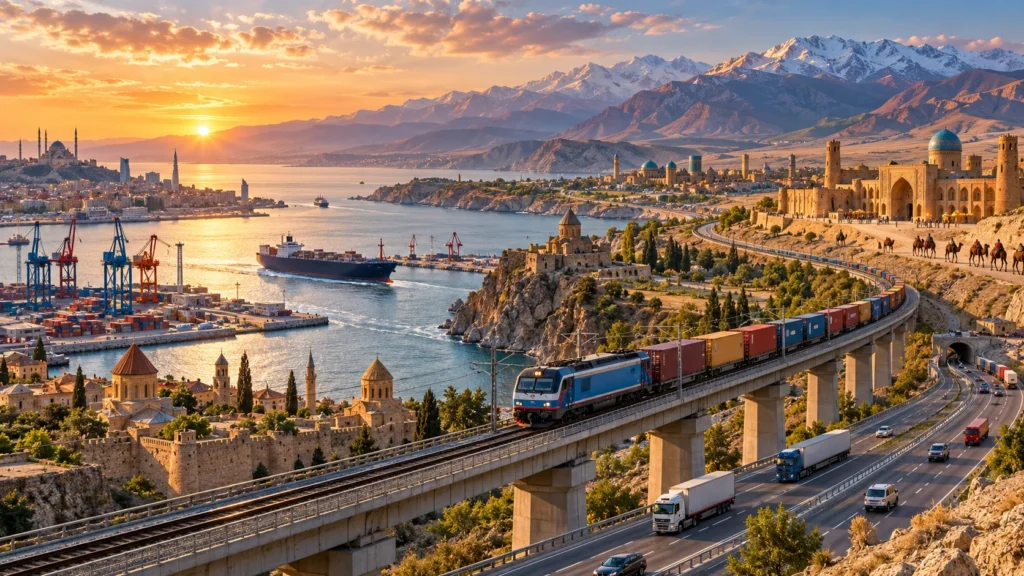
In addition to elevating passenger journeys, the high-speed line integrates with broader intercontinental transit corridors. The route forms an integral component of the multimodal Middle Corridor, which links Asia, the South Caucasus, and continental Europe via the Baku–Tbilisi–Kars railway line and the Marmaray undersea rail tunnel running directly beneath the Bosphorus Strait in Istanbul.
The project’s advanced dual-purpose engineering enables the coexistence of rapid passenger services and heavy container logistics. Annual freight capacity across the corridor is projected to surge from 1.5 million tonnes to 9.5 million tonnes. By shifting large volumes of commercial road haulage onto electrified tracks, the corridor reduces border bottlenecks at Kapıkule, enhances regional air quality, and lowers vehicular carbon footprints across surrounding national parks and agricultural belts.
Government development guidelines highlight that modern transport links directly foster business tourism, commercial exchanges, and cross-border trade delegations. Faster transit between Istanbul’s financial districts and European commercial zones creates new opportunities for corporate conventions, cross-border exhibitions, and regional enterprise partnerships.
Future Horizons for Continental Train Travel
As secondary phases between Halkalı, Ispartakule, and Çerkezköy advance toward total integration, public works authorities are ensuring that customs clearance protocols and intermodal facilities at Kapıkule operate with streamlined efficiency. The ongoing modernization of border inspection facilities and terminal amenities will further shorten dwell times at the frontier, making rail travel between Türkiye and Bulgaria as effortless as modern intercity routes within Central Europe.
The opening of the Çerkezköy-Kapıkule high-speed rail line signifies an enduring commitment to regional integration, environmental sustainability, and travel modernization. By bridging geographic divides, safeguarding the environment through low-emission transport, and reconnecting iconic historic destinations, the high-speed link inaugurates a new chapter for European rail tourism and cross-border discovery across the Eurasian crossroads.
For more travel news like this, keep reading Global Travel Wire