Geopolitical uncertainties affecting traditional maritime chokepoints—such as the Bab el-Mandeb Strait, the Suez Canal, and adjacent sea passages—have accelerated global efforts to diversify intercontinental logistics and transport networks. While international shipping operators continue to address extended oceanic voyages, transport ministries and regional planning authorities are directing strategic investments toward the Trans-Caspian International Transport Route, widely known as the Middle Corridor.
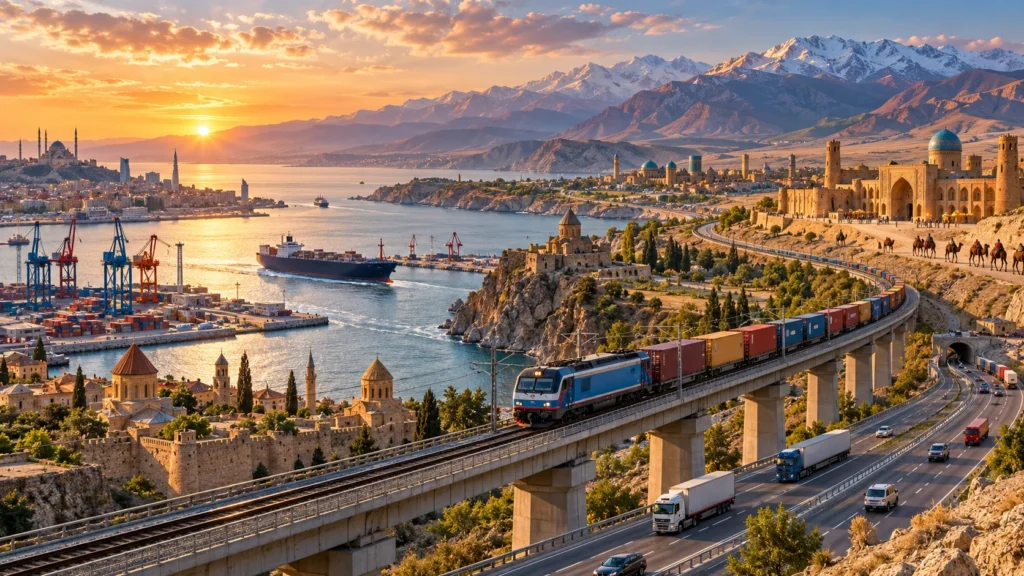
Connecting East Asia and Central Asia through Azerbaijan, Georgia, and Türkiye to the European mainland, this strategic multimodal network combines electrified railways, Caspian Sea maritime operations, expanded modern seaports, and cross-border road arteries. While originally envisioned to reinforce supply chain resilience and sovereign trade flows, the comprehensive development of the corridor is rapidly emerging as a transformative catalyst for regional connectivity, cultural heritage exchanges, and international tourism across historic Silk Road waypoints.
Strategic Geography of the Trans-Caspian Network
The Middle Corridor bridges sovereign territories that have long stood at the crossroads of continental commerce. Starting in Central Asian transit hubs, the route crosses the Caspian Sea toward the Port of Baku at Alat in Azerbaijan, proceeding overland across the South Caucasus through Georgia and connecting with rail and road infrastructure in Türkiye.
Official development targets set by intergovernmental coordination committees aim to expand corridor throughput to between 11 million and 20 million tonnes over the coming years. This operational expansion includes the planned commissioning of ten modern roll-on/roll-off passenger and vehicular vessels on the Caspian Sea, accompanied by major dredging, berth expansion, and digital customs integration across coastal maritime terminals.
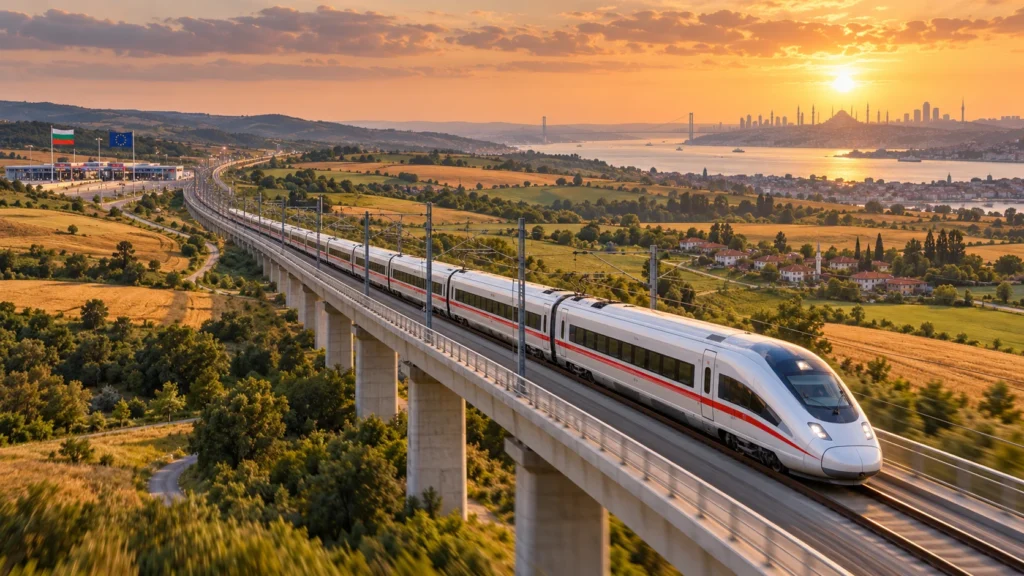
For international travelers and regional visitors, this infrastructure overhaul provides new opportunities to navigate historically remote inland destinations. Rather than depending exclusively on aviation links between major capitals, the integration of passenger-capable rail lines, roll-on/roll-off sea links, and modern international highway spurs creates the practical foundation for multi-country Silk Road itineraries. The route allows travelers to move progressively across changing topographies, arid steppes, and mountain ranges, discovering UNESCO World Heritage architecture, ancient caravan centers, and distinct regional traditions.
Azerbaijan and the South Caucasus as a Central Tourism Hub
Occupying a pivotal geographic position along the network, the Republic of Azerbaijan provides the essential link between the eastern and western sections of the trans-Caspian system. Through the strategic expansion of the Port of Baku, national railway modernizations, and direct connections to the Baku–Tbilisi–Kars railway line, the country facilitates fluid east-west transit across the Caspian basin.
These infrastructure advancements directly enhance visitor flows into historic urban centers and preserved mountain landscapes:
Modern passenger rail connections link the architectural landmarks of Baku on the Caspian shoreline with historic regional hubs like Sheki, known for its Silk Road merchant caravanserais and palace craft traditions.
Rail corridors seamlessly integrate with Georgia’s transport system, providing travelers with convenient land links to Tbilisi and the Black Sea coastal ports of Batumi and Poti.
Strategic transport projects, including ongoing infrastructure modernization across liberated territories and sovereign links connecting mainland regions with Nakhchivan via designated transit corridors, create opportunities to establish scenic travel corridors across historically significant valleys.
Coordinated regional border arrangements between Azerbaijan, Georgia, and Türkiye establish unified protocols that simplify land border clearances for scheduled international transport services.
By combining public works investments with heritage conservation, regional authorities are converting commercial transit arteries into accessible cultural tourism trails that distribute visitor spending into rural artisan communities, family-run guesthouses, and local agricultural producers.
Multimodal Transport Integration and Operational Synchronization
The sustained success of the Middle Corridor depends on operational alignment across participating sovereign nations. Transport and risk management experts highlight that expanding physical capacity alone is insufficient without institutional standardization.
To achieve optimal efficiency, participating transport ministries are establishing interoperable digital customs platforms, standardized cross-border documentation, unified tariff structures, and joint risk monitoring protocols. Synchronizing railway operations with maritime schedules on the Caspian and Black Seas reduces idle waiting times at international interchange hubs, ensuring predictable journeys for commercial operators and passenger transit services alike.
Furthermore, expanding the corridor’s institutional framework to encompass Central Asian partners strengthens collective transport security. Established energy and logistics pipelines—including the Baku–Tbilisi–Ceyhan route, the Southern Gas Corridor, and interlinked international rail systems—demonstrate that long-term trilateral cooperation between Azerbaijan, Georgia, and Türkiye provides a proven model for regional stability that can be extended eastward.
Sustainable Regional Mobility and Future Tourism Horizons
Beyond its function as a resilient alternative to vulnerable maritime choke points, the Middle Corridor represents a vital engine for economic and tourism diversification across Eurasia. Establishing transparent, predictable, and open transit conditions ensures that diverse nations share common commercial and cultural interests along a shared territorial axis.
As railway electrification projects proceed, Caspian Sea vessel fleets modernize, and digital border clearance systems mature, the Middle Corridor is evolving into a modern multimodal artery. By connecting ancient Silk Road oases with contemporary urban centers, the corridor offers a sustainable, overland travel route that bridges cultures, encourages multi-destination exploration, and safeguards long-term connectivity across the Eurasian continent.
For more travel news like this, keep reading Global Travel Wire