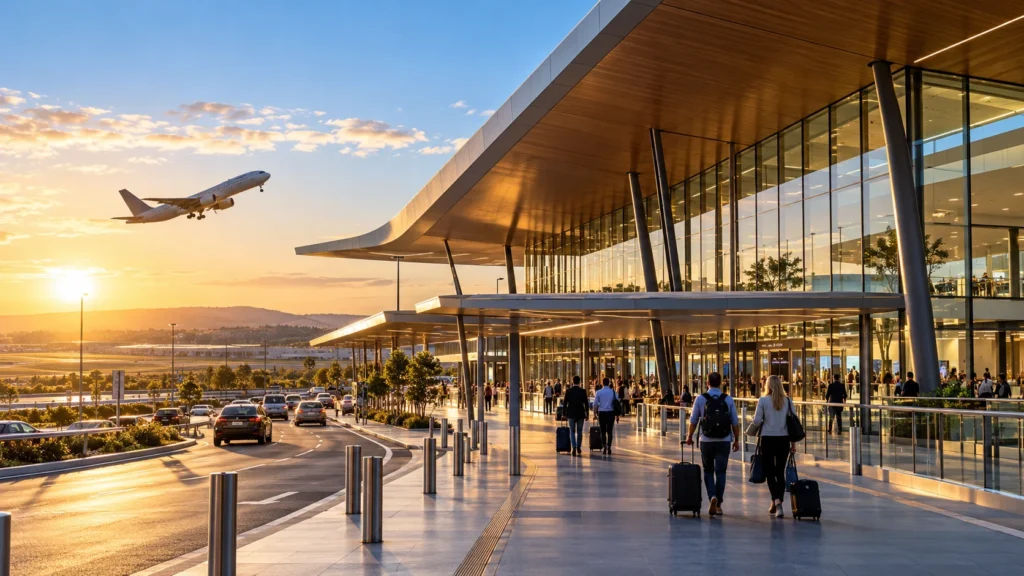
The landscape of Australian aviation and regional visitor economies has reached a historic milestone with the official commencement of commercial operations at Western Sydney International (Nancy-Bird Walton) Airport. Marking the first major greenfield aviation hub built in the metropolitan Sydney basin in generations, the airport officially opened its gates to travelers, inaugurating regular passenger services and unlocking long-term capacity for domestic and global tourism.
The maiden commercial service, Jetstar flight JQ362 bound for the Gold Coast, marked the beginning of scheduled runway operations. The departure drew worldwide interest from aviation enthusiasts and industry watchers alike, quickly emerging as the most tracked flight globally on digital flight-monitoring radars as it climbed into the skies. For local travelers and tourism authorities, the moment represented the realization of decades of strategic planning designed to transform Sydney into a dual-airport gateway capable of sustaining visitor demand well into the century ahead.
Expanding Domestic and Trans-Tasman Visitor Networks
Positioned 44 kilometers west of the Sydney Central Business District, the modern facility at Badgerys Creek provides immediate, frictionless air connectivity for more than two million residents living across the rapidly expanding Western Sydney region. Previously required to navigate cross-city congestion to access Sydney Airport at Mascot, leisure travelers and inbound visitors now benefit from direct access to prominent Australian holiday markets.
Under the initial deployment of commercial timetables, Jetstar is initiating up to 24 weekly return services connecting Western Sydney directly with major leisure corridors including Melbourne and Brisbane, alongside regional holiday destinations like the Gold Coast. These domestic city-pair connections significantly expand seat capacity into Greater Sydney during peak travel seasons, giving holidaymakers flexible entry points into New South Wales without urban bottlenecks.
The tourism network expands internationally within days of opening, as Air New Zealand commences trans-Tasman operations linking Western Sydney directly to Auckland. This inaugural international connection will restore a vital pipeline for visiting friends and relatives, cross-border commercial travelers, and international tourists touring New South Wales and New Zealand. Additional scheduled departures to major regional holiday hubs, including direct flights to Bali, are slated to integrate into the route network, consolidating the precinct as a versatile launching pad for regional holidaymakers.
Driving Tourism Growth Across Greater Western Sydney
The commissioning of Western Sydney International Airport is fundamentally altering the distribution of visitor spending across New South Wales. Tourism authorities have long emphasized the visitor potential of Western Sydney, an expansive precinct that serves as the natural geographical foyer to the UNESCO World Heritage-listed Greater Blue Mountains, the historic Hawkesbury River basin, and thriving multi-ethnic dining and cultural quarters.
By landing passengers directly within the region, the new gateway disperses leisure spending away from traditional inner-city harborside hubs and channels visitor dollars directly into regional hospitality providers, regional tour operators, indigenous cultural institutions, and regional eco-resorts. Inbound travelers arriving through the Nancy-Bird Walton terminal enjoy shortened travel times to mountain retreats, outdoor adventure parks, national heritage reserves, and major entertainment and sporting arenas located throughout Western Sydney.
For the international visitor market, the presence of a 24-hour, curfew-free modern airport provides airlines with unprecedented scheduling flexibility. Free from legacy movement restrictions, carriers can design customer-friendly arrival and departure windows that optimize transit times, encourage overnight leisure stays, and foster stronger regional connection points across Australian domestic routes.
Catalyzing Infrastructure and Regional Employment
The official opening of the terminal facilities brought together senior commonwealth and state representatives, including Federal Transport Minister Catherine King and New South Wales Premier Chris Minns, underscoring the collaborative governance that brought the multi-billion-dollar project from blueprint to operational reality. Federal leaders highlighted that the precinct serves as far more than an air transport terminal; it functions as an economic engine engineered to stimulate job creation, workforce skills development, and permanent travel accessibility for future generations.
Surrounding the airfield, the development of the broader Western Parkland City and the Aerotropolis employment zone continues to attract major capital investments in advanced logistics, commercial accommodation, freight infrastructure, and business tourism precincts. New surface transport connections, dedicated arterial motorways, and future integrated passenger rail networks are systematically linking the airfield to regional hubs like Penrith, Liverpool, and Campbelltown, establishing a cohesive regional travel network.
Named in honor of pioneer aviator Nancy-Bird Walton, the terminal honors Australia’s aviation heritage while integrating passenger processing systems designed for touchless check-in, swift baggage logistics, and energy-efficient environmental standards.
A Long-Awaited Chapter for Australian Travel
The opening brings to a definitive conclusion decades of governmental analysis, inter-agency studies, and regional discourse regarding the requirement for supplementary aviation infrastructure to support the eastern seaboard of Australia. The presence of two major commercial airports servicing New South Wales ensures structural resilience, provides national airlines with room to grow their passenger fleets, and insulates the national economy against capacity bottlenecks.
For the passengers who secured boarding passes aboard the inaugural flight to the Gold Coast, the journey was a personal celebration of community progress. Local residents gathered at the departure gates to commemorate the historic occasion, celebrating a home-grown gateway that firmly integrates their communities into national and international travel itineraries. As route networks expand, Western Sydney International Airport stands ready to reshape the geography of Australian tourism, welcoming millions of future travelers directly to the heart of western New South Wales.
For more travel news like this, keep reading Global Travel Wire