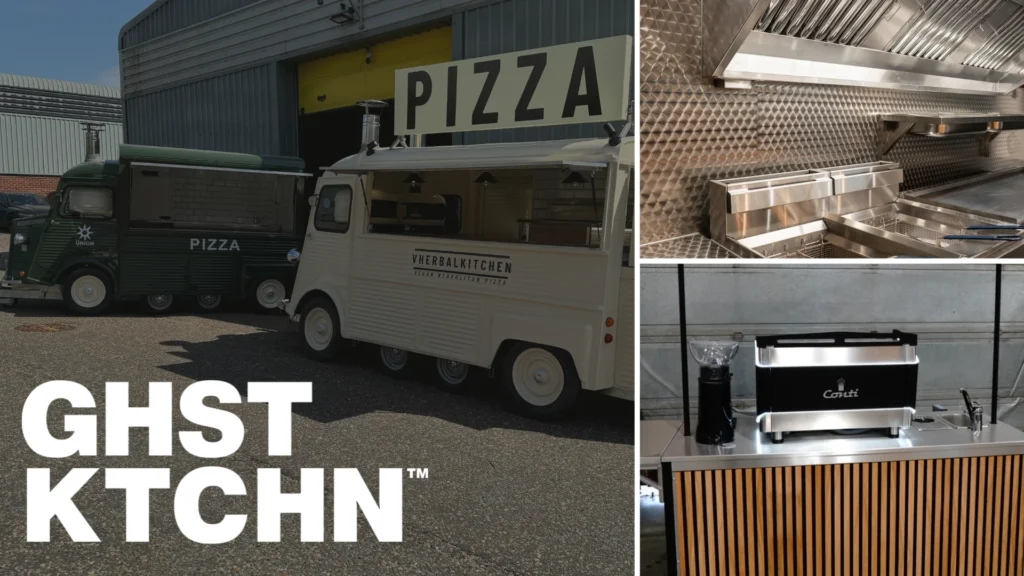
GHST KTCHN has expanded its manufacturing facilities as hospitality businesses show growing interest in mobile catering trailers.
The UK company has moved into premises approximately four to five times larger than its previous site. The relocation comes as restaurant operators explore ways to serve customers beyond traditional premises.
Project and Sales Coordinator Rich Duval said the company had experienced growing interest over successive months and years. He discussed the business during the Hospitality B2B Portfolio event, where GHST KTCHN displayed a retro-inspired coffee trailer.
For tourism and hospitality businesses, mobile foodservice offers potential opportunities at outdoor events, attractions and temporary venues. However, the company has not announced specific tourism contracts or disclosed how many trailers operate at visitor destinations.
Duval’s comments reflect GHST KTCHN’s own experience. They do not establish growth rates for the wider UK mobile catering market.
Larger Facility Supports Future Ambitions
The move gives GHST KTCHN more space to develop its trailer manufacturing operations. Duval said the company previously produced approximately 55 to 60 trailers annually.
He did not disclose a production target for the larger facility. Additional space could support future manufacturing activity, although output will also depend on staffing, equipment and customer demand.
For hospitality operators, a wider choice of mobile catering units could support businesses exploring new locations and service formats. Restaurants, coffee shops and event caterers may consider trailers when permanent premises do not suit their plans.
However, operators must also assess towing requirements, site access, utilities and trading permissions before committing to a mobile operation.
East London Coffee Trailer Takes Centre Stage
At the event, GHST KTCHN showcased a high-output coffee trailer built for an East London business.
Duval said the project involved several months of collaboration, from initial design discussions through to completion. The trailer includes coffee preparation equipment such as a coffee machine, grinder and hot-water facilities.
Its retro styling attracted attention at the exhibition, while its layout supports the customer’s coffee service. The company did not provide an hourly drinks capacity or detailed equipment specifications.
The project illustrates how a mobile unit can combine a distinctive appearance with a practical foodservice function. For hospitality businesses, that combination may help create a recognisable presence at events and temporary trading locations.
A trailer’s suitability will still depend on its equipment, available workspace and the needs of its operator.
From Vintage Vans to Purpose-Built Trailers
GHST KTCHN’s designs draw inspiration from classic Citroën vehicles. Duval said the company initially restored older vehicles before changing its approach.
Those early projects involved extensive mechanical work. However, ageing engines and other components sometimes created reliability problems after customers received their vehicles.
The company later developed purpose-built trailers that retain a vintage-inspired appearance without relying on old vehicle engines. Its current trailers require a separate towing vehicle.
Duval said the design also uses the cab-inspired section as working space. The company offers different configurations, including short- and long-wheelbase designs.
This approach gives customers a choice of layouts while preserving the visual character associated with classic catering vehicles. The interview did not disclose specific dimensions or towing weights.
Customer Involvement Shapes Trailer Design
GHST KTCHN places customer involvement at the centre of its design and manufacturing process, according to Duval.
Some clients arrive with detailed plans, while others seek guidance as they develop their concept. Customers can meet designers, see the production line and discuss their requirements with the team.
Duval also highlighted the company’s hands-on manufacturing culture. He said its director remains involved in production alongside family members.
The company regards design, craftsmanship and customer experience as key strengths. It did not provide independent quality comparisons or customer satisfaction figures.
What Mobile Catering Could Mean for Tourism
Food and drink often form part of a visitor’s experience at festivals, attractions and outdoor gatherings. Mobile catering could help operators serve those audiences in locations without permanent kitchens.
A coffee trailer, for example, might suit a temporary event or a seasonal visitor setting. Operators could also consider mobile units when testing demand before investing in a permanent venue.
These possibilities do not guarantee additional visitor spending or tourism growth. The interview did not identify confirmed deployments at festivals, airports or attractions.
Businesses must also plan for food safety and local requirements. UK government guidance states that new food businesses, including mobile operators, must register with their local authority at least 28 days before trading.
GHST KTCHN’s expansion signals confidence in its own opportunities as hospitality businesses explore flexible foodservice. For the wider tourism sector, the practical impact will depend on where operators choose to trade and how they serve visitors.
For more travel news like this, keep reading Global Travel Wire