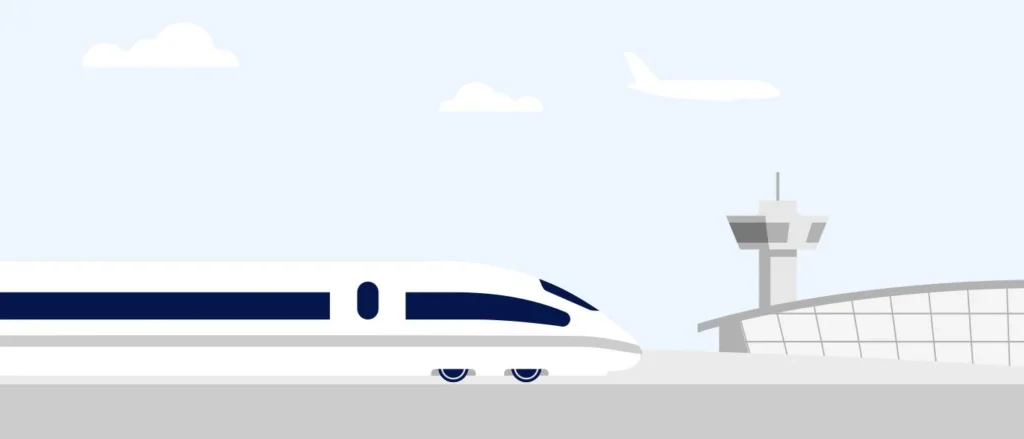
Lufthansa and Air France are integrating railway journeys into flight bookings, giving travellers alternative ways to reach major European airports. Their partnerships with Deutsche Bahn and SNCF connect regional cities with international flights, changing how passengers plan holidays and business trips.
The development combines two transport modes within coordinated itineraries rather than requiring passengers to arrange every stage independently. For tourism businesses, these connections create opportunities to package regional destinations alongside international arrivals.
However, the transition varies by country, route and airport. It does not establish a Europe-wide withdrawal of domestic flights or identical arrangements across airline groups.
France Targets Specific Short Flight Routes
France introduced restrictions on certain domestic flights where suitable direct railway alternatives take less than two and a half hours. The framework also considers service frequency and timetable suitability, making its scope more specific than a simple distance threshold.
The government’s summer 2026 guidance identifies routes potentially subject to restrictions, including Paris-Orly connections with Nantes, Lyon and Bordeaux. Its published list also includes other city pairs, reflecting route-specific assessments rather than a blanket domestic aviation ban. ecologie.gouv.fr
For travellers, the distinction matters when comparing airports and planning onward journeys. A railway alternative serving central Paris does not necessarily provide the same connection as a train reaching an airport.
Consequently, passengers should check their actual itinerary instead of assuming every short French flight faces the same restriction.
Lufthansa Links Regional Cities With Frankfurt
Lufthansa Express Rail combines selected Deutsche Bahn train services with flights through Frankfurt Airport. The product allows passengers to arrange their railway and airline journey together, with a transfer guarantee.
Participating stations include Cologne, Stuttgart, Düsseldorf and Nuremberg, alongside other German cities. Travellers receive separate boarding passes for the train and flight, while their booking specifies the railway departure.
This arrangement can simplify airport access for passengers starting near participating stations. Nevertheless, it does not mean every participating city has lost its air service or every train carries airline connection protection.
The baggage arrangements also require attention. Passengers remain responsible for their luggage during the railway journey and check it after reaching Frankfurt Airport. Lufthansa
Air France Combines Train And Flight Bookings
Air France’s Train + Air service similarly allows passengers to book and pay for train and flight journeys together. The arrangement brings railway access into the airline booking process, helping travellers organise a coordinated itinerary.
For international visitors, this approach creates another way to include regional France within a wider holiday. Equally, residents outside Paris can consider railway access when arranging international departures.
However, passengers must examine the station and airport named in their booking. Different transfer arrangements can affect walking distances, baggage handling and the time available before departure.
The service represents Air France’s partnership with SNCF. Travellers should not assume identical conditions apply across every carrier within Air France-KLM. Air France, France
Tourism Opportunities Extend Beyond Major Hubs
Integrated railway connections can help travel companies develop itineraries involving regional cities alongside international gateways. Hotels, attractions and local transport providers could benefit when visitors add destinations or extend their stays.
For example, a combined booking may help travellers assess a regional stop without arranging a separate domestic flight. However, convenience depends on railway frequency, luggage requirements and the location of accommodation.
Tourism businesses should therefore match packages with confirmed services and realistic transfer times. Improved access creates an opportunity, while actual reservations and spending establish the commercial outcome.
The available evidence does not demonstrate a specific increase in hotel occupancy or tourism employment from these partnerships.
Travellers Need Clear Transfer Information
Passengers should compare the complete journey before choosing between a feeder flight and a railway connection. Station access, airport security, baggage drop deadlines and transfer distances all influence total travel time.
Families and travellers carrying several bags should pay particular attention to luggage responsibilities. Those requiring assistance should also confirm support for both railway and airport stages.
Furthermore, a separately purchased train ticket may carry different protections from an airline’s integrated product. Travellers should review disruption arrangements and contact details before departure.
These practical details determine whether a combined itinerary delivers the convenience passengers expect.
Reliable Connections Will Shape Future Growth
Airline and railway partnerships offer a practical way to combine regional access with international aviation. Their success depends on dependable timetables, clear booking conditions and effective support when disruption occurs.
For destinations, the priority involves turning connectivity into appealing visitor experiences. For passengers, the strongest benefit comes when the complete journey offers suitable timing, manageable transfers and competitive overall costs.