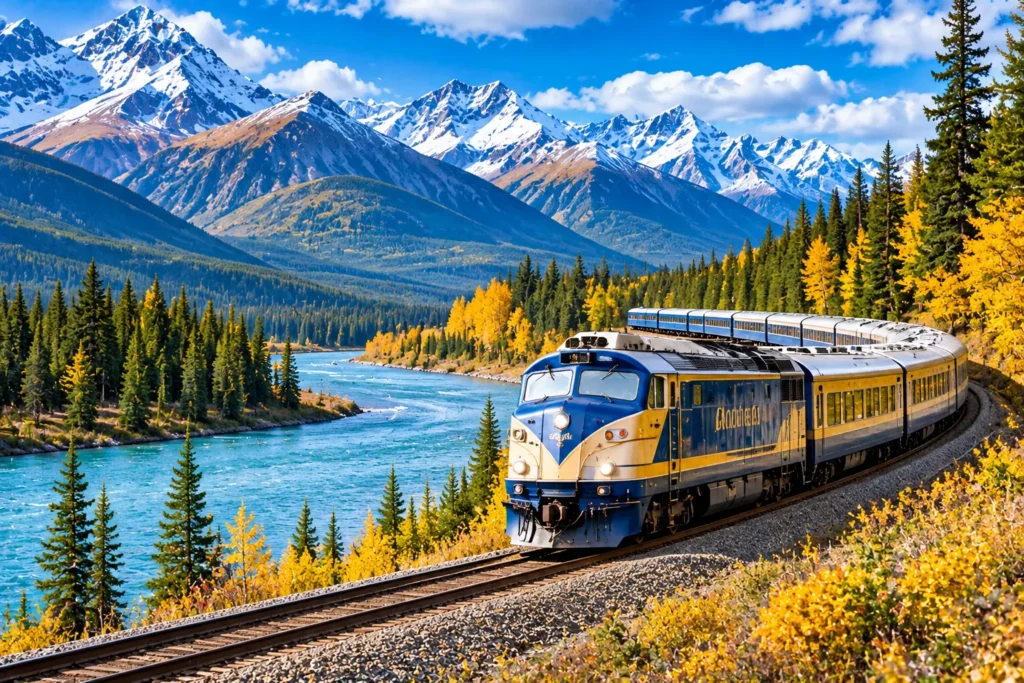
Official national railway timetables, public transport ministry declarations, and international travel advisories demonstrate that long-distance overland rail travel continues to hold a compelling appeal for experiential travelers worldwide. Moving beyond functional point-to-point transit, transcontinental passenger rail routes allow passengers to navigate changing geography, cross multiple administrative boundaries, and traverse remote wilderness regions. From the high-altitude tracks traversing the Tibetan Plateau to vast routes cutting across North American plains and Siberian expanses, scheduled passenger services offer rare insight into the physical scale and cultural heritage of the world’s largest nations.
While modern aviation delivers rapid intercity travel, sovereign rail operators continue to maintain long-distance passenger services that provide scheduled sleeper accommodations, observation lounges, and regional dining. For international leisure voyagers, embarking on journeys that span several continuous days requires careful evaluation of published timetables, visa requirements, border protocols, and verified official consular guidance.
High-Altitude Engineering Along China’s Transcontinental Rail Corridors
In East China, state railway infrastructure operator China State Railway Group maintains direct long-haul rail services linking southern maritime hubs with high-altitude western autonomous regions. Among the most prominent long-distance operations is Train Z264, which connects Guangzhou Station with Lhasa Railway Station in the Tibet Autonomous Region. Covering approximately 4,980 kilometers in roughly 53 hours, the daily transcontinental route traverses eight provincial-level administrative divisions before ascending onto the Qinghai-Tibet Railway.
Official engineering documentation confirms that the Qinghai-Tibet Railway holds the distinction of operating the highest railway line in the world, reaching its summit at the Tanggula Mountain Pass at an elevation of 5,072 meters above sea level. Passenger coaches operating along this elevated corridor are custom-engineered with centralized oxygen enrichment systems, UV-filtering window panes, and independent medical monitoring equipment to protect travelers from high-altitude sickness.
Administrative guidelines from the Tibet Tourism Bureau mandate that international passport holders obtain an official Tibet Travel Permit through registered travel providers before boarding trains bound for Lhasa, in addition to securing standard Chinese consular visas. Independent bookings are processed directly through the official national passenger railway platform, where travelers can review real-time seating availability across hard-sleeper and soft-sleeper berths.
Complementing the southwestern mountain route, Train Z138 operates across 4,719 kilometers from Guangzhou to Urumqi in the Xinjiang Uygur Autonomous Region, taking approximately 48 hours. The service travels through the historic Hexi Corridor, passing through Lanzhou, Jiayuguan, and Turpan before arriving in the northwestern oasis territory. Travelers booking long-distance journeys across mainland China must review the latest official consular advisories, noting updated security assessments and entry considerations issued by foreign affairs ministries.
Transcontinental Wilderness Crossings Across North America
In North America, national rail corporations operate scheduled passenger routes that trace early pioneer passages and scenic river valleys. In Canada, national passenger rail operator VIA Rail runs the celebrated transcontinental train known as The Canadian. Linking Toronto Union Station on Lake Ontario with Pacific Central Station in Vancouver on the Pacific Coast, the service covers 4,466 kilometers across four overnight periods, with running schedules ranging between 92 and 97 hours.
Traversing the dense boreal woodlands of the Canadian Shield, the wide agricultural plains of Saskatchewan and Manitoba, and the dramatic mountain passes of the Canadian Rockies near Jasper National Park, the service offers multiple accommodation tiers. Public railway schedules indicate bi-weekly seasonal departures, offering coach seating alongside dedicated sleeper berths and private cabins. Premium tiers incorporate full onboard dining service and panoramic dome car access, providing unobstructed views of glacial peaks and pine forests.
In the United States, national rail operator Amtrak operates its longest unified route by linking the Texas Eagle with the Sunset Limited. Operating three times weekly between Chicago Union Station and Los Angeles Union Station via San Antonio, the combined through-car service (Trains 421 and 422) covers 4,390 kilometers (2,728 miles) in approximately 65 hours and 43 minutes. The line crosses seven states, spanning Illinois, Missouri, Arkansas, Texas, New Mexico, Arizona, and California.
Annual operational reports from Amtrak indicate strong public utilization across the multi-state route, with over 370,000 passenger journeys recorded across the Texas Eagle operating network in recent annual cycles. Traveling along the historic Chisholm Trail corridor, the Edwards Plateau, and the Sonoran Desert, passengers transition from Midwestern waterways to southwestern desert landscapes through scheduled sleeper accommodations and dining services.
The Northern Eurasian Overland Traverse and Travel Advisories
The longest scheduled direct passenger rail route in the world remains the Trans-Siberian corridor operated by Russian Railways. Tracing a historic continuous line completed in 1916, flagship passenger services, including Train 1 and 2, cover approximately 9,300 kilometers between Moscow’s Yaroslavsky Station and Vladivostok on the Golden Horn Bay of the Pacific Ocean. Crossing eight time zones over roughly 164 hours, the seven-day journey skirts the Ural Mountains, cuts across the Siberian taiga, and passes along the southern shoreline of Lake Baikal, the world’s deepest and oldest freshwater lake.
While the engineering legacy of this northern Eurasian traverse remains an exceptional feat of transport history, foreign ministries emphasize that geopolitical developments strictly govern the feasibility of leisure journeys. The United States Department of State maintains a Level 4 “Do Not Travel” advisory for the Russian Federation, alerting citizens to severe legal restrictions, arbitrary enforcement of local laws, and limited consular capabilities. Government travel bodies urge travelers to prioritize personal safety and strictly review official sovereign advisories before considering long-distance itineraries across volatile jurisdictions.
By coordinating transport modernization with heritage tourism preservation, sovereign passenger railways provide a distinctive perspective on continental geography. Whether ascending glacial mountain passes or traversing expansive prairies, long-distance rail journeys remain an enduring testament to global civil engineering and overland exploration.
For more travel news like this, keep reading Global Travel Wire