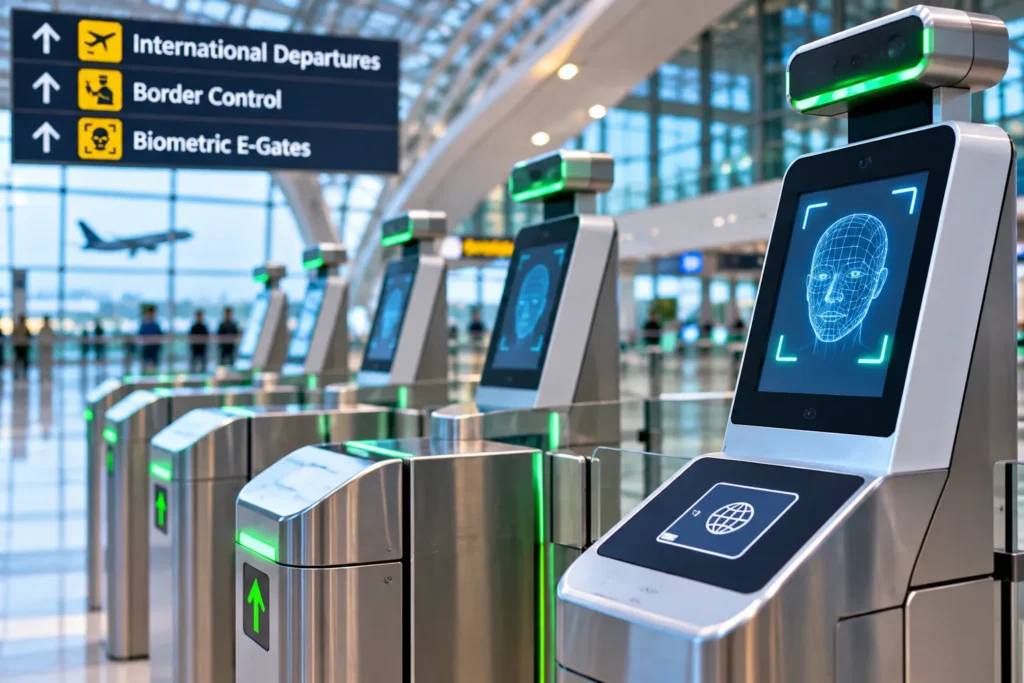
Official aviation industry benchmark releases and multilateral transport evaluations confirm that international travelers are widely adopting automated processing systems, even as cumbersome immigration hurdles remain a major barrier to cross-border journeys. According to the comprehensive 2026 Global Passenger Survey released by the International Air Transport Association, passenger adoption of airport biometric technology and digital travel credentials has reached record highs. The multilateral findings, drawing upon detailed feedback from more than ten thousand verified respondents across more than two hundred sovereign nations, indicate that while travelers increasingly demand contactless terminal processing and intelligent route-planning solutions, opaque visa regulations continue to deter significant segments of international tourism.
Aviation administrators emphasize that rapid advancements in digital identity management are transforming standard airport transit. However, transport policy leaders caution that sovereign immigration procedures must evolve in tandem with civil aviation technology to prevent administrative bottlenecks at primary international entry terminals.
Rapid Adoption Across Airport Biometrics and Digital Credentials
The annual monitoring report shows that fifty-eight percent of air travelers experienced biometric identification checkpoints during their journeys over the preceding twelve months. This represents an eight percentage point rise from fifty percent recorded across 2025 and an increase of twenty-four percentage points compared to baseline metrics established in 2022. Passenger contentment among travelers utilizing facial scans and automated recognition reached a survey record of eighty-seven percent, demonstrating broad acceptance of automated processing.
Willingness to share personal identification markers to accelerate security clearance continues to expand. Seventy-eight percent of survey participants indicated a readiness to submit biometric data in exchange for avoiding repeated manual checks of physical passports and paper boarding passes. Among that group, seventy-five percent expressed an express preference for completing a single advance digital enrollment that enables automated recognition at every touchpoint throughout departure and arrival terminals.
Interest in digital passports—often referred to in sovereign civil aviation standards as Digital Travel Credentials—is equally high. Eighty-four percent of surveyed passengers confirmed they would utilize a digital passport during remote online check-in rather than presenting physical documents. Furthermore, eighty-two percent expressed willingness to share digital credential data directly with airlines upon booking to receive automated destination entry guidance. Despite this willingness, privacy governance remains a central concern: fifty-nine percent of travelers worry about potential data breaches, forty-nine percent express caution regarding third-party data sharing, and forty-one percent cite a lack of transparent information on how sensitive data is managed.
Artificial Intelligence in Traveler Planning and Consumer Choices
The report underscores that machine intelligence is fundamentally reshaping how international travelers discover destinations and organize journeys. Forty-nine percent of surveyed international voyagers confirmed utilizing artificial intelligence tools for comprehensive travel planning.
Among passengers adopting digital planning assistants, twenty-one percent used algorithmic tools to search for specific flight connections, nineteen percent sought cost-optimized airfare itineraries, and seventeen percent leveraged computational systems to discover new leisure destinations and cultural circuits. Senior aviation officials note that travel providers must align reservation systems with consumer technology, ensuring that digital conversational inquiries can transition smoothly into verified reservations without logistical friction.
Complex Immigration Barriers Deter International Tourism Demand
In contrast to technological advancements within terminal buildings, regulatory entry hurdles continue to suppress international passenger volumes. Official survey tallies indicate that complex immigration requirements discouraged forty-three percent of surveyed travelers from visiting specific international destinations, up from thirty-three percent recorded in 2025.
Among travelers deterred by border controls, fifty-three percent cited excessively complex application processes as the primary deciding factor. Elevated administrative fees and privacy requirements were each identified by seventeen percent of hesitant tourists. Furthermore, regional instability and armed conflict served as significant travel disincentives; of passengers discouraged by regional geopolitical conflicts, seventy-two percent prioritized personal safety, while thirteen percent cited unpredictability regarding border access and flight continuity.
Consumer preferences strongly favor pre-departure digital clearance. Sixty percent of travelers favor applying for necessary entry permits via online digital platforms, compared to twenty-five percent who prefer visiting foreign embassies or consular offices. While more than one hundred sovereign governments currently issue electronic travel authorizations and e-visas, international airline operators report ongoing operational challenges because entry verifications lack multilateral consistency across border gates.
Public Policy Directions for Multilateral Border Governance
Aviation authorities emphasize that realizing the full potential of global tourism requires public agencies and sovereign border directorates to establish unified digital standards. Cross-border harmonization would permit commercial carriers to verify passenger entry eligibility before aircraft departure, reducing airport queue congestion and avoiding inadvertent travel interruptions.
As destination management organizations, airport authorities, and transport ministries structure their forward planning, streamlining border protocols and safeguarding personal data will be vital. By pairing robust consumer data protection with interoperable digital travel identity standards, global destinations can reduce unnecessary visa hurdles and deliver a secure, modern travel experience.
For more travel news like this, keep reading Global Travel Wire