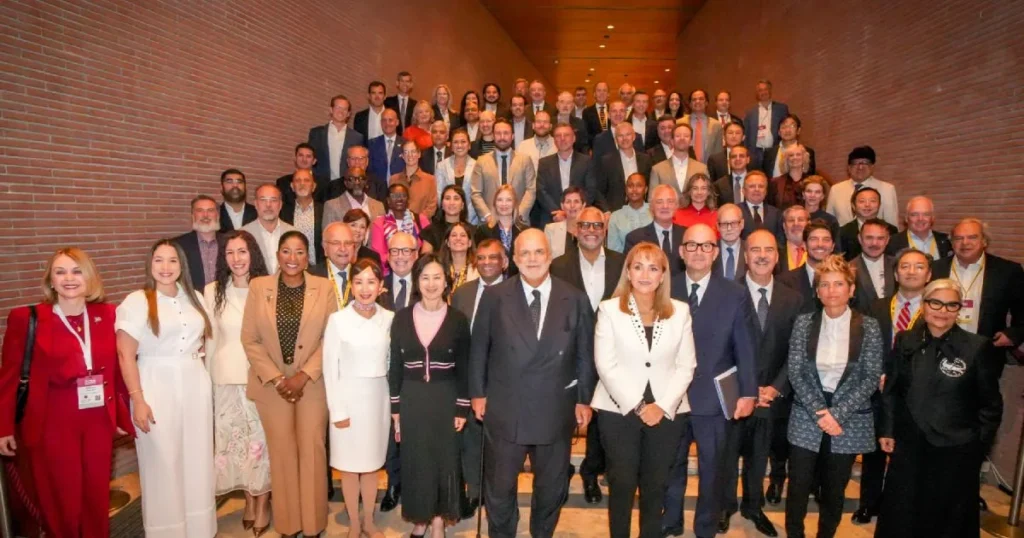
Spain’s Meliá Hotels International and Barceló Hotel Group have returned to the World Travel & Tourism Council alongside Uber. Their participation forms part of a broader membership expansion, with the organisation reporting 50 additions during 2026.
Four Seasons and Mandarin Oriental have also taken Executive Committee seats, strengthening luxury hospitality representation within the council’s leadership.
The developments bring accommodation, mobility and other visitor-economy businesses into a shared forum for industry cooperation. They come as WTTC forecasts a US$11.9 trillion economic contribution from travel and tourism worldwide in 2026.
Returning Operators Broaden Industry Representation
WTTC identified eight returning members, including Meliá Hotels International, Barceló Hotel Group, Uber and travel retailer Avolta.
Their businesses operate across different stages of a journey, from accommodation and ground transport to purchases at travel gateways.
The return of the two Spanish hotel groups adds established hospitality experience to discussions involving destinations, investment and traveller needs.
Uber brings a mobility perspective, while Avolta contributes experience in travel retail.
These different activities demonstrate the breadth of businesses connected with tourism. However, membership announcements do not establish new customer benefits, transport services or hotel developments.
Their immediate significance concerns representation and participation in industry discussions.
New Participants Extend Beyond Traditional Tourism
Businesses welcomed by WTTC include Corinthia Group, Club Med, Investindustrial, Allianz Partners and Pernod Ricard.
The range extends across hospitality, investment, insurance and other activities linked to international travel.
This broader participation allows discussions to include businesses supporting tourism alongside those directly operating holidays, accommodation or transport.
WTTC’s membership includes chairpersons, presidents and chief executives from hotels, airlines, airports, cruise companies, tour operators and technology platforms.
Through that network, the council seeks engagement between private businesses and governments on policy, economic performance and sustainable development.
For destinations, such discussions can address issues shared across multiple parts of the visitor economy rather than individual business categories.
Luxury Hotel Groups Take Leadership Seats
Four Seasons and Mandarin Oriental’s Executive Committee appointments bring additional high-end hospitality experience into WTTC’s leadership.
Mandarin Oriental returns following more than 25 years of previous membership.
Its portfolio comprises 47 hotels, 16 residences and 43 exclusive homes across 30 countries and territories. The group has set a goal of reaching 100 hotels worldwide by 2033.
That target represents a future ambition rather than completed expansion.
Four Seasons, founded in 1961 with its first property in Toronto, has developed an international accommodation and residential business.
Its presence now includes 140 hotels and more than 60 residential properties across 47 countries.
Both companies contribute experience in operating across destinations with different visitor markets and hospitality requirements.
Responsible Growth Shapes Industry Priorities
WTTC presented the membership expansion as a sign of confidence in the organisation and the wider travel sector.
The participating hotel groups emphasised responsible growth, collaboration and long-term relationships with destinations.
Mandarin Oriental connected its renewed involvement with benefits for local communities and the importance of human connections.
Four Seasons highlighted service, people, innovation and resilience as relevant priorities for its participation.
These themes connect leadership discussions with practical tourism concerns, including guest experiences and relationships between businesses and their host destinations.
However, the appointments alone do not establish measurable improvements in sustainability, employment or community income.
Such outcomes depend on the policies and business decisions that follow.
Tourism Forecast Highlights Economic Scale
WTTC projects that travel and tourism will contribute US$11.9 trillion to the global economy during 2026.
The forecast represents 9.9% of worldwide gross domestic product.
Employment supported by the sector is projected to reach 375 million jobs, equivalent to approximately one in nine jobs globally.
These figures describe the anticipated scale of tourism’s economic contribution. They are forecasts rather than final results for the year.
They also provide context for the membership announcement, rather than evidence that additional members caused economic growth.
WTTC’s work includes research into tourism’s economic and social impact alongside policy engagement and cooperation with governments.
Wider Participation Creates A Platform For Cooperation
The expanded membership brings together businesses serving different traveller needs and operating across multiple international markets.
For hotels, transport platforms and destinations, that creates opportunities to discuss challenges extending beyond individual companies.
The return of Meliá, Barceló and Uber also reinforces links between accommodation and mobility within the council’s network.
Meanwhile, Four Seasons and Mandarin Oriental add luxury hospitality expertise to its Executive Committee.
The next measure of progress will be how this participation supports practical cooperation, informed policy discussions and responsible destination development.
For now, the confirmed change is broader industry representation during a year of substantial projected tourism activity.
For more travel news like this, keep reading Global Travel Wire