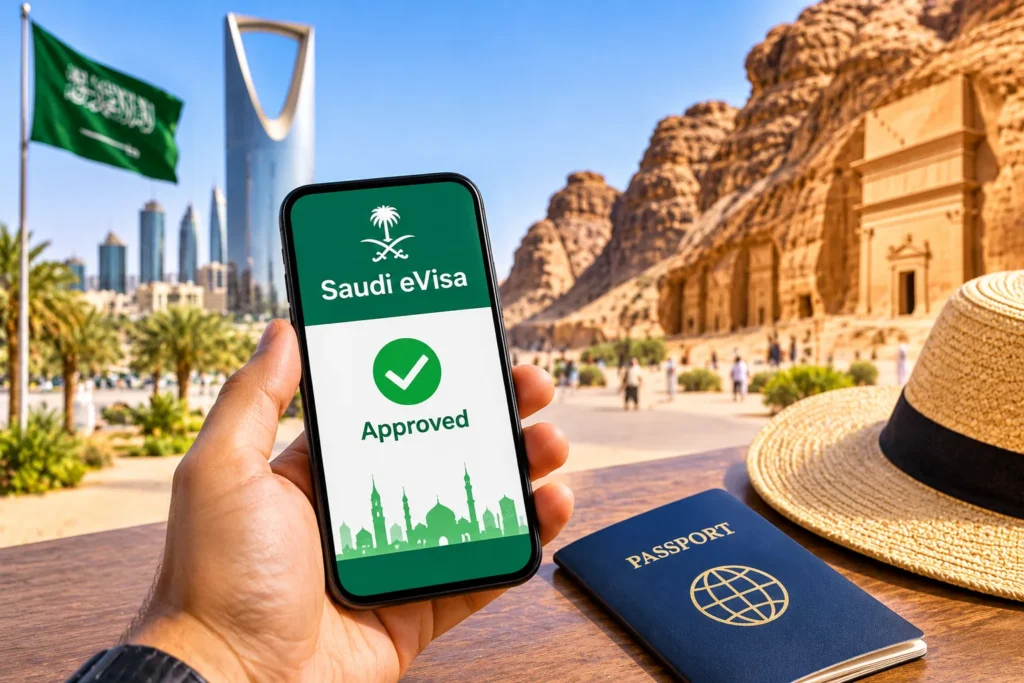
The Kingdom of Saudi Arabia has officially expanded its digital tourism gateway, extending instant tourist e-Visa and visa-on-arrival eligibility to ordinary passport holders from Mexico, Serbia, Bosnia and Herzegovina, and North Macedonia. In a joint policy announcement issued by the Ministry of Foreign Affairs and the Ministry of Tourism, authorities confirmed that citizens from these four nations can now access the Kingdom through streamlined electronic applications or directly upon arrival at designated air, land, and sea ports of entry.
The initiative represents another milestone in the Kingdom’s National Tourism Strategy under Vision 2030, which aims to diversify the national economy, increase international arrivals, and establish the nation as a premier global hub for leisure, cultural heritage, business conventions, and religious travel. With the addition of these four nations, the Saudi tourist e-Visa program has expanded to encompass 72 eligible countries across the Americas, Europe, Asia, and Oceania.
Streamlined Entry and Permitted Travel Categories
Under the revised immigration framework, citizens of Mexico, Serbia, Bosnia and Herzegovina, and North Macedonia no longer need to complete administrative consular procedures at overseas diplomatic missions prior to travel. Eligible travelers can secure a one-year, multiple-entry tourist e-Visa via the official digital visa platform before departure or obtain entry authorization upon touchdown at international gateway hubs, including King Khalid International Airport in Riyadh, King Abdulaziz International Airport in Jeddah, and King Fahd International Airport in Dammam.
The tourist visa framework permits foreign nationals to enter the Kingdom for diverse travel purposes:
Sightseeing, desert excursions, and exploring archaeological destinations including the UNESCO World Heritage sites at Hegra in AlUla, Historic Jeddah, and the At-Turaif District in Diriyah.
Attending major international conventions, industrial trade shows, cultural festivals, and sporting tournaments.
Visiting family members and friends residing in the Kingdom.
Undertaking the Umrah pilgrimage at the Holy Mosques in Makkah and Madinah throughout the year, excluding the restricted Hajj pilgrimage season.
By simplifying digital entry, national authorities have removed historic administrative hurdles, facilitating spontaneous travel, intercontinental stopovers, and international conference participation.
Diplomatic Endorsement and Deepening Bilateral Mobility
Diplomatic representatives from the newly included nations officially welcomed the decision, citing improved mobility as a strategic catalyst for economic, academic, and cultural cooperation.
Mexican diplomatic representatives in Riyadh emphasized that extending digital visa access opens significant outbound leisure and professional pathways for Mexican travelers, students, and entrepreneurs. Diplomatic assessments highlight that direct travel fosters people-to-people connections, allowing international visitors to experience firsthand the Kingdom’s social transformation, culinary heritage, contemporary arts movements, and sustainable tourism ventures along the Red Sea coast.
Similarly, the diplomatic mission of Serbia highlighted that the simplified visa protocol builds upon recent bilateral achievements, including formal agreements on visa abolition for diplomatic and official passport holders. Official statements underscored that enabling direct e-Visa and visa-on-arrival access allows Serbian travelers, including pilgrims intending to perform Umrah, to organize their journeys with unprecedented ease. Enabling citizens to explore the Kingdom’s historical, archaeological, and spiritual landmarks fosters mutual acquaintance and enriches bilateral dialogue across commerce, education, and international transport.
Official Compliance Regulations and Visa Conditions
The Ministry of Tourism has reiterated mandatory legal frameworks governing tourist visit visas to ensure smooth travel experiences and border compliance.
Consular and border regulations specify clear conditions for all visa holders:
Stay Duration: The multiple-entry tourist visa provides a cumulative stay limit of up to 90 days within its one-year validity period.
Overstay Penalties: Visitors must strictly adhere to the duration authorized in their entry permits. Overstaying incurs statutory fines, and tourist visas cannot be renewed or extended until the original visa has officially expired.
Employment Restrictions: The tourist visit visa is granted strictly for leisure, family, event, and religious visits outside Hajj. Engaging in paid commercial employment, work for compensation, or unauthorized labor is strictly prohibited and subject to legal penalties.
Pilgrimage Limitations: While holders of the tourist e-Visa are authorized to perform Umrah, the permit does not grant authorization to participate in the annual Hajj pilgrimage, which requires specialized, quota-governed Hajj visas and permits issued under dedicated regulatory frameworks.
As global transport connectivity expands through national carriers and newly established flight routes connecting the Middle East with Europe and the Americas, the continuous widening of the Saudi tourist e-Visa network reinforces the Kingdom’s status as an accessible, world-class destination welcoming international travelers from across the globe.