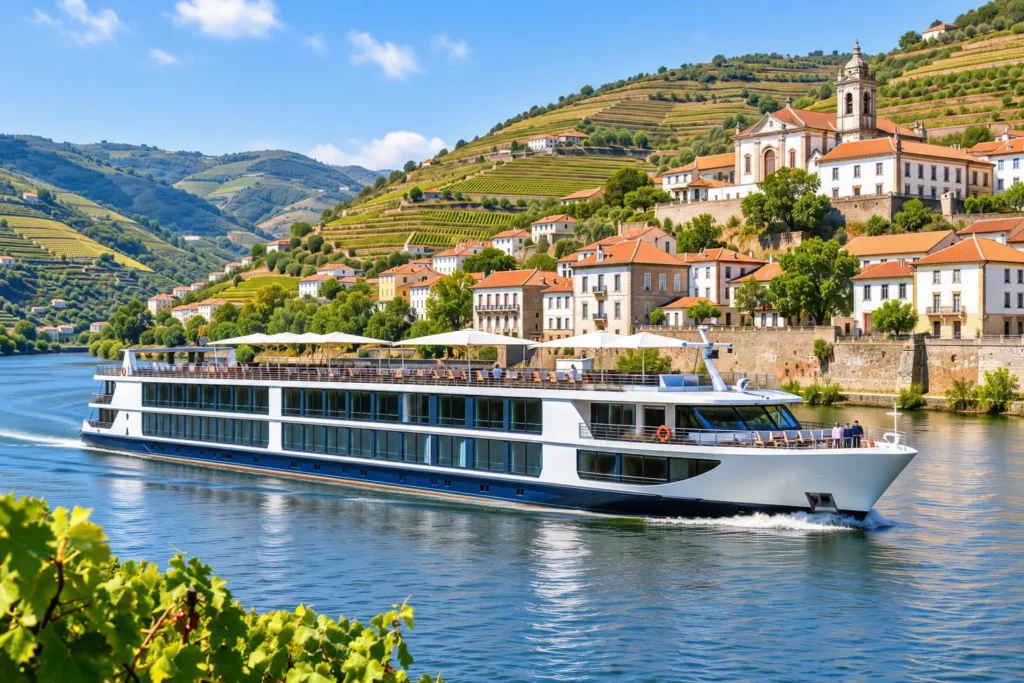
Official tourism board reports from Turismo de Portugal, regional port authority updates, and enterprise operational announcements indicate a steady increase in demand for inland waterway travel across southwestern Europe. The historic Douro river valley, designated as a UNESCO World Heritage cultural landscape, continues to attract international visitors seeking immersive vineyard itineraries, architectural exploration, and sustainable maritime travel. Within this expanding sector, European river cruise operator VIVA Cruises formally announced the renaming of its dedicated Douro passenger vessel, transitioning the ship from Porto Mirante to VIVA MIRANTE as it prepares for its first full operating season directly under the brand’s fleet umbrella.
Fleet Alignment and Maiden Full-Season Deployment
The formal fleet update brings the 80-meter river ship into uniform alignment with VIVA Cruises’ international naming conventions, which feature the signature corporate prefix across its European river fleet. Effective immediately, the vessel enters operational preparations for a comprehensive 2027 sailing calendar encompassing 32 scheduled departures between March and November. The scheduled operating window aligns directly with peak regional tourism cycles, spanning spring blooming across the valley terraces through the autumn harvest and winemaking season.
VIVA MIRANTE was purpose-built to navigate the specific navigational parameters, locks, and bridge clearances of the Douro waterway. Operating with a guest capacity capped at 120 passengers across 60 passenger cabins, the ship maintains a small-ship operational footprint designed to preserve intimate hospitality standards while reducing physical congestion at inland docks. Accommodations located across the upper Diamond Deck and middle Ruby Deck feature floor-to-ceiling sliding glass doors and French balconies, offering direct views of the terraced hillsides. The lower Emerald Deck provides exterior-view staterooms fitted with sealed panoramic viewing windows.
Comprehensive Onboard Amenities and Hospitality Infrastructure
Public vessel specifications and fleet releases detail an extensive array of hospitality features engineered for scenic navigation. Dining infrastructure is centered around two dedicated venues: the primary RIVERSIDE restaurant, which delivers flexible dining hours, open seating, and regional Portuguese-inspired gastronomy, and a specialized secondary bistro positioned to view passing shoreline panoramas.
The ship’s communal architecture includes a forward-facing panoramic lounge and bar, an interconnected double-deck sky lounge, a guest boutique, and an indoor fitness center equipped with cardio machines and weights. The exterior top deck features an open-air sun terrace, passenger loungers, and an integrated swimming pool designed to accommodate the warmer Mediterranean climate characteristic of northern Portugal’s interior during the summer months. An interior guest elevator connects the passenger cabin decks to ensure accessible transit throughout the interior spaces.
Executive leadership from VIVA Cruises highlighted that bringing the vessel fully into the corporate fleet structure allows the operator to combine regional destination discovery with a standardized all-inclusive service model. The company’s standard fare packaging encompasses all on-board meals, high tea service, non-alcoholic and premium alcoholic beverages, daily replenishment of cabin minibars, unlimited Wi-Fi connectivity, and all port taxes and crew gratuities.
Inland Waterway Tourism and Regional Economic Value
Data compiled by Turismo de Portugal and the northern regional development agency (CCDR-NORTE) demonstrates that river cruising represents an indispensable economic catalyst for the Douro valley. By carrying travelers inland from the coastal gateway of Porto toward the Spanish frontier, river journeys distribute visitor spending into rural municipalities that historically relied solely on agricultural commerce.
The standard seven-night itinerary scheduled for the 2027 season embarks from the historic port city of Porto and follows the river eastward through key cultural destinations, including Folgosa, Vega de Terrón on the Spanish border, Pocinho, Pinhão, and Peso da Régua. Along the route, structured shore excursions connect passengers with centuries-old quintas, artisanal olive oil mills, traditional stone villages, and regional viticultural estates.
Municipal authorities along the Douro corridor emphasize that river voyages provide structured, environmentally managed tourist dispersion. Because cruise passengers sleep and dine aboard ship, the model reduces developmental pressure on limited rural hotel infrastructure while still generating direct revenues for municipal museums, local transport providers, guided heritage tours, and independent retail establishments throughout the river basin.
Navigational Management and Environmental Standards
Managing traffic along the navigable 210-kilometer stretch of the Portuguese Douro requires close administrative coordination with the regional waterway management institute, the Instituto da Mobilidade e dos Transportes (IMT), and the Port Authority of Douro, Leixões and Viana do Castelo (APDL). Public regulatory announcements stipulate strict scheduling across the river’s five major lock systems—Crestuma-Lever, Carrapatelo, Bagaúste, Valeira, and Pocinho—to prevent bottlenecking and ensure ecological balance along protected riverbanks.
Modern vessels commissioned for the Douro, including VIVA MIRANTE, incorporate advanced diesel-electric propulsion setups, selective catalytic reduction systems to limit exhaust emissions, and dedicated wastewater treatment facilities that comply with European environmental regulations for inland navigation. Port authorities continue to invest in shore-side power infrastructure at key mooring points, enabling vessels to connect to municipal electrical grids and shut down auxiliary generators while docked, thereby minimizing noise and localized emissions in historic town centers.
Outlook for European River Tourism Demand
Inland cruising remains one of the fastest-growing segments within European leisure travel, supported by strong booking interest from primary source markets including the United Kingdom, North America, Germany, and Australia. Public tourism forecasts indicate that travelers increasingly prioritize destination-centric river journeys that offer unhurried travel paces, high levels of inclusive service, and guaranteed access to authentic cultural heritage.
With bookings officially open and departure dates established through November 2027, the deployment of VIVA MIRANTE reinforces the Douro River’s standing as a premier global river cruise destination. Through continued private fleet investments and public waterway stewardship, the sector continues to demonstrate how modern maritime tourism can support regional preservation, economic vitality, and sustainable visitor mobility.
For more travel news like this, keep reading Global Travel Wire