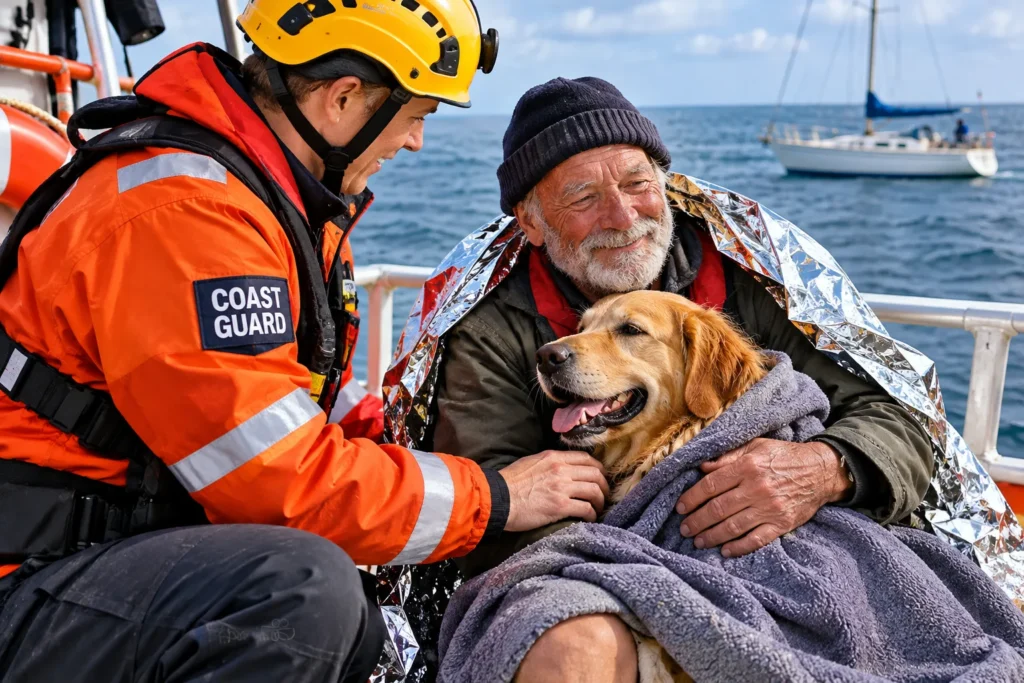
Maritime safety authorities and ocean tourism officials are highlighting the essential role of emergency distress systems following the successful recovery of an 86-year-old mariner and his pet companion. The solo navigator, accompanied by his dog aboard the private sailing vessel named Willow Wind, was located and brought to safety approximately 460 nautical miles off the coast of San Diego, California, after experiencing prolonged mechanical disablement along a challenging transoceanic transit corridor.
Long-distance recreational voyaging represents one of the most adventurous segments of modern marine tourism. However, crossing extensive stretches of open water presents inherent natural hurdles that demand rigorous vessel upkeep, continuous navigational awareness, and reliable emergency communication gear.
Detailed Itinerary and Operational Timeline of the Voyage
The transpacific expedition commenced from the historic port town of Astoria, Oregon, situated at the mouth of the Columbia River, a region well recognized for its deep maritime roots and recreational sailing communities. The mariner plotted an ambitious 5,000-mile itinerary headed southwest toward the tropical harbor of Pago Pago in American Samoa, a classic cruising stop for international blue-water adventurers.
Official flight logs and operational records show that communication with the Willow Wind was lost on August 20. When the vessel failed to report at anticipated progress points, family and coastal contacts officially notified regional authorities that the navigator was overdue on October 24.
The turning point occurred three days later, on October 27, when an Emergency Position Indicating Radio Beacon (EPIRB) registered to the sailboat was activated, broadcasting coordinates into international satellite search nets. District search and rescue command centers mobilized immediate long-range reconnaissance flights to canvas the coordinates, successfully spotting the disabled craft drifting roughly 460 miles west of the southern California shoreline.
Coordinating under international maritime protocols, the search center directed a nearby commercial merchant vessel participating in the Automated Mutual-Assistance Vessel Rescue system to divert its course. Working in tandem with coast guard aviation crews who guided the operations from above, the commercial crew executed a ship-to-ship transfer, bringing both the senior navigator and his dog aboard without major injury.
Critical Preparedness Rules for Blue-Water Marine Tourism
Transoceanic sailing routes across the Eastern and Central Pacific offer pristine marine sceneries, but they take voyagers far beyond standard VHF radio coverage and land-based towing infrastructure. Maritime safety administrations advise recreational sailors embarking on deep-sea expeditions to implement multi-layered safety plans:
Automated Distress and Satellite Signaling
The successful extraction of the Willow Wind crew demonstrates why active satellite transponders remain mandatory for off-grid travel. An emergency beacon linked directly to satellite constellations functions independently of onboard ship power, instantly alerting mission coordinators with precise coordinates even when vessels suffer electrical failures. Ocean cruisers must verify battery expiration dates and keep their registration profiles current in national beacon databases before casting off.
Redundant Route Float Plans and Check-In Intervals
Before entering open waterways, skippers should submit detailed float plans to designated shoreside contacts, yacht clubs, or coastal station managers. These itineraries should specify vessel specifications, emergency equipment manifests, survival rations, and mandatory check-in milestones. Establishing strict “overdue triggers” ensures search and rescue assets deploy without delay if check-ins are missed.
Dual Communications and Energy Redundancy
Experienced passage-makers rely on satellite messaging messengers, high-frequency single sideband radios, and secondary portable power systems to retain bidirectional communication with land-based routing agencies. Ocean weather shifts, equipment fatigue, and rigging failures can swiftly disrupt primary steering or propulsion, making manual water makers, reserve provisions, and multiple power backups essential for enduring weeks adrift.
The Resilience of Remote Ocean Cruising and Global Coastal Heritage
The waters stretching from the Pacific Northwest down the California coast down to Polynesia host some of the most storied maritime heritage routes in global exploration. Ports like Astoria celebrate centuries of nautical enterprise, welcoming hundreds of cruising yachts annually that provision local shipyards, chandleries, and seaside communities.
When private sailors set out across ocean routes, their safe passage relies not just on individual seamanship, but on a vast, cooperative network connecting regional harbor masters, civil search commands, and commercial merchant shipping lanes. The successful rescue off California reinforces the protective framework that underpins modern oceanic travel, proving that international search partnerships and smart distress technology continue to safeguard adventurous voyagers across the world’s most remote waters.
For more travel news like this, keep reading Global Travel Wire