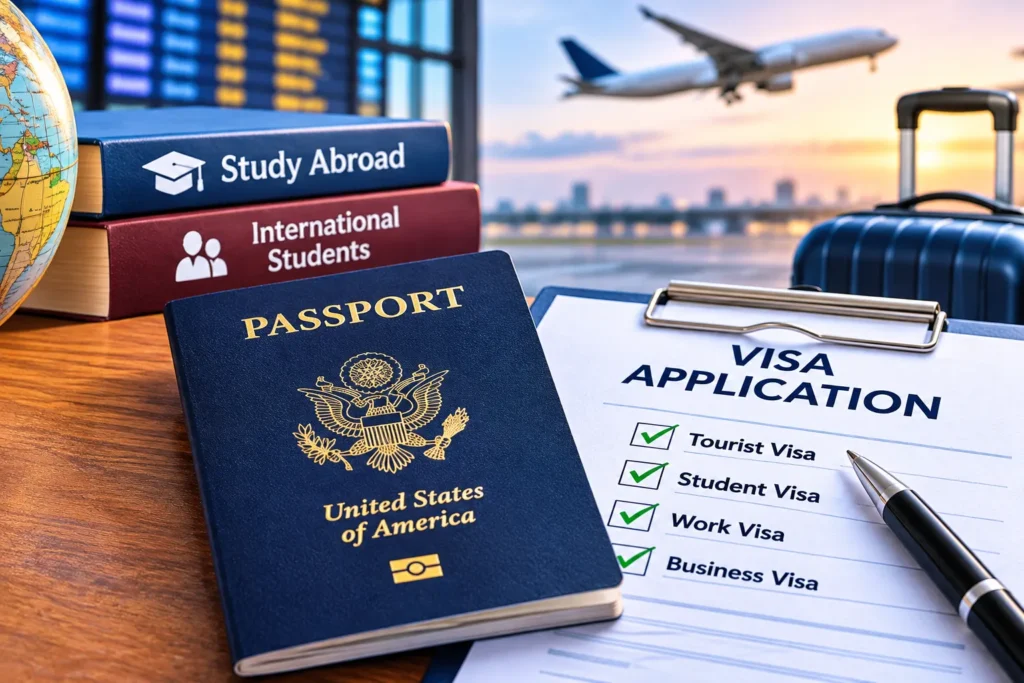
Significant federal policy developments across Washington are reshaping travel documentation, international student mobility, and cross-border immigration administration for travelers and global visitors. From a new digital passport pilot launched by the U.S. Department of State to updated screening protocols from U.S. Citizenship and Immigration Services and shifting international student enrollment trends, recent federal announcements carry direct implications for international tourism, educational travel, and outbound American holidaymakers.
State Department Launches Online Passport Application Pilot
For outbound American travelers preparing for international holidays, the most immediate operational improvement arrives from the U.S. Department of State. Effective November 16, 2026, the agency is launching a year-long pilot program permitting eligible first-time adult passport applicants and certain previous passport holders ineligible for standard renewals to submit Form DS-11 electronically.
According to the official public notice published by the Bureau of Consular Affairs, the initial phase of the pilot welcomes adult citizens residing in the United States who establish citizenship through a Certificate of Naturalization, alongside qualifying applicants who previously held a passport. Participants verify their identity digitally through Login.gov before completing the electronic application on America.gov, where they upload a compliant digital photograph, select delivery options, and record a video recitation of the required statutory oath for review by a passport specialist.
With the State Department processing nearly 13.9 million first-time passport applications annually, officials noted that moving eligible filings online aims to streamline processing times and reduce administrative friction. As technical testing advances, the department anticipates expanding digital eligibility to applicants using U.S. birth certificates, Certificates of Citizenship, Consular Reports of Birth Abroad, and eventually citizens residing overseas.
International Student Mobility Faces Visa Headwinds
While outbound passport processing modernizes, inbound educational tourism and long-term academic travel are encountering notable headwinds. Recent international higher education data covering 437 universities across 63 countries indicates that new international undergraduate enrollment at U.S. institutions declined by 13 percent compared with the prior academic year.
Educational travel and student mobility represent vital pillars of the broader U.S. visitor economy, supporting extended stays, visiting family tourism, and regional hospitality spending across university towns nationwide. Institutional findings indicate that tighter visa vetting procedures and broader policy uncertainty are prompting prospective international students to increasingly consider academic destinations across Europe and Asia. More than one-third of surveyed American universities anticipate further enrollment contractions if visa processing friction persists, signaling an ongoing competitive shift in global student travel flows.
USCIS Updates Guidance on Naturalization and Financial Conduct
Alongside consular and visa developments, U.S. Citizenship and Immigration Services issued updated policy guidance clarifying how financial conduct and public benefits usage factor into good moral character determinations for naturalization applicants. Under the agency’s November 2026 policy memorandum, lawfully receiving public assistance does not automatically disqualify a permanent resident from obtaining U.S. citizenship. However, adjudicating officers are directed to evaluate each applicant’s individual circumstances and may consider factors such as benefits fraud, willful failure to support dependents, or unmet financial sponsorship obligations.
To implement these standards consistently, U.S. Citizenship and Immigration Services announced plans to update its Policy Manual and revise Form N-400 to gather additional details regarding dependent support and public benefit history. For naturalized citizens and lawful permanent residents who frequently travel abroad to visit relatives, maintaining accurate documentation and ensuring full compliance with federal filing requirements remains essential to avoiding administrative delays during citizenship transitions.
Labor Certification Proposals and Congressional Outlook
In parallel with citizenship and consular updates, the U.S. Department of Labor is advancing proposed revisions to the permanent labor certification process, known as PERM, which underpins many employer-sponsored green card petitions. Having cleared White House regulatory review in late October 2026, the forthcoming proposal is expected to introduce stricter domestic recruitment standards, expanded documentation protocols, and enhanced employer oversight. Existing labor certification rules remain fully active while the department finalizes its rulemaking text, with any adopted modifications projected to take effect no earlier than 2027.
Meanwhile, following the November 3 midterm elections, shifting dynamics on Capitol Hill point toward renewed legislative debate over border management, immigration oversight, and bipartisan reform proposals such as the Dignity Act. While lawmakers prepare new oversight initiatives and protections for long-term residents, multi-year federal enforcement funding already enacted through 2029 means operational border and visa screening frameworks are expected to remain steady in the near term.
For international visitors, students, and outbound American tourists alike, staying informed through official government portals—including State Department travel advisories, U.S. Customs and Border Protection entry guidelines, and agency processing updates—remains the most reliable strategy for navigating cross-border travel smoothly throughout the upcoming holiday and winter travel seasons.
For more travel news like this, keep reading Global Travel Wire