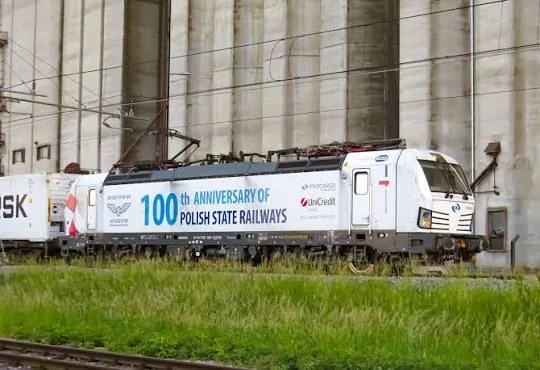
Poland marked 100 years of Polish State Railways with a gala at the Teatr Wielki – Polish National Opera in Warsaw on Monday, 23 November 2026. Prime Minister Donald Tusk addressed the ceremony, which formed part of Railway Workers’ Day. The event recognised employees and companies that contribute to the development and everyday operation of the country’s rail network.
The gala came during the Year of Polish Railways, a national commemoration designated by the Sejm, the lower house of Poland’s parliament. It also gave the government an opportunity to outline its current priorities for passenger rail, including faster journeys from Warsaw and services reaching more regional towns.
From a 1926 Decree to a National Network
President Ignacy Mościcki signed the decree establishing Polskie Koleje Państwowe, or PKP, on 24 September 1926. Poland had regained independence eight years earlier and inherited railways built under three former partitioning powers. Bringing those lines into a coordinated system was part of connecting regions that had previously been administered separately.
The founding of PKP gave the young state a national enterprise to run its railways. It became one of Poland’s largest employers in the interwar period. Its tracks linked cities and industrial centres, while the people who maintained the network and operated its trains kept passengers and goods moving across the country.
The Sejm adopted its centenary resolution on 26 September 2025. It recognised generations of railway workers and the role they played in building public transport and strengthening connections within Poland. The government also placed the gala within wider commemorations marking two centuries of railway history worldwide.
Warsaw Gala Recognises the People Behind the Trains
The ceremony brought the railway sector to one of Warsaw’s leading cultural venues. Infrastructure Minister Dariusz Klimczak and Deputy Minister Piotr Malepszak were listed on the programme alongside Tusk. The Prime Minister’s Office said the event would honour railway professionals and companies working to improve the quality of Polish rail services.
That focus on workers connects the centenary to the passenger experience. For a visitor travelling between cities, the condition of the train, the reliability of the timetable and the ease of making a connection all shape the journey. Railway Workers’ Day recognised the operational and technical work behind those parts of a trip.
Poland Looks to Faster Links From the Capital
At the gala, Tusk highlighted more than 42 billion złoty for rail modernisation, new rolling stock and improvements to passenger comfort. The government said European funding helped support that investment. It also pointed to a programme that aims to improve travel times between Warsaw and Poland’s largest cities, alongside work to extend services to more regional communities.
Poland recorded about 439 million rail passenger journeys in 2025, up 7.7% from the previous year. The figure covers all types of rail travel, from local trips to long-distance journeys. It gives a sense of the scale of the network as Poland considers how to improve services between major cities and smaller destinations.
For international visitors, a faster connection from Warsaw could make it easier to combine the capital with another city in a short stay. For destinations farther from the main gateways, the availability of onward trains matters as much as the speed of the first leg. Those connections can determine whether a regional stop fits into a day trip or calls for an overnight stay.
Where Visitors Can Explore Warsaw’s Railway Heritage
Travellers interested in the anniversary can visit Stacja Muzeum, Warsaw’s railway museum. The collection includes historic locomotives and rolling stock, offering a way to see how railway technology and passenger travel changed over the decades. The museum provides a public counterpart to the formal commemoration at the National Opera.
The centenary also gives visitors a historical perspective on journeys they can make today. The work of connecting regions after independence helped shape the national network now used for city breaks, family visits and trips beyond the capital. In Warsaw, that history can form part of a visit in its own right, with time for the museum before travelling onward by train.
The gala honoured the people who built and sustained those connections. For the next generation of passengers, the government’s plans will matter most where they translate into practical changes, from more comfortable trains to shorter journeys and better connections between destinations.
For more travel news like this, keep reading Global Travel Wire