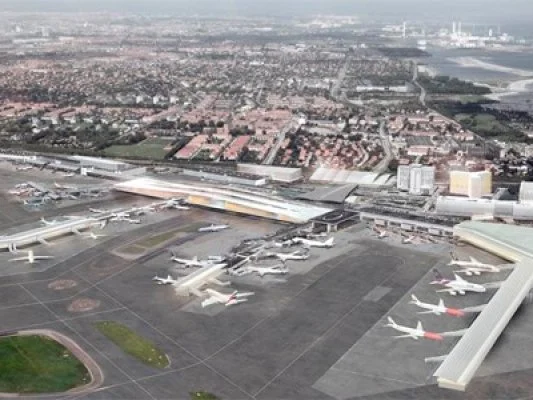
Copenhagen Airport has unveiled a long-term expansion proposal that could let it handle up to 55 million passengers a year. The plan calls for larger aircraft stands, additional terminal capacity and changes to a crossing runway within the existing airport boundary. The airport announced the proposal on 23 November 2026 as it forecast a record 34.5 million passengers for the year.
The Danish Planning and Rural Districts Agency expects to complete work on the planning framework in 2028. Once that framework is approved, the airport must obtain permissions for individual projects before construction can begin. A separate Terminal 3 expansion is already under construction and is expected to open in 2027.
New Stands Would Make Room for Larger Aircraft
The airport proposes adding stands in its north-western area to accommodate newer and larger aircraft. It also wants to relocate and shorten its crossing runway, freeing space for other infrastructure. The proposal would allow the airport to expand the terminals and adapt facilities as security requirements and passenger processing technology change.
More space for wide-body aircraft could give airlines options when choosing which aircraft to fly on intercontinental routes. It could also help existing services carry more people on individual flights. Airlines would still decide whether to add destinations or frequencies based on demand, aircraft availability and the economics of each route.
The difference between the airport’s 2026 traffic forecast and the proposed capacity is 20.5 million passengers a year. That gives a sense of the proposal’s scale. The airport has yet to set a date for reaching that capacity.
Transfer Traffic Strengthens the Case for Expansion
Copenhagen Airport handled 32.4 million passengers in 2025, a record at the time. It expects about 2.1 million more in 2026, even after cutting its forecast from 35.5 million as demand growth slowed. The revised outlook still points to a second consecutive record year.
Connections account for a substantial share of that traffic. About 4.3 million passengers transferred through Copenhagen in the first half of 2026, up 31% from the same period a year earlier. They represented 27% of the airport’s traffic during those six months. Many were Danish, Norwegian or Swedish travellers connecting to flights across Europe, North America and Asia.
Those passengers help airlines draw on demand from several Nordic markets to fill a single long-haul flight. For visitors travelling in the other direction, more connections could make it easier to combine a stay in Copenhagen with another Nordic destination. Hotels and attractions in Denmark would see the clearest benefit if additional routes bring more visitors who start or end their journeys in the country.
Terminal 3 Improvements Are Due First
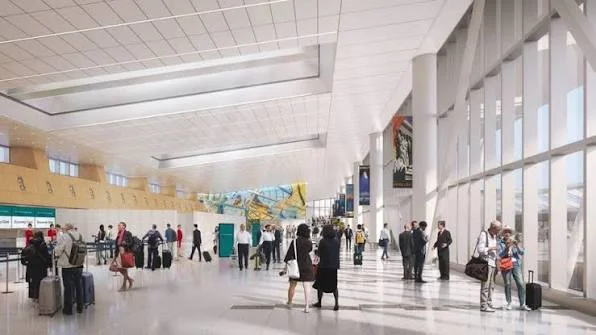
The 60,000-square-metre Terminal 3 project is already underway. It will expand the passenger area between gates B and C, add shops and dining space, enlarge baggage reclaim and increase passport control capacity. The airport expects the expanded area to open in 2027.
For visitors arriving on flights that require passport checks, the expanded border facilities are among the most relevant changes. A larger reclaim area will also give arriving passengers more space to collect luggage before continuing by train or metro. These improvements are part of the project already being built, ahead of any construction under the wider capacity proposal.
Noise and Air Quality Will Shape the Next Phase
The airport has proposed adding or raising noise barriers and using sound-reducing materials on buildings. It also intends to keep aircraft taxi distances short while engines are running, a measure aimed at limiting local air pollution. Stands designed for newer aircraft could give airlines more flexibility to use models that carry more passengers and produce less noise than some older aircraft.
How those measures perform will depend on the final layout, the aircraft airlines use and the volume and timing of flights. The planning framework will set the overall conditions for development, with authorities reviewing individual projects before work can begin.
For travellers, the next change to watch is the opening of the expanded Terminal 3 area in 2027. The 2028 planning milestone will determine what the airport can seek permission to build after that. Whether the additional space leads to more direct flights to Denmark or a wider choice of Nordic connections will depend on the routes airlines choose to operate.
For more travel news like this, keep reading Global Travel Wire