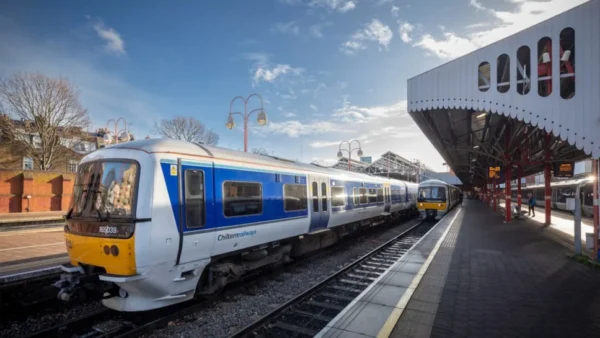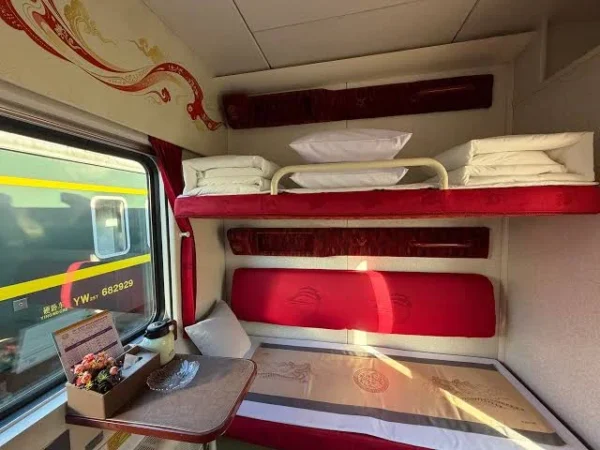
A direct sleeper train left Beijing Railway Station for Irkutsk on 25 November 2026, restoring through rail travel via Mongolia. The service runs once a week in each direction and covers 2,666 kilometres in about 55 hours. Passengers can leave the train in Ulaanbaatar or keep their berth across the second border into Russia’s Lake Baikal region.
Irkutsk is the terminus. Any onward journey to Moscow requires a separate connection. British travellers considering the Russian section should also note that the UK Foreign, Commonwealth and Development Office advises against all travel to Russia. Travelling against that advice can invalidate insurance.
Wednesday Departures From Beijing and Saturday Returns
The northbound train is scheduled to leave Beijing at 07:27 on Wednesdays, reach Ulaanbaatar at 14:35 on Thursdays and arrive in Irkutsk at 14:55 on Fridays. The return leaves Irkutsk on Saturdays, reaches Ulaanbaatar at 06:38 on Sundays and arrives in Beijing at 14:35 on Mondays. All times are local.
Published listings differ on the Saturday departure time from Irkutsk. The operating timetable lists 06:58, while a Beijing municipal notice gives 18:58. Passengers should confirm the local departure time with the railway when buying their ticket and use the time on the issued ticket to arrange their station transfer.
The weekly frequency matters for stopovers. Travellers who get off in Ulaanbaatar and want to continue north on the same service can usually plan for a week in the Mongolian capital, subject to berth availability. Confirm the onward booking before paying for accommodation. Those continuing to Irkutsk should also check separate train times if they plan to travel farther west.
Two Sleeper Classes and a Carriage Change Beneath the Train
The train carries standard hard berths, deluxe soft berths and a dining car. Designated international ticket offices in Beijing and Erenhot sell departures from China in person. Booking arrangements depend on where the journey starts, so confirm how to buy the return or onward ticket as well as the outward berth.
At Erenhot, crews change the carriages’ wheel assemblies because Mongolia and Russia use a wider track gauge than China. Passengers can continue in the same carriage after the change. Immigration checks still apply at both borders, including for people travelling straight through Mongolia.
Border Rules Depend on Passport and Crossing Date
The route uses Erenhot and Zamyn-Uud at the China–Mongolia border, then Sukhbaatar and Naushki at the Mongolia–Russia border. Check the rules for the passport you will carry and the date the train reaches each checkpoint. A departure in late December can put a border crossing in January.
British tourists can visit Mongolia visa-free for up to 30 days through 31 December 2026 under the published arrangement. Mongolia requires at least six months’ passport validity on arrival. Travellers who need a visa should check which category applies to their itinerary, including transit if they remain aboard through Mongolia.
Russia lists Naushki as a rail checkpoint that accepts its unified e-visa. Indian passport holders are eligible to apply, subject to the visa conditions. The single-entry visa allows a stay of up to 30 days within its 120-day validity. British passport holders need a Russian visa in advance. Check entry rules and official travel advice before paying for the Russian portion.
What the Restored Route Means for Tourism
The direct Beijing–Ulaanbaatar train returned in June 2025 after cross-border passenger services stopped in February 2020. The November 2026 launch restores the through journey into eastern Siberia. Stops include Darkhan in Mongolia and Ulan-Ude and Slyudyanka in Russia, giving travellers a choice of destinations before the train reaches Irkutsk.
Mongolia recorded 925,857 tourist arrivals in the first ten months of 2026. Russia and China together accounted for about 58% of the total. Those figures cover all modes of travel and predate the sleeper’s launch. Any effect on hotel bookings or visitor spending will become clearer once the service has operated for longer.
For travellers planning a stop in Ulaanbaatar, the first step is to secure a berth for each rail leg. For those considering Lake Baikal, the return timetable, Russian entry documents and official travel advice should inform the decision before hotels or onward trains are booked.
For more travel news like this, keep reading Global Travel Wire