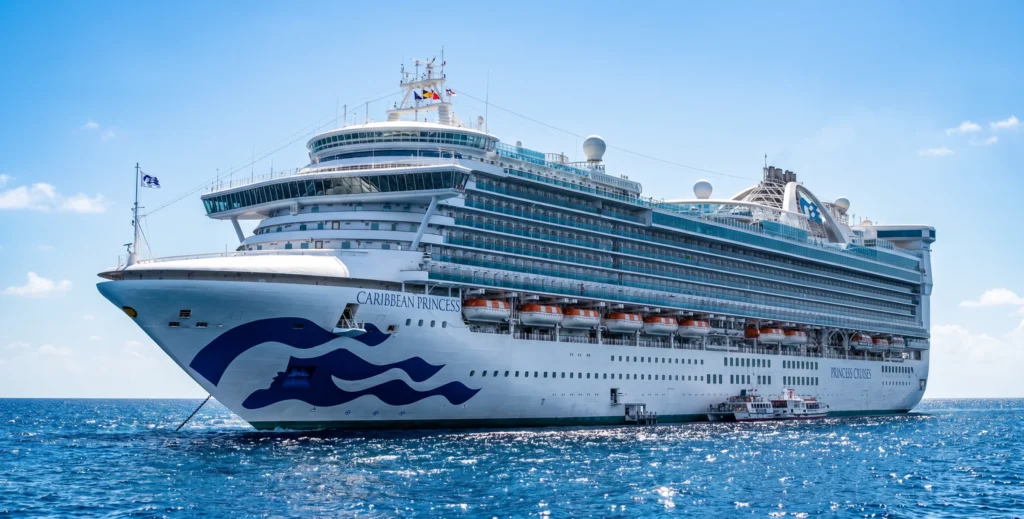
A norovirus outbreak affected 268 passengers and crew aboard Caribbean Princess during a 12-night November sailing from Port Everglades in Florida. The US Centers for Disease Control and Prevention (CDC) identified norovirus as the cause after the Princess Cruises ship completed its voyage on 23 November 2026. The outbreak was the second documented on the ship this year.
The CDC recorded illness in 233 of 2,936 passengers, or 7.9 per cent, and 35 of 1,132 crew members, or 3.1 per cent. Vomiting and diarrhoea were the main symptoms. The figures cover the entire voyage, including people who became ill at different points between departure and the ship’s return to Fort Lauderdale.
Princess Cruises Stepped Up Cleaning and Isolated Sick Guests
The voyage began on 11 November, and the outbreak was reported to the CDC’s Vessel Sanitation Program on 15 November. Princess Cruises and the crew increased cleaning and disinfection, isolated passengers and crew who became ill, and collected samples for laboratory testing.
Federal health officials also conducted an onboard environmental assessment and investigated the outbreak. The operator consulted the CDC on cleaning procedures and case reporting. The federal report documents the response and identifies the virus, while leaving the initial source of infection undetermined.
For guests who fall ill on a cruise, isolation can mean missing meals in shared dining areas, onboard entertainment or a planned shore excursion. The ship’s medical team gives passengers instructions based on their symptoms and the measures in place during that sailing.
November Outbreak Exceeded Earlier Princess Cruises Totals
An earlier Caribbean Princess outbreak affected 160 people during a sailing from 28 April to 11 May. In that incident, 145 passengers and 15 crew members reported illness. The CDC identified norovirus on that voyage as well. The two outbreaks accounted for 428 reported illnesses across separate sailings.
Ruby Princess also experienced a norovirus outbreak on a voyage that ended in San Francisco on 2 July. The CDC recorded 107 passenger illnesses and 25 crew illnesses, bringing the total to 132. The November Caribbean Princess total exceeded both of those earlier outbreaks.
The passenger rates also show how the voyages differed. About 4.7 per cent of guests reported illness on the spring Caribbean Princess sailing, compared with 7.9 per cent in November. On Ruby Princess, the corresponding share was 3.5 per cent. Each figure describes a specific voyage and reflects cases reported to the ship’s medical team.
What the Figures Mean for Cruise Ports and Passengers
Fort Lauderdale was the departure and return point for the November sailing. The CDC investigation focused on illness aboard Caribbean Princess. Its findings provide no evidence of increased infection risk for travellers using the Port Everglades terminal, staying in nearby hotels or boarding other ships.
The Vessel Sanitation Program monitors gastrointestinal illness on international cruise voyages that stop at US ports. It investigates when at least 3 per cent of passengers or crew report symptoms that meet its case definition. The threshold applies separately to passengers and crew. The November sailing exceeded it in both groups.
Prompt reporting helps the ship detect changes in the number of people falling ill and decide when to step up its response. This matters on longer voyages, where new cases can appear days apart and guests share dining rooms, lifts and other common areas throughout the trip.
How Cruise Travellers Can Reduce Their Risk
The CDC advises passengers to wash their hands frequently with soap and water, especially before eating and after using the toilet. Norovirus can spread through contact with an infected person or after touching contaminated surfaces. Shared items such as buffet utensils and lift buttons are among the surfaces passengers may touch repeatedly during a sailing.
Anyone who develops vomiting or diarrhoea on board should call the ship’s medical centre promptly, even if symptoms seem mild. Medical staff can assess the symptoms and explain when it is safe to resume normal activities. The CDC also advises passengers to report vomiting in shared areas so the crew can clean them promptly.
For travellers preparing to embark, the same guidance applies before the holiday begins. If vomiting or diarrhoea develops before departure, contact the cruise operator for instructions before heading to the terminal. If symptoms begin at sea, call the medical centre before joining a meal, boarding an excursion bus or spending time in a shared lounge.
For more travel news like this, keep reading Global Travel Wire