Aviation safety protocols and municipal emergency systems demonstrated swift coordination across Greater Los Angeles on Saturday, November 28, 2026, after a magnitude 5.0 earthquake struck off the Southern California coast. According to data recorded by the United States Geological Survey, the tremor occurred at approximately 9:30 a.m. Pacific Time, centered roughly six miles west-southwest of Manhattan Beach at a depth of about 7.5 miles. While the shaking rattled windows across coastal communities, triggered vehicle alarms, and prompted air traffic controllers at Los Angeles International Airport to execute a precautionary go-around for an arriving commercial airliner, state and municipal authorities confirmed no major structural damage or serious injuries across the region.
Aviation Safety Protocols Trigger Precautionary Go-Around at LAX
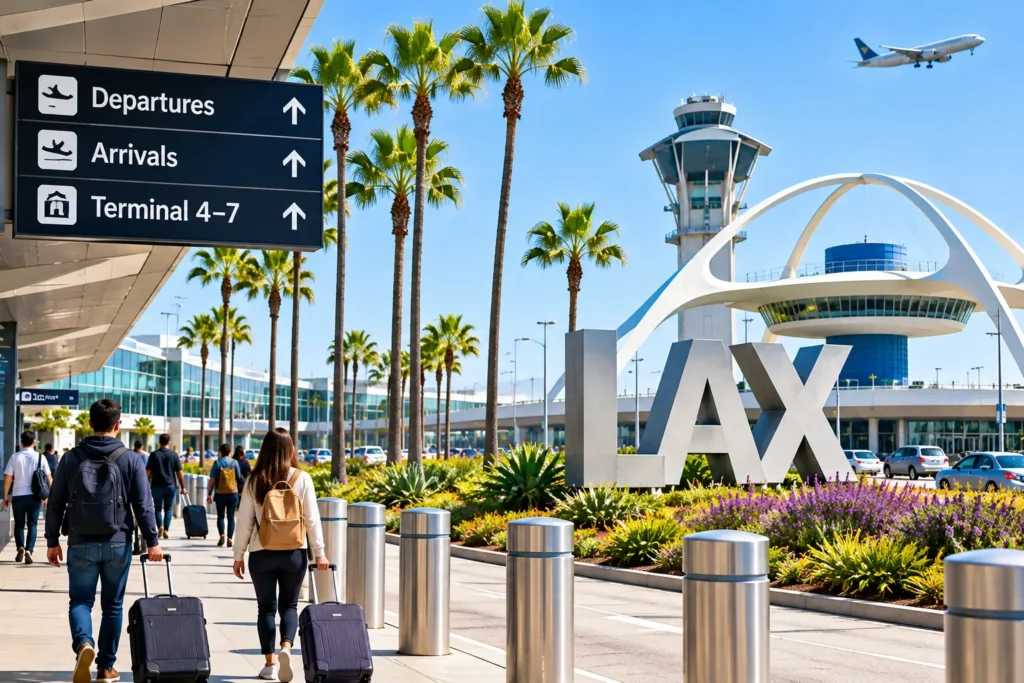
Located just miles north of the offshore epicenter, Los Angeles International Airport experienced noticeable shaking as the morning tremor rolled through the coastline. In strict adherence to federal aviation safety procedures, air traffic control immediately instructed Delta Air Lines Flight 1972—an Airbus A319 arriving from Kansas City that was on final approach to the runway—to abort its landing and climb back into a holding pattern. A second arriving aircraft, Delta Air Lines Flight 1628, also adjusted its approach sequence while ground teams completed rapid runway inspections.
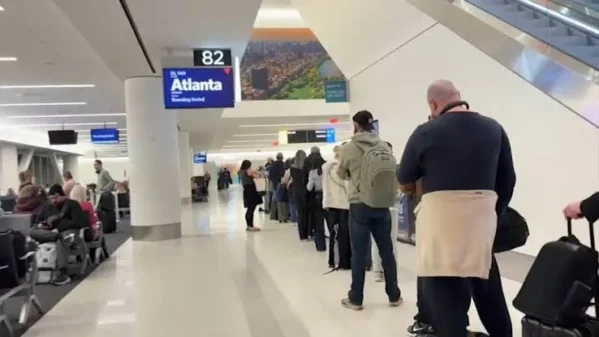
Standard aviation safety protocols require airport operations crews to verify that runways, taxiways, and navigational lighting remain completely free of surface cracks or debris following seismic activity before resuming arrivals. Once inspection teams confirmed full pavement integrity, both flights completed safe, routine landings, and overall terminal operations proceeded without major disruption during the busy Thanksgiving holiday travel weekend.
Emergency Officials Monitor Aftershocks and Infrastructure
Following the initial morning jolt—the strongest seismic event recorded in the immediate Los Angeles basin since the magnitude 5.1 La Habra tremor in 2014—regional seismic networks logged more than 40 smaller aftershocks throughout Saturday and into early Sunday morning, including a magnitude 4.5 tremor at 11:41 a.m. PT.
The California Governor’s Office of Emergency Services announced via official channels that state response teams were actively coordinating with county and municipal officials to inspect critical transit corridors, bridges, utilities, and public facilities. Emergency planners reminded both residents and visiting travelers that earthquakes are inherently unpredictable and urged everyone in the region to stay alert for potential aftershocks over the coming days. Local fire and transportation departments reported normal operations across highways, rail networks, and coastal visitor districts following precautionary structural checks.
Seismic Preparedness and Visitor Guidance in California
Situated along the boundary of major tectonic plates, the United States West Coast experiences frequent seismic movement, though the vast majority of daily tremors register too lightly to be felt by California’s 40 million residents and millions of annual visitors. Decades of stringent seismic building codes implemented following historical events—such as the 1994 Northridge earthquake in the San Fernando Valley and the 1906 San Francisco earthquake—have substantially strengthened modern hotels, airport terminals, convention centers, and entertainment venues throughout the state.
For travelers visiting Los Angeles and Southern California coastal destinations, official emergency management agencies recommend straightforward preparedness measures that enhance personal safety without disrupting itineraries. Visitors are advised to familiarize themselves with hotel floor plans and emergency exit routes upon check-in, keep mobile devices charged with wireless emergency alerts enabled, and follow the standard Drop, Cover, and Hold On procedure if shaking occurs indoors. Should a tremor strike near the coast, travelers along beaches or harbors are reminded to move promptly to higher ground until official tsunami advisories confirm that coastal waters remain safe.
With airport runways cleared, major attractions operating on schedule, and emergency agencies maintaining active monitoring across Los Angeles County, air travel and visitor services continue smoothly across Southern California.
For more travel news like this, keep reading Global Travel Wire