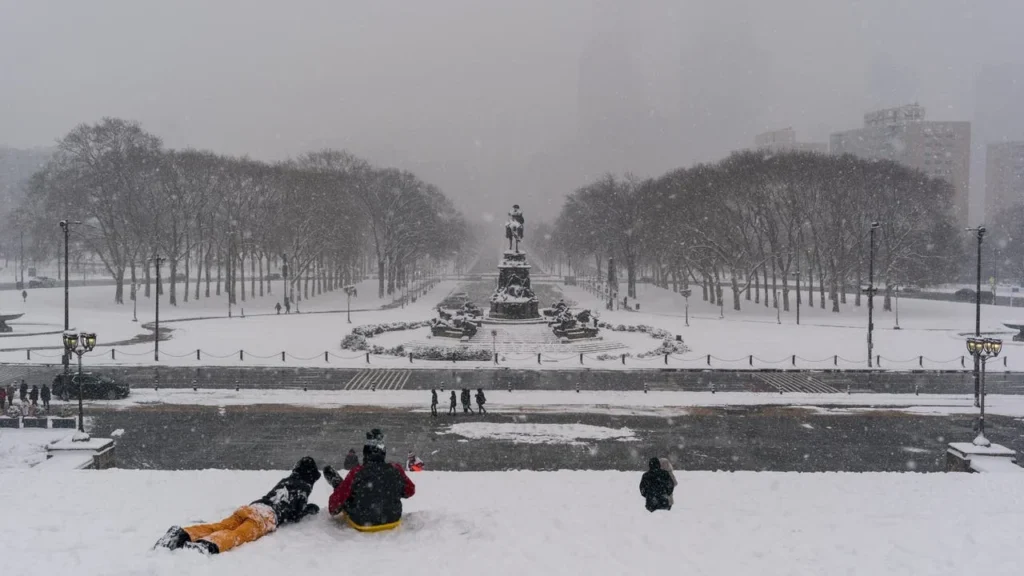
Philadelphia heads into winter 2026–27 with warmer-than-normal conditions favoured across the Northeast and a strong El Niño expected to persist into early spring. The US Climate Prediction Center’s November outlook also favours above-normal precipitation in the Mid-Atlantic. For travellers, the combination means wet-weather delays are worth planning for alongside the possibility of snow.
The National Weather Service’s Mount Holly office found that Philadelphia averaged 16.4 inches of snow during past very strong El Niño winters, compared with a seasonal normal of 23.1 inches. The 16.4-inch figure is a historical average. Snowfall varied widely between those winters, and a single storm can account for much of a season’s total.
What Federal Forecasters Expect This Winter
On 12 November, the Climate Prediction Center put the chance of strong to very strong El Niño conditions at more than 79 per cent for January through March 2027. El Niño develops when water in the central and eastern tropical Pacific becomes warmer than usual. Changes in ocean temperatures can alter atmospheric circulation and shift storm tracks far from the Pacific.
The centre’s 19 November outlook gives much of the Northeast a greater than 50 per cent chance of above-normal temperatures for December through February. It also favours a wetter season across the Mid-Atlantic and much of the Northeast. Precipitation includes both rain and the water equivalent of snow. Whether a particular storm brings rain, snow or a mix depends on temperatures and the storm’s path at the time.
For a winter city break, the outlook offers context for packing and planning. It has less bearing on whether a particular morning flight, motorway drive or evening train will face disruption. Short-range forecasts closer to departure provide the detail needed for those decisions.
Philadelphia’s Snow Records Show How Much Winters Vary
In Mount Holly’s analysis, Philadelphia averaged 37.4°F from December through February during very strong El Niño winters. The 1991–2020 normal for the same three months was 36.1°F. Those averages span mild days and cold spells, including the periods when snow can accumulate.
The city’s historical records show how different two El Niño winters can be. Philadelphia recorded only 5.9 inches of snow in 1997–98. In 2015–16, it recorded 35.2 inches, including 27 inches from a single January storm. That storm alone produced more snow than Philadelphia normally receives over an entire season.
For hotels and tour operators, the timing of a storm can matter as much as the seasonal total. One storm on an event weekend can delay arrivals or force changes to a group itinerary. A season with fewer snowy days can still include a period when guests need to move airport transfers, tours or overnight reservations.
What the Outlook Means for Airport, Rail and Road Trips
Travellers flying through Philadelphia International Airport should watch the forecast at their origin, destination and any connecting airport. A storm elsewhere can affect an inbound aircraft or the next leg of a trip. If a carrier changes your arrival time, check the effect on hotel check-in, the last train or a separately arranged pickup before accepting the new itinerary.
Drivers using the Interstate 95 corridor should check conditions along the whole route. Milder temperatures can bring rain during storms that might otherwise produce snow, and heavy rain can reduce visibility or leave standing water. Allow time for a slower journey when warnings are in effect, particularly if the drive ends at a rental car return or a fixed departure.
Rail passengers should check their specific train and any local connection. A long-distance service may run while an onward bus or local train follows a modified schedule. For an evening arrival, confirm the final leg before leaving, especially if a delay could put you past the last departure.
Plan Around the Forecast for Your Travel Dates
Visitors booking museum tickets, sporting events or guided tours should check how easily reservations can move if a winter storm changes their arrival. For a short stay, leaving space between a flight and the first prepaid activity gives travellers more room to absorb a delay. Save booking details and provider contact numbers before setting out.
The Philadelphia winter outlook favours milder conditions over three months. As the trip approaches, use the local forecast and the operator’s latest service update to decide whether to change a departure, transfer or booking.
For more travel news like this, keep reading Global Travel Wire