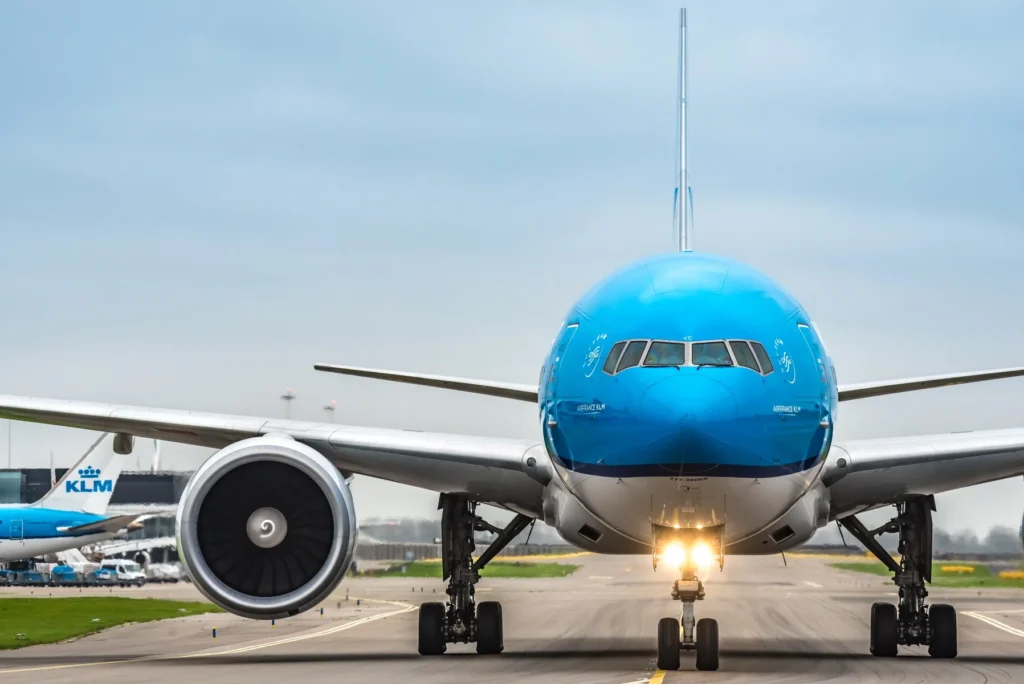
Air France-KLM estimates that its activities support nearly €114 billion in annual European Union economic benefits and over 1.2 million jobs. Published on 6 October 2026, the assessment highlights aviation’s connections with tourism, employment, suppliers and regional business activity.
The findings represent the group’s first EU-wide economic impact assessment, within the fourth edition of its research programme. Its estimated contribution equals approximately 0.6% of EU gross domestic product.
For tourism businesses, the study illustrates how airline operations connect with spending beyond airports. However, the figures remain attributed company estimates, rather than independently established totals for Europe’s tourism economy.
Aviation Spending Extends Beyond Airline Tickets
The assessment covers passenger services, cargo, maintenance and associated economic activity. It includes staff pay, purchasing, passenger spending, airport operations and subsequent spending throughout the economy.
This broad scope explains why the headline estimate extends beyond ticket sales. Airlines purchase goods and services, employ workers and transport visitors who spend within destinations.
Hotels, restaurants, attractions and local transport providers can benefit from those visitor journeys. Nevertheless, the publication provides no separate spending totals for these tourism sectors.
The supported employment figure includes direct, indirect and induced full-time equivalent positions. This measures work expressed as full-time jobs, rather than counting only employees directly working for the group.
The release does not provide sufficient supporting detail to reproduce the complete economic model. Consequently, its findings require clear attribution when assessing aviation’s wider contribution.
France and the Netherlands Lead the Estimates
France accounts for an estimated €52.2 billion in annual economic contribution and nearly 550,000 supported jobs. The study places that contribution at 1.8% of French GDP.
For the Netherlands, the assessment reports €29.1 billion and nearly 300,000 jobs. Its estimated contribution represents 2.4% of the Dutch economy.
Together, these two markets account for most of the group’s reported EU economic footprint. Their prominence reflects the central position of France and the Netherlands within its operations.
Elsewhere, Sweden and Denmark together account for nearly €2.3 billion and more than 27,000 supported jobs. Portugal’s estimated contribution exceeds €1.3 billion, supporting nearly 25,000 jobs.
These figures describe activity associated with the airline group. They do not represent complete national tourism accounts or establish equivalent increases in visitor spending.
Passenger Networks Connect Tourism and Trade
The operations covered carried 103 million passengers and transported 917,000 tonnes of freight during 2025. The release also describes a network exceeding 320 destinations.
Alongside passenger and cargo services, maintenance activity serves more than 3,000 aircraft for 200 airline customers, beyond the group’s fleet. This adds another economic channel extending outside holiday travel.
International connections help destinations welcome leisure visitors and support business journeys. They also allow companies to maintain overseas relationships and move goods between markets.
The group reports more than €6.6 billion in purchases across France and the Netherlands during 2025. Such procurement connects airline operations with suppliers operating beyond airport sites.
However, these purchases should not simply be added to the headline economic estimate. Without reconciliation, doing so could count activity already included within the model twice.
Tourism Growth Provides Separate Market Context
Official EU accommodation figures recorded 1.321 billion overnight stays during January–June 2026, up 1.7% compared with a year earlier. Foreign guests accounted for 48.9% of those nights.
Overnight stays by foreign visitors increased 2.5%, while domestic guest nights rose 0.9%. These figures indicate growing accommodation demand across the EU during the reporting period.
However, accommodation statistics measure a different activity from an airline’s modelled economic contribution. They cannot establish how much tourism growth resulted from Air France-KLM services.
For hotels and destination operators, the distinction matters when interpreting market opportunities. Broader demand growth provides context, while local bookings and transport schedules offer more direct operating evidence.
Proposed Investments Remain Conditional
The assessment appeared while Air France-KLM pursued European expansion plans. Its proposed increased ownership of a Scandinavian carrier remained subject to competition approval.
A potential Portuguese investment also remained conditional. Portugal authorised further negotiations on 4 September 2026, before a final corporate offer announcement on 30 September.
These ownership processes remain separate from the economic study. The publication established no completed acquisition or associated passenger service launch.
For tourism businesses, confirmed operating announcements will provide clearer evidence of future connectivity changes. Proposed investments alone do not establish additional flights, new destinations or booking opportunities.
The study strengthens the discussion about aviation’s economic reach across Europe. Its practical tourism significance lies in showing how transport activity supports employment and spending, while future growth depends on demand and confirmed operations.
For more travel news like this, keep reading Global Travel Wire