Airbus is preparing its A350F freighter for a first flight as the aircraft moves through ground checks and flight-test preparations. The milestone will begin a critical stage for a new long-haul cargo aircraft targeting service in 2027.
The A350F has not yet made its first flight. Airbus said in September 2026 that teams were rehearsing that event in a simulator and checking systems on the aircraft. Two A350F aircraft are being prepared for the flight-test programme.
For cargo airlines, the programme offers a potential new option for moving heavy freight across long distances. For airports and logistics operators, its progress will help shape plans for future cargo handling.
Airbus says the A350F can carry up to 111 tonnes over distances of up to 8,700 kilometres. Those targets place payload, range and loading flexibility at the centre of its appeal to operators.
Ground Tests Prepare the Aircraft for Flight
Before the A350F enters the air, Airbus must check systems designed specifically for cargo operations. These include the main-deck loading system, cargo door and equipment used to monitor the aircraft during loading.
The manufacturer has also completed ground vibration testing on the first aircraft. That work measures how the structure responds to controlled movement and helps validate models used in flight preparation.
Meanwhile, flight-test teams have conducted simulated first flights to assess the freighter’s handling and systems. These rehearsals allow crews and engineers to examine procedures before testing them in the air.
The first flight will mark progress, but it will not complete the approval process. Airbus must still gather flight-test results and demonstrate that the aircraft meets certification requirements.
Airbus has described a flight-test campaign involving roughly 400 hours. The programme will give engineers and regulators evidence about the freighter’s performance under different conditions.
Large Cargo Door Shapes the A350F Design
The A350F is a dedicated freighter built around the A350 aircraft family. Its cargo configuration includes a main-deck door designed for large and heavy shipments.
Airbus completed the first door at its Illescas facility in Spain and delivered it to Toulouse, France, for aircraft integration. The opening measures 4.3 metres wide and 3.15 metres high.
That size should give ground teams more flexibility when loading cargo that needs substantial clearance. It could prove especially useful for shipments that are difficult to move through smaller openings.
Airbus has also tested the door’s operation and the loading system that moves freight into position. These checks matter because cargo handling affects both safety and aircraft turnaround at busy airports.
The aircraft must carry heavy loads while keeping their weight properly distributed. Airbus has included a maximum-payload ground test to check how the loading systems perform with 111 tonnes aboard.
European Facilities Support Production
The A350F programme draws on Airbus facilities across Europe. Spain produces the cargo door and rear fuselage components, while the United Kingdom supplies wings.
German facilities contribute structural work, and Toulouse handles final assembly. This production network brings specialised manufacturing together before each aircraft enters testing and delivery preparation.
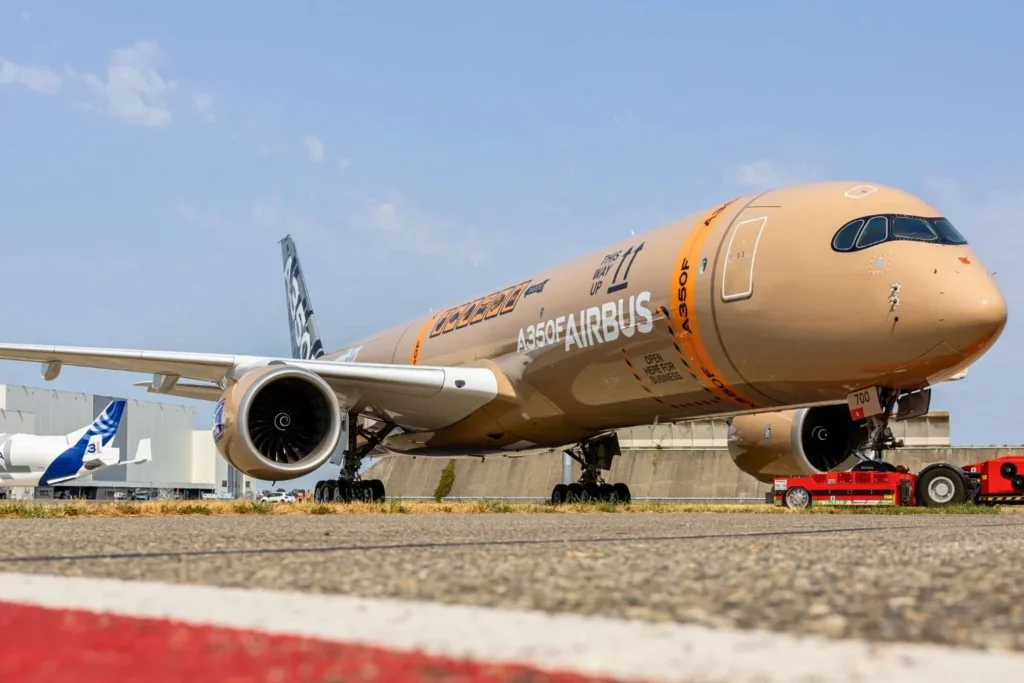
The first A350F has also completed its paint process. Airbus displayed the aircraft in September as teams continued preparations for flight.
These manufacturing steps show how the programme has advanced, although its remaining milestones are substantial. Flight tests, certification and customer preparations must follow before commercial operations begin.
Efficiency Drives Freighter Interest
Airbus is positioning the A350F for cargo carriers renewing long-haul fleets. Operators must weigh payload and range against fuel use, maintenance costs and the needs of their route networks.
Airbus says the A350F could use up to 20% less fuel than previous-generation freighters with similar payload and range capability. Actual operating results will depend on airline routes and aircraft use.
The company also says the aircraft can operate with up to 50% sustainable aviation fuel when it enters service. It aims for full capability by 2030.
Interest in the aircraft extends across international cargo markets. Airbus reported 101 A350F orders from 14 customers at the end of March 2026.
Orders signal fleet planning, while flight testing will provide the next evidence of the aircraft’s capabilities. Cargo airlines will need certification and delivery schedules before placing it into service.
For now, the most immediate milestone is the first flight. Its completion would move the A350F from ground preparation into the air, bringing Airbus closer to its planned 2027 introduction.
For more travel news like this, keep reading Global Travel Wire