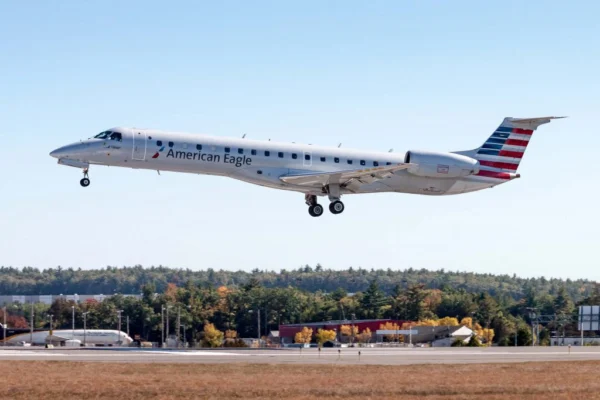
An American Airlines regional service operated by Piedmont Airlines returned safely to Charlotte Douglas International Airport after departing for Greenville, North Carolina, bringing renewed attention to how airlines manage unexpected operational changes on short-haul routes.
Flight PDT5986, operated with an Embraer ERJ-145LR registered as N655AE, left Charlotte at approximately 10:48 p.m. EDT on June 22, 2026. The aircraft was scheduled to reach Greenville before midnight but instead turned back toward Charlotte and landed at approximately 12:29 a.m. EDT on June 23.
The flight landed safely, and no injuries were reported in the information available. However, the precise reason for the return has not been officially disclosed. That leaves the event publicly classified as an operational diversion without a confirmed cause.
Return to Charlotte Highlights Hub Advantage
The decision to return to Charlotte placed the aircraft back at one of American Airlines’ most important hubs. Charlotte Douglas International Airport supports a large volume of domestic and connecting traffic, giving airline teams access to maintenance facilities, replacement aircraft, crew resources and passenger-service operations.
For travelers, returning to a major hub can create inconvenience through missed connections, delays or rebooking. At the same time, it may offer more recovery options than landing at a smaller airport with limited airline infrastructure.
This is especially relevant on regional routes, where aircraft often connect smaller communities with large national networks. When an aircraft returns to its departure point, operations teams can assess the situation while also arranging onward travel, hotel accommodation or alternative transportation when required.
Cause of PDT5986 Diversion Remains Unconfirmed
No official explanation has been released identifying whether the return involved weather, a technical indication, an operational matter, a passenger issue or another precautionary concern.
Without a formal statement, speculation should be avoided. Flight-tracking information can confirm an aircraft’s route, altitude, timing and return path, but it cannot establish why a crew made an operational decision.
Commercial pilots may return to their departure airport for several reasons, including the availability of maintenance support, changing weather, air traffic restrictions or the need for additional checks. A return does not automatically indicate a serious emergency. In many cases, it reflects conservative decision-making designed to keep passengers and crew within established safety margins.
The safe landing in Charlotte indicates that the aircraft remained under controlled operations throughout the event.
Regional Aviation Plays a Key Tourism Role
Piedmont Airlines operates regional services within the American Airlines network using Embraer regional jets. These flights are important for communities that depend on hub connections for tourism, business travel and access to wider domestic and international markets.
The Charlotte-Greenville route supports travelers moving between eastern North Carolina and one of the country’s major connecting airports. Even a single disruption can affect onward itineraries, especially for passengers with early departures, international connections or time-sensitive travel plans.
Regional aviation also supports local hotels, rental-car providers, restaurants and visitor attractions by helping smaller destinations remain connected to major population centers. Reliable air access can influence weekend travel, convention attendance, family visits and corporate demand.
When a flight is delayed or diverted, the impact may extend beyond the passengers on board. Aircraft schedules, crew assignments and later services can all require adjustment, creating wider operational pressure across the airline network.
What Passengers Can Expect After a Return
Following a return to origin, airline teams normally review the aircraft’s status and determine whether the flight can depart again. Maintenance personnel may conduct inspections, while dispatchers and airport staff evaluate crew availability, operating limits and destination conditions.
Passengers may be rebooked on a later flight, moved to another routing or provided with ground alternatives depending on the circumstances and available capacity. Travelers with onward connections are generally advised to monitor airline notifications and speak with airport representatives about updated arrangements.
Because the reason for PDT5986’s return remains undisclosed, it is not yet clear what recovery measures were offered to affected passengers.
Safe Outcome Remains the Central Development
The most important confirmed outcome is that Piedmont-operated American Airlines Flight PDT5986 returned safely to Charlotte after departing for Greenville.
The event illustrates the operational flexibility built into regional aviation, particularly when a major hub is nearby and can support aircraft, crews and travelers. It also underscores the difference between verified movement data and confirmed incident findings.
Until the airline or an aviation authority provides further details, the cause should remain described as unconfirmed. For travelers and the tourism industry, the episode is a reminder that diversions can disrupt plans, but they also form part of the procedures airlines use to manage uncertainty while prioritizing safe operations.
For more travel news like this, keep reading Global Travel Wire