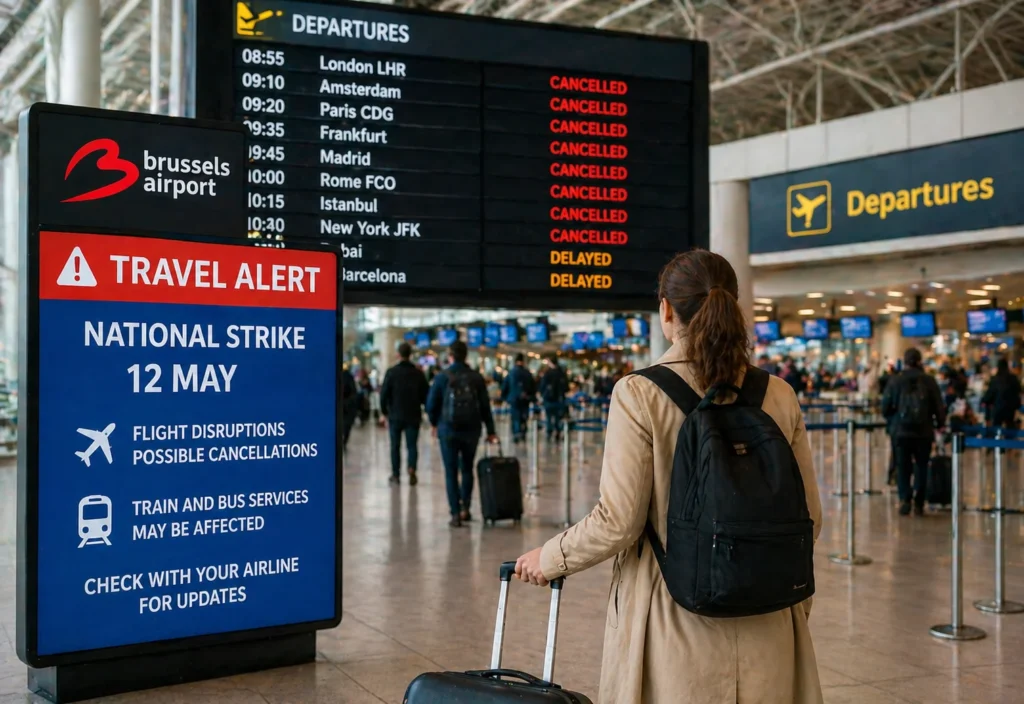
Travelers heading to Belgium next month are being advised to prepare for possible disruptions after Brussels Airport warned that a national strike on May 12 could impact departing flights, arriving services, and public transportation links. The alert comes as one of Europe’s busiest gateways prepares for possible operational challenges linked to industrial action and demonstrations in the Belgian capital.
For tourists, business visitors, and transit passengers, the announcement is an important reminder to check schedules early and remain flexible when traveling through Brussels during the affected period.
Brussels Airport Issues Travel Warning for May 12
Brussels Airport has announced that the national strike planned for May 12 may create significant disruption across airport operations and transport services. According to the airport operator, a large number of departing flights may need to be cancelled, while some arriving flights could also face delays or operational changes.
Passengers are expected to receive updates directly from their airlines as the date approaches. The airport has also cautioned that train and bus connections to and from the terminal may be affected, creating additional challenges for travelers trying to reach the airport.
As Belgium is a key gateway for European tourism and international business travel, even short-term disruptions can affect thousands of passengers in a single day.
Why Brussels Matters for European Tourism
Brussels is not only Belgium’s capital but also one of Europe’s most important diplomatic, cultural, and transport hubs. The city attracts leisure travelers for its historic squares, museums, culinary scene, and nearby heritage destinations, while also welcoming a large number of corporate and institutional visitors year-round.
Brussels Airport plays a central role in this travel ecosystem by linking Belgium with major European cities, long-haul destinations, and global transit networks.
When operations are disrupted at such a hub, the impact can extend beyond Belgium. Passengers connecting through Brussels to other European destinations may also need to review their itineraries.
For tourism businesses, stable airport operations are essential for maintaining visitor confidence and smooth travel flows.
Flights Most Likely to Be Affected
Although final airline schedules will depend on staffing levels and operational decisions closer to the date, departing flights are expected to face the highest level of disruption.
Airports often prioritize safety, staffing requirements, and available ground services during strike periods. If employee participation is high, carriers may reduce schedules in advance rather than risk day-of-travel cancellations.
Arriving flights may also experience delays, diversions, or schedule adjustments depending on available resources and airside operations.
Short-haul European routes, same-day business travel, and tightly timed connections are usually the most sensitive during industrial action because passengers have less flexibility if schedules change.
Public Transport Could Add Extra Pressure
The warning extends beyond flights. Train and bus services to and from Brussels Airport may also be disrupted, which could create major access issues even for passengers whose flights operate as planned.
Many travelers rely on rail links and airport buses for affordable, convenient access from central Brussels and surrounding cities. If these services are reduced, roads and taxi networks may face increased demand.
Tourists unfamiliar with local transport systems may need to allow extra time or consider alternative transfer options.
For visitors arriving in Belgium during the strike, onward journeys to hotels, city centres, or nearby destinations could also take longer than usual.
What Travelers Should Do Now
Passengers flying through Brussels on or around May 12 should take proactive steps now rather than wait for last-minute changes.
Recommended actions include:
Check airline emails and mobile app notifications regularly
Confirm airport transfer plans in advance
Arrive earlier than normal if flights remain scheduled
Keep hand luggage essentials easily accessible
Review rebooking and refund options before travel day
Allow flexibility for hotel check-in or onward rail bookings
Travel insurance policies may also be useful for some itineraries, depending on coverage terms and booking conditions.
Early preparation can significantly reduce stress during operational disruptions.
Belgium Tourism Remains Strong Beyond the Strike
While the strike may create short-term inconvenience, Belgium remains one of Europe’s most attractive destinations for city breaks, culture, gastronomy, and regional travel.
Brussels continues to draw visitors to landmarks such as Grand Place, Art Nouveau architecture, museums, and world-famous chocolate and culinary experiences. The city also serves as a convenient base for exploring Bruges, Ghent, Antwerp, and other popular destinations.
Short-term industrial action does not change the country’s long-term tourism appeal. Most travel demand typically returns quickly once normal operations resume.
Travelers with flexible plans may simply shift arrival times or use alternative airports in neighboring regions if necessary.
How Airports Manage Strike Periods
Airports across Europe regularly activate contingency plans during national strikes or large demonstrations. These plans may include revised schedules, closer coordination with airlines, passenger communication campaigns, and operational prioritization of essential services.
The goal is to maintain safety while minimizing disruption wherever possible.
In many cases, airlines cancel selected flights in advance to avoid overcrowding and confusion at terminals. This allows passengers to receive earlier notice and make alternative arrangements.
For travelers, advance cancellations can be frustrating, but they are often easier to manage than unexpected same-day disruption.
Wider Impact on European Travel
Because Europe’s aviation network is highly interconnected, delays or cancellations at one major airport can create ripple effects across the region.
Aircraft rotations, crew scheduling, and connecting itineraries may all be affected if services into or out of Brussels are reduced. That means some travelers not flying directly to Belgium could still see minor schedule changes elsewhere.
However, major carriers and airport authorities are experienced in managing these situations, and most disruptions remain temporary.
The strongest advice for passengers is simple: stay informed and remain flexible.
Outlook for May 12 Travelers
The Brussels Airport strike warning is an important heads-up for anyone planning travel to Belgium next month. While disruption is possible, informed passengers who monitor updates and prepare alternatives can still navigate the day successfully.
Belgium’s tourism appeal, strategic location, and strong transport network ensure that travel demand is likely to remain strong after the strike period passes.
For now, travelers should keep a close eye on airline communications, confirm transport plans, and approach May 12 journeys with extra time and flexibility.