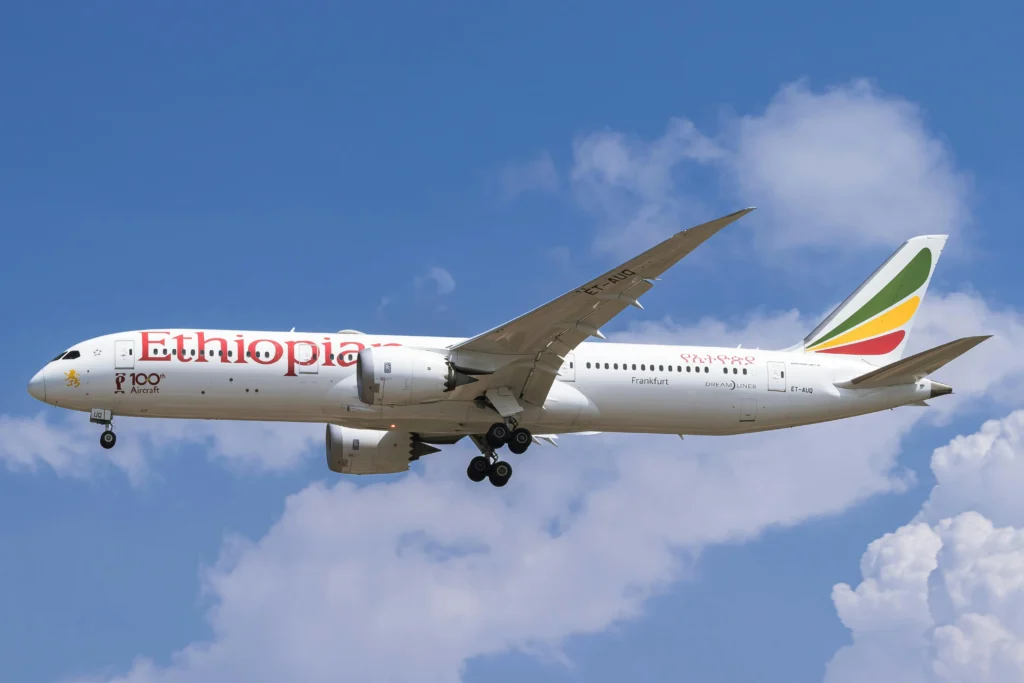
The historical narrative of African flight reached a milestone as Ethiopian Airlines Group officially celebrated its 80-year journey of operations. The landmark anniversary, marked by a series of high-profile commemorative events in the capital city, placed a profound spotlight on the carrier’s longstanding commitment to incorporating, managing, and maintaining cutting-edge aviation technology. As Africa’s largest and most consistently profitable airline group, the company’s forward-looking strategy highlights its critical role in shaping regional trade, economic development, and international leisure travel.
Speaking before a distinguished gathering of state ministers, regional diplomats, trade stakeholders, and international visitors at a static airshow held at Addis Ababa Bole International Airport, Ethiopian Airlines Group Chief Executive Officer Mesfin Tasew emphasized that technology adoption remains the core foundation of the carrier’s long-term commercial success. The specialized exhibition provided a visual history of the company’s growth, tracing its evolution from its early post-war foundations in April 1946 with a modest fleet of five repurposed military transports to its current status as a globally recognized intercontinental powerhouse.
A Massive Fleet Expansion to Meet Surging Global Demand
To sustain its position as a dominant competitor on the global stage, the airline group is aggressively expanding its physical operational capacity. The carrier manages a remarkably young and environmentally progressive fleet consisting of 147 cutting-edge passenger and cargo aircraft. To prepare for the next phase of international tourism demand, the airline has finalized robust procurement agreements with major global manufacturers, securing firm commitments for more than 100 next-generation narrow-body and wide-body jets from Boeing and Airbus.
According to official fleet development schedules, these incoming aircraft are slated for systematic delivery between the current year and 2032. Group leadership framed this multi-billion-dollar investment not merely as a standard fleet replacement cycle, but as a core component of a broader, long-term structural transformation designed to enhance overall network reliability, lower carbon emissions, and expand passenger seating options across major long-haul routes.
The expansion is deeply aligned with the carrier’s comprehensive strategic roadmap, which envisions doubling the group’s total fleet size by the year 2040. By maintaining a highly modern, technologically superior fleet, the airline is uniquely equipped to optimize fuel efficiency and ensure maximum passenger comfort, laying a solid foundation for sustainable growth across the highly competitive intercontinental travel sector.
Focus Keyword: Aviation Connectivity and Global Tourism Access
The foundation of modern international travel relies heavily on seamless aviation connectivity, an area where Ethiopian Airlines has fundamentally transformed the geography of the African continent. By positioning its primary hub in Addis Ababa as a centralized transit gateway, the airline successfully bridges the geographical gaps between developing markets and major commercial centers across Europe, the Americas, Asia, the Middle East, and the Pacific.
Official traffic statistics released during the anniversary program demonstrate the immense scale of the carrier’s daily operations. The airline transports approximately 21 million passengers annually, managing an expansive global footprint that reaches over 140 destinations distributed across 82 nations spanning five continents. This extensive reach makes the airline an indispensable asset for national tourism boards worldwide, injecting millions of international visitors directly into regional hospitality networks, cultural heritage sites, and local entertainment economies.
Beyond its primary passenger services, the group’s robust network acts as a major artery for international commerce. The airline’s cargo division moves more than 850,000 tonnes of time-sensitive freight annually, utilizing specialized logistics facilities to support export-driven sectors. This dual focus on passenger and cargo transport effectively transforms aviation networks into vital lifelines that bolster international trade relations and promote sustained economic resilience.
Cultivating Unity and Expanding Global Partnerships
The anniversary celebrations also featured a Global Cultural Day event, designed to celebrate the rich cultural tapestry of the diverse international communities the airline connects. Group leadership described the event as a reflection of unity in diversity, emphasizing that commercial flight serves a greater purpose than simply moving travelers from point to point—it acts as a powerful vehicle for intercultural diplomacy and global understanding.
Looking ahead, the group is focused on deepening its strategic partnerships, expanding its network to unserved markets, and enhancing its multi-hub network layout across West, Central, and Southern Africa through joint ventures with regional carriers. Guests attending the celebrations were granted exclusive access to tour the airline’s state-of-the-art Maintenance, Repair, and Overhaul facilities, reinforcing the carrier’s self-reliant technical capabilities and its status as a premier provider of aviation training and engineering services on the continent.
As the airline enters its ninth decade of service, its commitment to youth, innovation, and technological leadership remains unwavering. By combining a future-ready fleet with an expansive global network, the carrier is poised to continuously elevate African aviation, ensuring that travelers from every corner of the earth enjoy unprecedented access to safe, efficient, and reliable global exploration.
For more travel news like this, keep reading Global Travel Wire