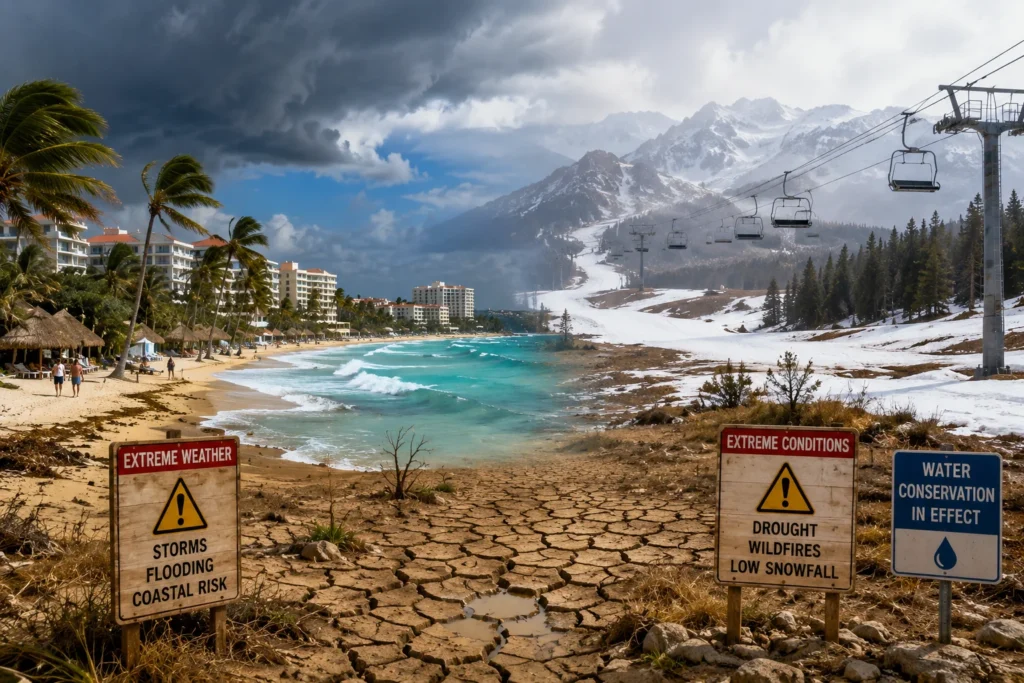
The United Nations World Meteorological Organization (WMO) has issued an official global climate declaration confirming that a supersized El Niño weather system is intensifying, triggering unprecedented meteorological turbulence worldwide through late 2026. As ocean temperatures in the Pacific reach record highs, the resulting environmental shifts are dramatically transforming international travel conditions, altering traditional seasonal tourism periods, and reshaping flight operations globally.
According to climate observations from public meteorological agencies, this rapidly strengthening phenomenon is producing unusual precipitation variations, shifting storm tracks, and elevated atmospheric instability. For global travelers and international travel operators, the evolving climate conditions require rapid adaptation as iconic destinations experience unseasonal heatwaves, shifting monsoon cycles, and localized flood risks.
Oceanic Heating Alters Flight Currents and Maritime Transit
The rapid expansion of eastern equatorial Pacific sea surface temperatures has initiated widespread atmospheric disruptions. Aviation agencies note that altered jet streams and upper-level wind shears are contributing to heightened transatlantic and transpacific atmospheric turbulence, extending long-haul flight times and requiring airlines to continuously re-route commercial flight paths.
| Climate Dynamic | Regional Tourism Impact | Operational Effect on Travel |
| Pacific Ocean Warming | Increased frequency of severe coastal storms in tropical regions | Delays in cruise itineraries and coastal resort activities |
| Jet Stream Volatility | Extended heat waves and unseasonal heavy rainfall patterns | Fluctuations in regional flight scheduling and air travel turbulence |
| Monsoon Pattern Shifts | Altered dry and rainy seasons across South and Southeast Asia | Changes in peak eco-tourism and outdoor travel booking windows |
Simultaneously, maritime tourism sectors face operational challenges. Elevated water temperatures across tropical marine zones affect coastal eco-tourism, coral reef ecosystems, and wildlife watching expeditions, prompting regional travel boards to adjust ecological tour offerings and visitor guidelines.
Shifts in Global Travel Demand and Regional Planning
Official climate statistics indicate that the warming phase will persist at high intensity through the end of the year, directly influencing global destination preferences. Northern European and British territories anticipate heightened rainfall and localized flooding during traditionally busy travel seasons, whereas parts of Africa, Southern Europe, and Latin America face prolonged heat spells.
Public tourism departments are increasingly urging travelers to review regional weather advisories and secure comprehensive travel itineraries. The broader global economic ripple effects—including fluctuating agricultural prices and operational adjustments across national transit networks—are prompting hospitality providers to adopt more flexible booking policies and real-time travel updates.
Governments and international climate bodies continue to monitor the phenomenon closely, emphasizing that robust early-warning systems and updated travel infrastructure planning remain essential to maintaining safe and sustainable global tourism operations.
For more travel news like this, keep reading Global Travel Wire