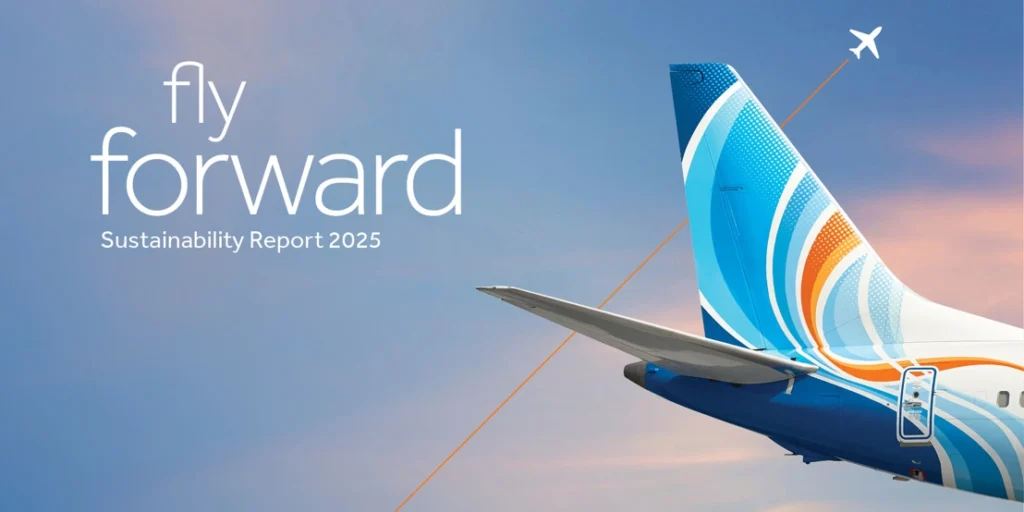
flydubai has published its first sustainability report, “Fly Forward,” outlining how operational efficiency, fuel conservation, emissions reduction and responsible business practices are being integrated into the airline’s future growth.
The report places particular emphasis on single-engine taxiing, a procedure that allows aircraft to move on the ground using one engine when operational and safety conditions permit. At flydubai’s Dubai hub, the airline has achieved a reported application rate of 95%, compared with an industry average of approximately 35%.
Across the wider network, the procedure is applied on around 74% of eligible operations. The performance demonstrates how relatively simple changes in ground operations can produce immediate fuel and emissions benefits without requiring major changes to passenger service.
Combined with a modern Boeing 737 fleet and plans to introduce Boeing 787-9 widebody aircraft, the strategy is positioning flydubai to expand its network while managing the environmental and operational pressures associated with rising travel demand.
Single-Engine Taxiing Reduces Ground Fuel Consumption
Single-engine taxiing is one of the most significant operational measures highlighted in the Fly Forward report.
When conditions permit, arriving aircraft can shut down one engine shortly after landing and continue taxiing to the terminal on the remaining engine. Before departure, aircraft may also begin taxiing with one engine before starting the second engine in preparation for take-off.
The procedure reduces the amount of fuel consumed while an aircraft is moving between the runway and terminal. Because it can be applied during every eligible arrival and departure, the cumulative savings across thousands of annual flights can be substantial.
Lower ground fuel burn also reduces carbon emissions around airports and may lessen unnecessary engine use. Over time, this can support maintenance efficiency by reducing operating hours on engine components during ground movements.
For passengers, the process generally takes place without any noticeable change to the journey. However, it contributes to lower operating costs and supports the airline’s efforts to maintain efficient, reliable services from Dubai.
Boeing 737 MAX Fleet Supports Emissions Strategy
Fleet modernisation remains another central element of flydubai’s environmental strategy.
The airline currently operates 97 Boeing 737 aircraft, comprising 68 Boeing 737 MAX 8s, three Boeing 737 MAX 9s and 26 Next-Generation Boeing 737-800s. The MAX family therefore represents the majority of the operating fleet.
According to flydubai, the Boeing 737 MAX delivers approximately 14% greater fuel efficiency than the aircraft generation it replaces. This improvement can reduce fuel consumption and carbon emissions per flight while also supporting longer-range operations from Dubai.
A more efficient narrowbody fleet is especially important to flydubai because the carrier connects Dubai with destinations across the Middle East, Africa, Central Asia, Europe and South Asia. Many of these markets are served by direct routes that were previously unavailable or offered only limited connectivity.
By operating fuel-efficient aircraft on these sectors, the airline can expand access to emerging destinations while managing operating costs and environmental impact.
Sustainability Extends Beyond Aircraft Operations
The Fly Forward framework presents sustainability as a broader operational responsibility rather than a programme focused only on fuel.
Its priorities include climate-ready operations, energy efficiency, responsible waste management, wildlife protection, workforce development, safety, service quality and greater use of digital aviation systems.
flydubai has also supported the UAE’s Net Zero by 2050 strategic initiative and introduced a solar power project at its campus. The initiative is expected to reduce annual carbon dioxide emissions by 1,211 tonnes while increasing the use of cleaner energy within its ground infrastructure.
The airline’s participation in wildlife protection efforts further extends its environmental commitments beyond aircraft operations. Its zero-tolerance approach to illegal wildlife transport supports international efforts to prevent trafficking in endangered species.
Together, these programmes show how airline sustainability now encompasses buildings, employees, cargo operations, technology and partnerships as well as flight efficiency.
Boeing 787-9 Plans Prepare flydubai for Long-Haul Growth
flydubai’s future Boeing 787-9 fleet will introduce a new phase of network development.
The airline placed its first widebody aircraft order for 30 Boeing 787-9s, creating the foundation for longer-range services from Dubai. The aircraft are expected to support expansion into markets beyond the practical reach of the airline’s current narrowbody fleet.
Widebody operations could allow flydubai to increase connectivity between Dubai and destinations across Europe, Asia and other long-haul regions. They may also provide additional cargo capacity and greater flexibility during high-demand travel periods.
Integrating these aircraft within the Fly Forward framework will be essential as the airline balances expansion with fuel efficiency and emissions objectives.
For international travellers, the move could create new nonstop routes, stronger one-stop connections through Dubai and greater competition across long-distance markets.
Efficient Operations Strengthen Dubai Tourism Connectivity
flydubai has developed a network of more than 140 destinations, strengthening Dubai’s role as an international aviation and tourism hub.
Fuel-saving procedures and modern aircraft help the carrier serve this expanding network more efficiently. Lower fuel consumption can improve resilience against energy price volatility, while reduced engine use and newer aircraft technology may support more reliable fleet availability.
That reliability matters to hotels, tour operators, attractions and other tourism businesses that depend on predictable visitor arrivals.
The Fly Forward report therefore represents more than an environmental statement. It is a roadmap for combining network expansion, operational discipline and responsible aviation growth.
As passenger demand continues to rise, flydubai’s ability to apply fuel-saving procedures at scale could provide a practical model for other airlines seeking immediate efficiency gains while preparing for longer-term technological change.
For more travel news like this, keep reading Global Travel Wire